
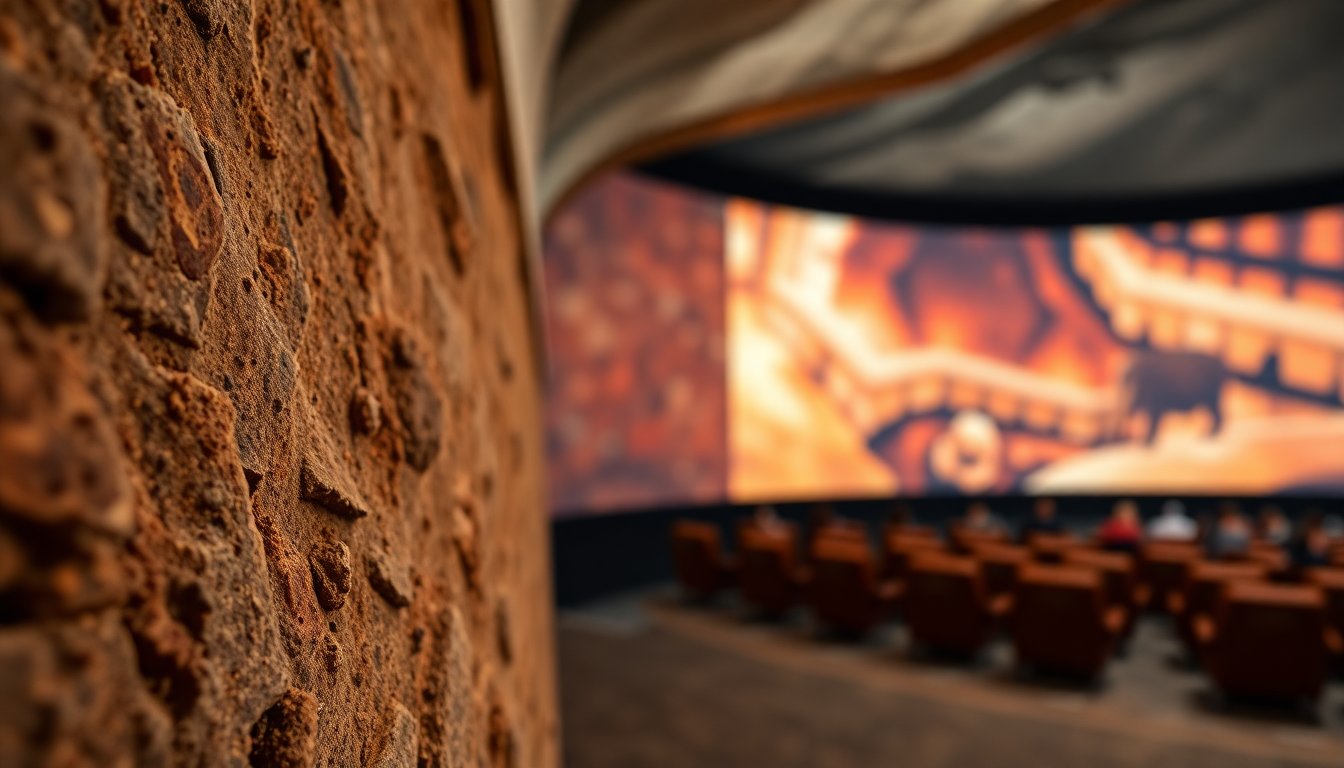
The restored presentation of Werner Herzog’s Cave of Forgotten Dreams is set to reappear on large screens, offering audiences a refreshed window into one of humanity’s oldest artistic sites. IFC announced that a newly completed 6K restoration and upgrade of Herzog’s pioneering 3D feature will have special IMAX screenings nationwide on April 15 and April 19 to mark the film’s 15th anniversary, followed by a broader theatrical rollout beginning April 24. The film documents the remote Chauvet Cave, whose Paleolithic paintings and geological formations have been preserved under natural seals for over 20,000 years, and the restoration aims to honor both Herzog’s original intent and the cave’s fragile legacy.
Why the restoration was needed
The original 2010 production was constrained by the infancy of on-set 3D workflows and strict preservation rules at Chauvet. Filmmakers were limited to a tiny crew and used specially engineered rigs to avoid harming the site, which meant many compromises in capture and postproduction. Those early limitations left visual artifacts and other imperfections that were effectively baked into the initial release. The restoration team set out to address these issues by revisiting the camera originals and rebuilding the film at a higher resolution. The effort centers on creating a faithful, high-fidelity representation of the cave paintings and interiors while retaining the documentary’s contemplative tone and Herzog’s observational voice.
Technical rebuilding of the imagery
Beginning in 2026, technicians returned to the raw elements to perform a frame-by-frame reconstruction for a true 6K master, recognizing that each stereoscopic frame requires dual attention. Every shot had to be processed twice to create an accurate two-eye restoration suitable for genuine stereoscopic 3D projection. This approach demanded painstaking alignment, color correction, and cleanup to respect the cave’s textures without creating artificial enhancements. By rebuilding left-eye and right-eye plates independently, the team preserved natural parallax and avoided the flattened or over-processed look that can undermine subtle surface detail in rock art and calcite formations.
Reimagining the sound
Alongside the visual overhaul, the restoration revisited the original audio tapes recorded inside the cave. The new release features a remixed immersive soundtrack designed to pair with the expanded visual depth. Engineers reconstructed ambient layers and spatial cues so that footsteps, dripping water, and the film’s narration exist within a clearer three-dimensional soundstage. The result is a sound field that amplifies the sense of being inside the cave without overshadowing the films reflective pace. This carefully balanced sound mix reinforces both scientific detail and poetic observation, complementing Herzog’s exploration of early human creativity.
Screenings and access
IFC has scheduled the restored film for special IMAX presentations on April 15 and April 19, events promoted as commemorative screenings for the film’s 15th anniversary. These IMAX dates are followed by a conventional theatrical release beginning April 24, allowing viewers who prefer standard cinemas to experience the refreshed transfer. The documentary’s production history remains a key promotional point: access to the Chauvet Cave was exceptionally limited, and the crew that filmed Herzog’s film entered only under strict permission from French authorities, using compact, custom-built digital cameras to avoid disturbing the fragile environment.
What audiences should expect
For viewers, the upgraded presentation means deeper spatial information and clarified textures that make the cave’s paintings and formations feel more immediate. The film’s contemplative rhythm and Herzog’s narration are intact, but the enhanced visual and audio fidelity allows new discoveries on repeat viewings. Trailer materials and side-by-side comparisons released by the distributor highlight differences in resolution, color depth, and stereo separation. Fans of documentary cinema, students of paleolithic art, and anyone curious about the intersection of conservation and filmmaking will find this version especially informative. For those interested in further context, a recent conversation on Emulsion with Herzog and collaborators expands on production stories and the restoration process.
Final thoughts
This restoration is both a technical achievement and a preservation-minded artistic gesture. By rebuilding the film for modern large-format projection and remastering its audio, the team has attempted to honor the cave’s extraordinary heritage while making Herzog’s work accessible to contemporary audiences. Whether experienced in IMAX or in regular theaters after April 24, the new presentation aims to deepen appreciation for early human expression and the care required to film it responsibly. The release also serves as a reminder that advances in imaging and sound can renew older works, revealing details that were once hidden by the limitations of earlier technology.