
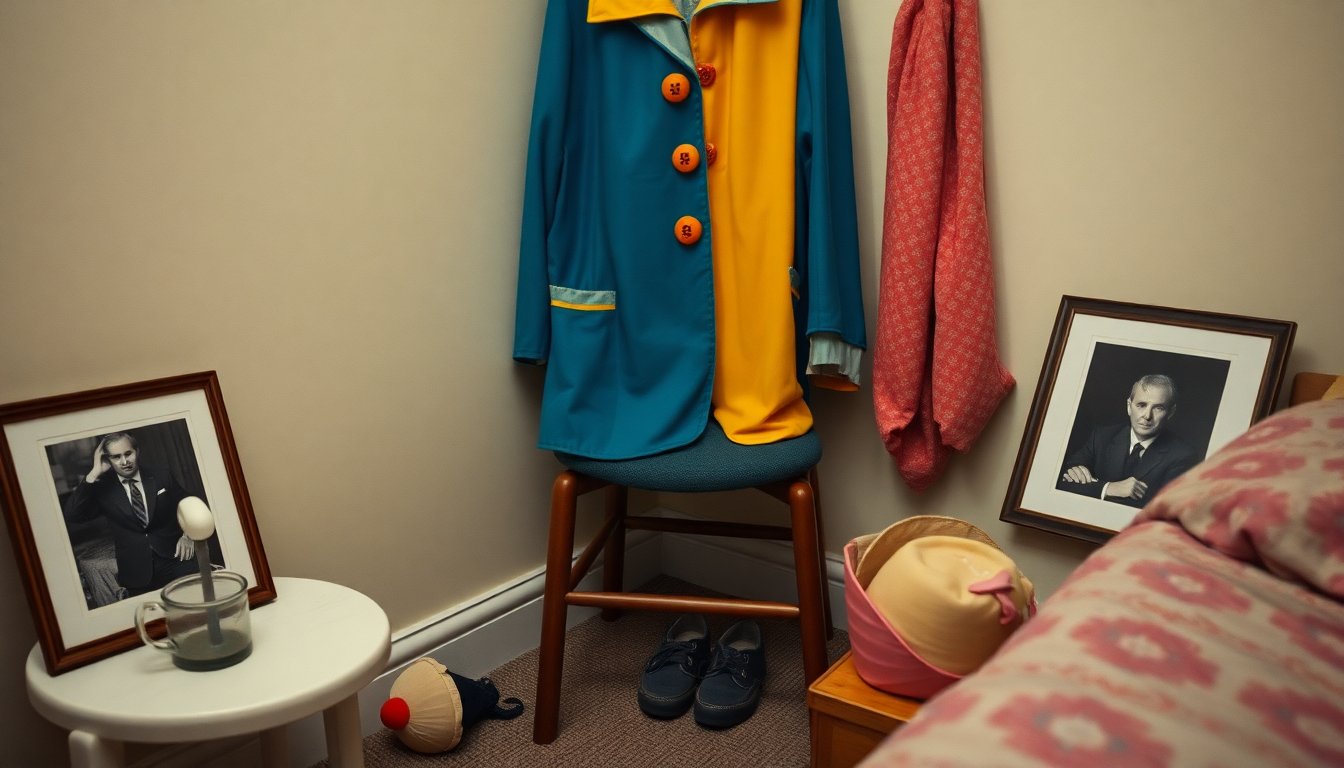
Four Minus Three picked up the Europa Cinemas Label in Panorama at the Berlin International Film Festival — a prize that brings targeted promotional support across a pan‑European cinema network and can be crucial for getting an intimate, quieter film into more theatres.
A personal story, rendered cinematic
Adrian Goiginger’s film adapts the memoir of Barbara Pachl‑Eberhart and stars Valerie Pachner as Barbara, a professional clown whose partner Heli and their two children are killed in a car accident. Rather than turn the tragedy into grand gestures, the film explores how humor and the craft of clowning become tools for survival: how ritual, timing and performance can hold together a life that’s been ruptured.
Crafting the adaptation
Senad Halilbašić wrote the screenplay, reshaping the memoir into a cinematic pattern that slips between past and present. Producers Giganten Film Productions and 2010 Entertainment backed a non‑linear approach that interlaces tender flashbacks with present‑day anguish, using rhythm and contrast to modulate emotional intensity.
Editing played a decisive role. During post‑production, the placement of the accident scene was shifted — a structural change that helped the film cohere and maintain the emotional through‑line without tipping into melodrama. Those kinds of decisions—about when to reveal, when to hold back—make the difference between a faithful adaptation and a film that genuinely resonates on screen.
Performance and casting
Valerie Pachner anchors the piece, conveying a wide interior life through small gestures and precise physicality. Robert Stadlober appears as Heli, bringing warmth and a lightness that makes the loss feel palpable. Supporting work from Stefanie Reinsperger, Hanno Koffler and Ronald Zehrfeld fills out a portrait of a creative, close‑knit household whose dynamics are essential to what the film ultimately mourns and remembers.
Clowning with care
Goiginger and his team treated clowning as a discipline, not a shorthand. They worked with hospital clowns, the Red Noses organization and a French practitioner who had known the real Heli, drawing practical advice on movement, tone and staging. That consultation kept the performances credible and humane: some sequences are quietly funny, others plainly tender, and none feel exploitative.
Stylistically, the film leans into a Chaplinesque idea — that laughter and grief can coexist — but it avoids sentimental shortcuts. Light‑inflected flashbacks (weddings, births, everyday domestic scenes) puncture the present struggle, offering relief while deepening empathy for Barbara’s grief. The
Behind the scenes: research and process
Preparation was immersive. The team attended clowning workshops, made hospital visits, and enlisted medical and performance advisors to ensure scenes stayed truthful without intruding on real patients. Shooting proved emotionally demanding; scenes were blocked and rehearsed with safeguards to protect cast and crew. In the edit suite, multiple permutations of the timeline were tested until the pacing preserved character agency while resisting the easy pulls of spectacle.
Festival lift and distribution prospects
The Europa Cinemas Label will help Four Minus Three reach programming teams across a network that includes more than 3,200 screens in 39 European countries, supported by initiatives such as the MEDIA programme and France’s CNC. Those resources are designed to amplify European titles beyond their domestic markets.
On the business side, Beta Cinema handles international sales, while Alamode Film and Polyfilm will distribute the film in Germany and Austria, respectively. Those relationships — a proactive sales agent and committed local distributors — are often what turn festival recognition into actual theatrical runs.
A personal story, rendered cinematic
Adrian Goiginger’s film adapts the memoir of Barbara Pachl‑Eberhart and stars Valerie Pachner as Barbara, a professional clown whose partner Heli and their two children are killed in a car accident. Rather than turn the tragedy into grand gestures, the film explores how humor and the craft of clowning become tools for survival: how ritual, timing and performance can hold together a life that’s been ruptured.0
A personal story, rendered cinematic
Adrian Goiginger’s film adapts the memoir of Barbara Pachl‑Eberhart and stars Valerie Pachner as Barbara, a professional clown whose partner Heli and their two children are killed in a car accident. Rather than turn the tragedy into grand gestures, the film explores how humor and the craft of clowning become tools for survival: how ritual, timing and performance can hold together a life that’s been ruptured.1
A personal story, rendered cinematic
Adrian Goiginger’s film adapts the memoir of Barbara Pachl‑Eberhart and stars Valerie Pachner as Barbara, a professional clown whose partner Heli and their two children are killed in a car accident. Rather than turn the tragedy into grand gestures, the film explores how humor and the craft of clowning become tools for survival: how ritual, timing and performance can hold together a life that’s been ruptured.2