
The new trailer for Verity arrives as a clear departure from the recent wave of film versions of Colleen Hoover novels. Directed by Michael Showalter and fronted by Anne Hathaway, the promo reframes familiar elements of romantic melodrama into something more volatile and stylized. In this piece, I examine how the clip reshapes character dynamics, highlight the visual and tonal choices signaled in the footage, and consider how the project positions itself between mainstream adaptation and experimental genre work. For readers tracking Hoover adaptations, the most notable shift is not only in mood but in how narrative reliability is used as a cinematic device.
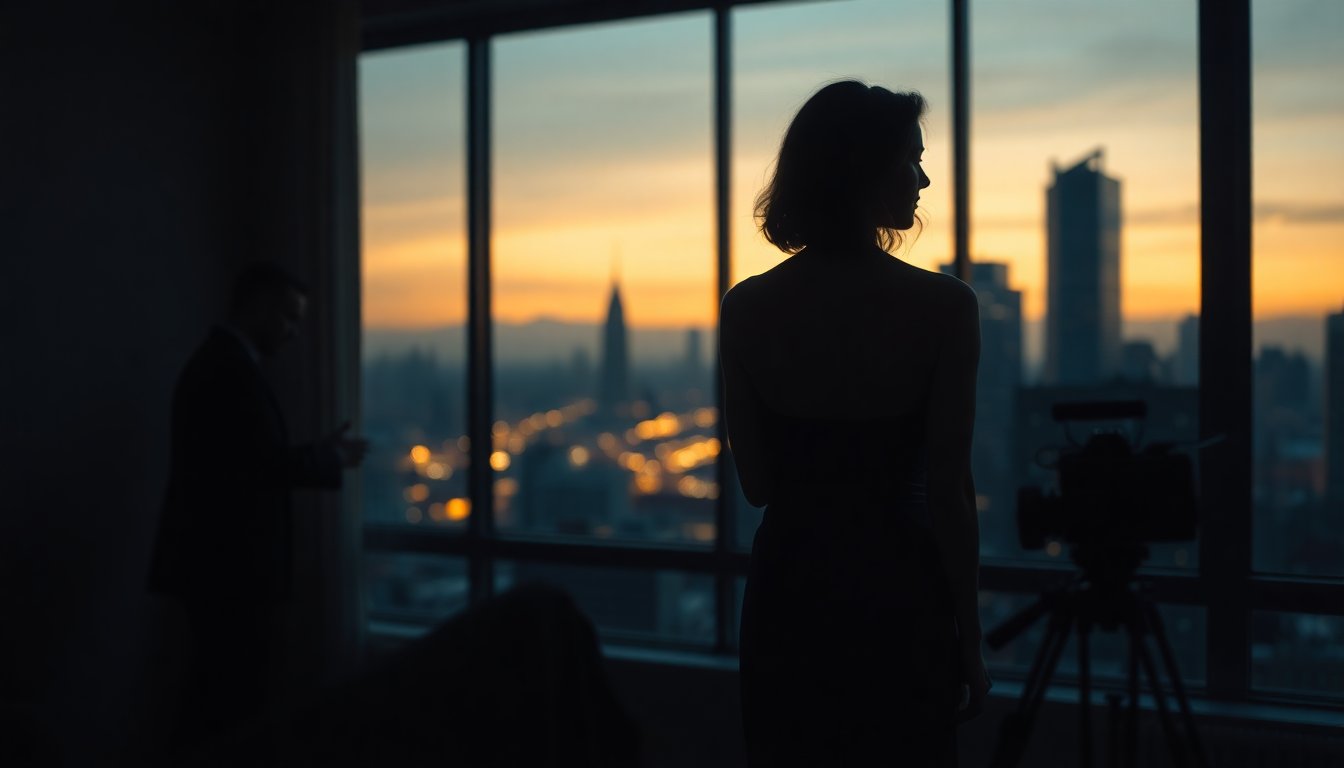
The teaser opens on an intimate domestic tableau that soon curdles into unease. We watch Dakota Johnson‘s character drifting through a dim house in a silk robe, a scene that feels intentionally familiar before the film deliberately disorients the viewer. A seemingly affectionate moment with Josh Hartnett slides into a shocking beat when Johnson reacts to a bite and finds Anne Hathaway watching — an image meant to upend expectations. The trailer even includes a chilling voice line that frames the journey ahead: “There is no light where we’re going. Darkness ahead.” That declaration functions as a tonal contract with the audience: this will not be a conventional Hoover melodrama.
Trailer tone and stylistic intent
The clip favors heightened, often unsettling imagery over the straightforward emotional sincerity that characterized adaptations like It Ends With Us. Visual choices — from shadowed interiors to intimate close-ups — steer the material toward psychological thriller territory. The marketing suggests a deliberate blend of erotic tension and creeping horror, positioning the film as both provocative and disquieting. As a result, the filmmakers appear to be testing the elasticity of Hoover’s source material: can the same narrative scaffolding that supports tearful realism also sustain sequences meant to unsettle and confuse? The trailer’s rhythmic editing and sonic cues imply they are purposely courting that risk.
From erotic thriller to prestige horror
Where some adaptations trade on raw emotional catharsis, Verity seems intent on ambiguity and mood. The trailer tilts into a genre-forward approach that flirts with both camp and seriousness, leaving viewers unsure whether moments are literal or imagined. This oscillation between registers is anchored by the decision to make uncertainty central to the audience’s experience. In cinematic terms, the trailer sells a promise: what you think you know about these characters will be questioned, and the film will ask viewers to choose between believing what they see or what they are told.
Characters, narrative role, and source material
At the heart of the story is Lowen, played by Dakota Johnson, a struggling writer who becomes enmeshed with a game designer named Jeremy Crawford, portrayed by Josh Hartnett. She accepts the task of finishing a book series for his injured wife, Verity. In the original novel, the unpublished manuscript functions as a crucial narrative device: it reveals a fractured inner life and forces readers to evaluate the trustworthiness of the storyteller. On screen, that device appears to remain central. Lowen’s position as both participant and observer turns her into an audience surrogate and an inherently unreliable vantage point, which the trailer exploits by presenting events that might be real, imagined, or manipulative.
What makes Verity a difficult retelling?
Adapting a book that pivots on subjective truth is always challenging because film language tends to privilege sensory proof. The movie must therefore choose whether to dramatize the manuscript’s claims directly or preserve ambiguity through suggestion and visual distortion. The trailer signals a choice for distortion: fragmented images, suggestive close-ups, and voice-over all work to keep viewers off balance. That ambiguity will be the production’s most important currency, and success will depend on whether the narrative maintains internal coherence while honoring the book’s unsettling ethical questions about authorship and deception.
Production notes, release plans, and related editions
Michael Showalter takes a notable tonal turn with this project, moving into darker material than much of his earlier work. The film is released by Amazon MGM Studios and is scheduled to be in theaters on October 2. Given the casting and the trailer’s bravado, much will ride on Anne Hathaway‘s ability to anchor scenes that could otherwise tip into pastiche. The promo reduces her presence to suggestive, distorted moments, which indicates that her performance will likely be the gravitational center that balances eroticism and horror.
Fans of the book can also find a well-regarded audiobook edition narrated by Vanessa Johansson and Amy Landon, running approximately 8h 10m and released in 2019. That audio version highlights the dual-voice approach to Verity’s manuscript and can be a useful reference for those curious about how different media treat the novel’s unreliable narrative strategies. Whether consumed as a book, an audiobook, or now a film, Verity is being reinterpreted across formats with an emphasis on ambiguity and atmosphere rather than straightforward melodrama.


