
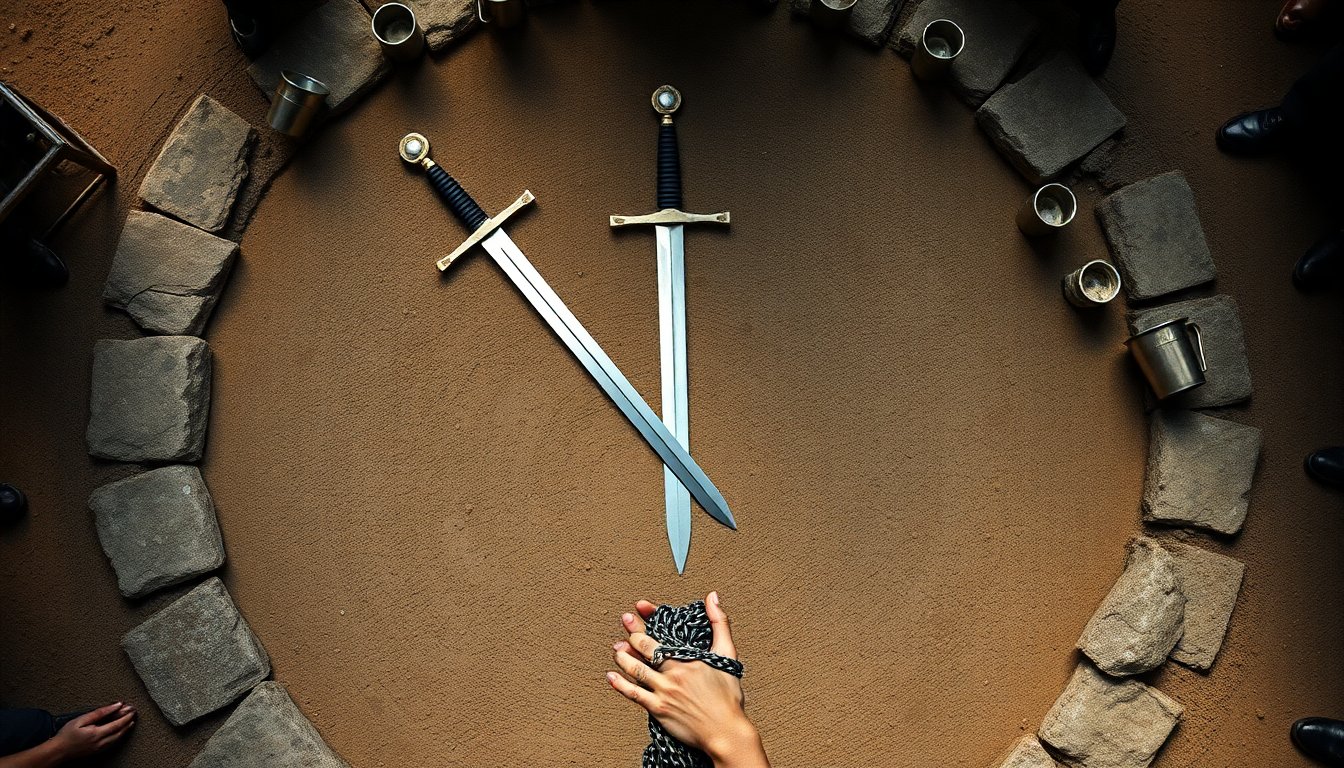
Bertie Carvel says Episode 5 of A Knight of the Seven Kingdoms hinges on an ancient ritual and a single, decisive choice. Airing February 15, 2026, the instalment stages the Trial of Seven and closes with a fallout that reshapes both characters and the political landscape.
Why Baelor picks Dunk: principle over pedigree
Carvel — who has long loved George R. R. Martin’s world — told interviewers that playing Prince Baelor Targaryen rekindled his childhood fascination with knighthood. Rather than presenting Baelor as simply “good” by birth, the episode makes virtue a momentary, intentional act: a choice that defines a man in public view.
On the field, Baelor refuses to toe a predictable royal line. His father Maekar and brother Aerion are set against Ser Duncan “Dunk” the Tall, but Baelor steps forward to defend Dunk and Egg. That decision functions on two levels: it is a private moral stance and a deliberate, visible signal aimed at Prince Aegon “Egg” — an assertion that honor can be earned, not inherited.
Balancing nobility and danger: a Targaryen with edges
Carvel rejects a flat portrayal of Baelor. He wants the prince to carry both tenderness and a capacity for violence; that ambivalence makes the moral stakes feel real. If Baelor were unambiguously benevolent, the scene could tip into cliché. The possibility of a harsher response keeps the drama taut and forces viewers to re-evaluate what royal virtue looks like when tested.
Crucially, the episode is filtered largely through Dunk’s perspective. Seeing events from Dunk’s vantage narrows the emotional frame, softening some political calculations and making Baelor’s choice read as morally straightforward — at least until the wider consequences emerge.
Performance and direction: choices that prioritize consequence
The staging favors ethical clarity over spectacle. Choreography and camera work linger on hesitation and resolve; close-ups emphasize the human cost of a public decision rather than triumphal pageantry. Carvel says he leaned into the script’s rhythms to shape Baelor’s public comportment, finding the role’s measured cadences a way to show a ruler who models courage by example.
The on-screen battle and its aftermath
The Trial of Seven brings together Dunk and allied knights — including Robyn Rhysling, Humfrey Beesbury, Humfrey Hardyng and Raymun Fossoway — against Aerion. Baelor’s arrival tips the balance, and Dunk wins the clash with Aerion. The sequence ends in tragedy: when Baelor removes his helm he is fatally wounded. By keeping the moment centered in Dunk’s point of view until the reveal, the production preserves audience uncertainty and heightens the emotional payoff.
Afterwards, public reaction tests the durability of Baelor’s stance. Courtiers and commoners respond in ways that expose the tension between courage and expediency. The episode deliberately leaves questions open: can a single act of conscience withstand systemic pressure? Does one noble deed rearrange the levers of legitimacy in a realm built on pedigree?
Why this matters now
The scene reframes leadership as performative — a series of choices with real-world consequences rather than a birthright. Filtering the fatal blow through Dunk’s eyes delays moral judgement and forces viewers to re-evaluate motives, loyalties and institutional legitimacy. A high-profile wound creates immediate political uncertainty and sets up altered alliances in episodes to come.
Carvel’s affection for the source material shows in how he discusses the scripts: he treats the series as an opportunity to revisit knightly virtues and explore responsibility as an active practice. The creative team stages the Trial of Seven to foreground those ethical stakes, turning a set-piece duel into a moral crucible.
Why Baelor picks Dunk: principle over pedigree
Carvel — who has long loved George R. R. Martin’s world — told interviewers that playing Prince Baelor Targaryen rekindled his childhood fascination with knighthood. Rather than presenting Baelor as simply “good” by birth, the episode makes virtue a momentary, intentional act: a choice that defines a man in public view.0