
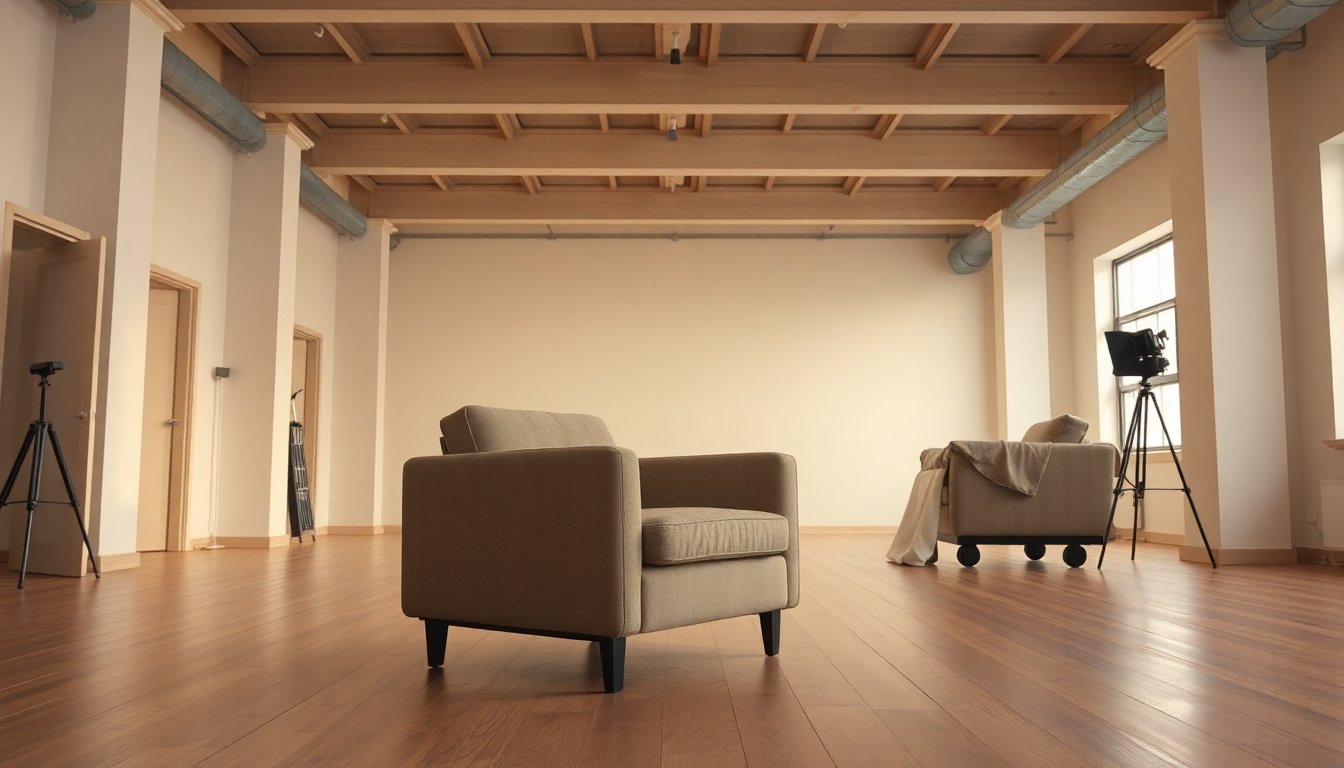
The film By Design, written and directed by Amanda Kramer, takes a bold swing at the familiar body-swap trope by swapping a woman’s consciousness with a high-end designer chair. Premiering at the 2026 Sundance Film Festival and scheduled to open in theaters on February 13, the movie intentionally situates itself between cinematic narrative and performance art. It trades conventional plot propulsion for a curated atmosphere of style, jealousy, and objectification, asking whether desire can reshape someone into an object coveted by others.
Kramer stages the story with a deliberately minimal palette: sparse sets, controlled sound, and a flat, stylized delivery from the cast. This design choice foregrounds themes over realism, turning scenes into tableaux where conversations function like catalog copy and silence can be louder than speech. The result is a film that is at once intriguing and testing — a slow-burn experiment that will reward some viewers and frustrate others.
Story and central performances
At the narrative core is Camille, played by Juliette Lewis, who becomes obsessed with a unique chair in a boutique showroom. When the chair is purchased by Olivier (Mamoudou Athie), Camille’s longing escalates into a supernatural exchange: her consciousness inhabits the chair while the chair’s absence of personhood occupies her body. This inversion creates scenes in which Lewis must convey presence largely through stillness, while Athie negotiates an odd intimacy with an object. The casting choices — including Melanie Griffith as the film’s narrator — lean into the film’s off-kilter tone, with Griffith’s voiceover alternating between satirical detachment and poignant observation.
Performances that anchor the oddity
Lewis’s performance is a study in restraint: much of her screen time involves immobility and silent reaction, which challenges conventional measures of acting. Athie brings controlled awkwardness as a man both attracted to and protective of the chair, while supporting players such as Samantha Mathis, Robin Tunney, and Betty Buckley populate the world with a stylized, sometimes vapid energy. Their interactions, often delivered in a clipped, rehearsed rhythm, underline the film’s theme that social ritual can mask deeper emotional vacancy.
Visual language and thematic concerns
Kramer and her collaborators emphasize a formal visual grammar. Cinematographer Patrick Meade Jones composes interiors as if they were gallery installations, often leaving frames deliberately empty to underscore absence and desire. Costume and production design dress characters in a way that signals status and aspiration, reinforcing the central metaphor: a person reduced to a marketable object. The film repeatedly returns to the idea that resentment and longing can be corrosive — an aphorism delivered via voiceover and action that positions envy as both poison and performance.
Objectification and satire
By Design functions as a satire of high-end branding and the fetishization of form. Scenes in which guests at a dinner party covet the chair read like a parody of tasteful tastemakers defining value through consensus. At times the satire is tactile and sharp; elsewhere it becomes so schematic that it risks becoming a branded vignette rather than a fully lived world. The film’s refusal to translate its metaphors into more conventional emotional beats is a conscious choice, but it narrows the audience who will feel rewarded by the cinematic gamble.
Strengths, limits, and who will respond
The film’s strengths lie in its formal discipline: the mise-en-scène, the use of silence, and the commitment to an aesthetic that blends gallery installation with cinematic storytelling. For viewers drawn to experimental rhythms and thematic clarity over plot mechanics, By Design will feel like a daring miniature — an almost theatrical piece disguised as film. However, those expecting a conventional satire with steady comedic or narrative escalation may find its tempo maddening and its detours, including dance sequences and surreal tangents, insufficiently earned.
Ultimately, By Design is an ambitious, polarizing work that turns commodity culture into narrative oxygen. It is not lightweight entertainment; rather, it is an exercise in form that asks audiences to sit with discomfort and metaphor. Whether that experience feels enriching or exasperating will depend on one’s tolerance for stylistic provocation and appetite for artful ambiguity.
As a piece of contemporary cinema, it poses a simple question: can desire transform identity into product? If the answer matters to you, and you’re open to a film that privileges mood and concept over convention, By Design is worth the seat.