
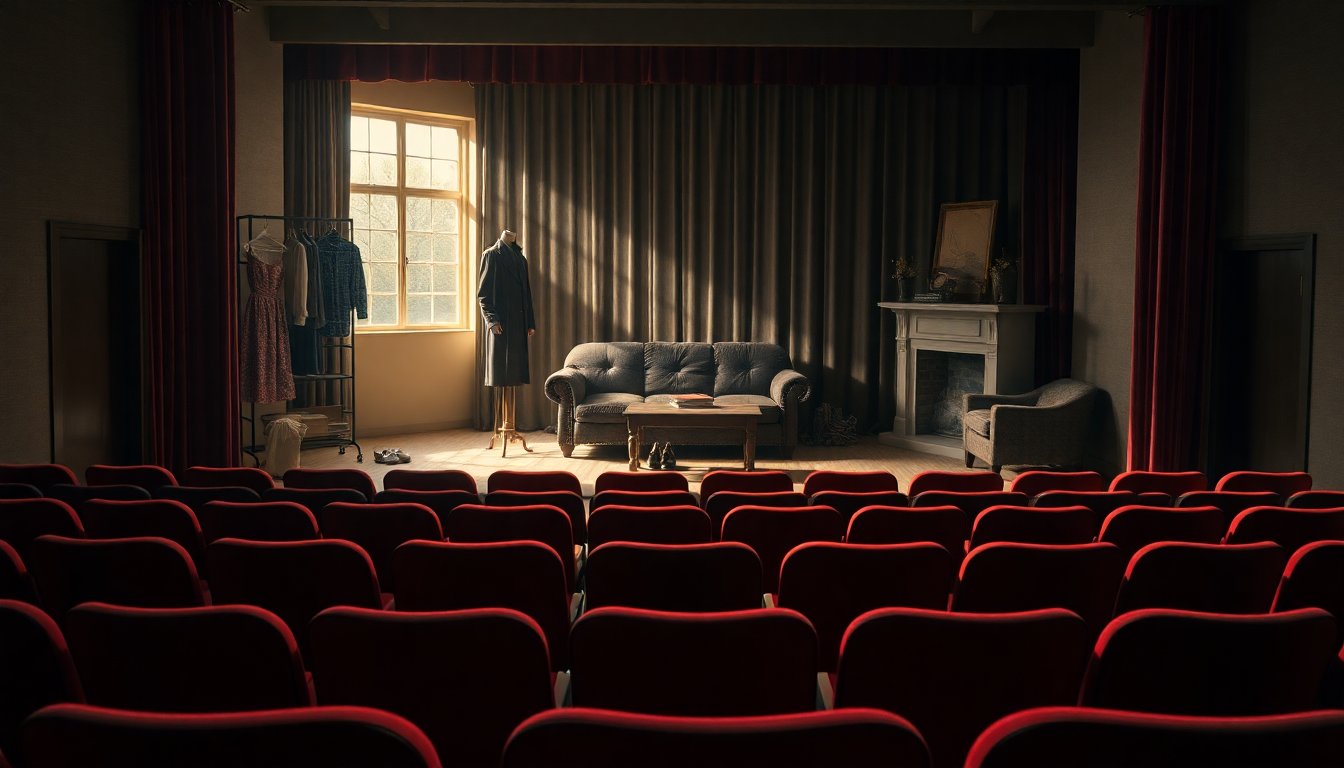
The German filmmaker Christian Petzold has been working on several ideas that range from television crime to theatrical drama, and one concept in particular has drawn attention because it could reunite two of his most frequent collaborators. Petzold described a project centered on a small company of actors who, having lost their home, stage a final season that becomes their finest work. In his outline the troupe performs a play by Chekhov and, oddly enough, the pressure of impending closure unlocks extraordinary performances from an uneven cast. This kernel of a story places ensemble dynamics at the heart of the drama and focuses on the creative alchemy that emerges when a group faces extinction.
That potential film would feature Nina Hoss and Paula Beer among the ensemble, a pairing that has critics and cinephiles excited because each actress has been central to Petzold’s recent cinematic language. Hoss is long associated with Petzold’s earlier breakthrough works, and Beer has anchored several of his latest films. The director has reportedly sketched the beginnings of a script and intends to finish it after completing a separate television crime installment, so the idea remains in development rather than locked to production dates. Thematically the project promises a meditation on performance, loss of space, and the ways art can flourish under duress, with the city and a hostile buyer of the building serving as antagonistic forces.
What the theatre drama proposes
Petzold’s outline frames the story around a troupe that has literally been dispossessed: their theatre is sold to a malevolent owner, and the company is forced to face the reality that the current season will be their last. Under these conditions they mount a Chekhov play, and the narrative explores how imminent disappearance paradoxically sharpens their craft. The director’s idea revolves around the notion that finality can provoke risk-taking and revelation, and that artistic cohesion often appears at the edge of collapse. By focusing on the micro-politics of a small company, Petzold seems set to examine broader questions about cultural survival and the economic pressures that erode local arts institutions.
Casting significance and creative history
The proposed reunion would draw on rich histories: Nina Hoss worked with Petzold on a string of films that helped define their collaboration, while Paula Beer became more visible after working with François Ozon and has since carried several of Petzold’s more recent projects. Casting both in the same ensemble suggests the director wants to juxtapose different stages of his acting partnerships and to explore how two strong performers operate within a larger, imperfect group. The presence of these names gives the film both prestige and a continuity with Petzold’s ongoing artistic concerns, making the potential project a notable event in European auteur cinema.
Other projects on Petzold’s slate
Alongside the theatre drama, Petzold mentioned a crime story for German television, described as his fourth contribution to the long-running series Polizeiruf 110. He also referred to a more provocative concept involving ‘political-left witches who are killing capitalists’, a premise that signals he is balancing restrained, intimate material with more overtly political experiments. These parallel efforts indicate a director moving between formats and tones, from the procedural clarity of television to the allegorical possibilities of genre-tinged cinema. In a career that blends social commentary with formal rigor, new projects like these continue Petzold’s habit of mixing the intimate and the polemical.
How this fits into Petzold’s trajectory
The director has alternated collaborations with certain actors and thematic preoccupations throughout his career, creating a recognizable body of work that critics associate with a particular tone and moral focus. Bringing Hoss and Beer together would be a logical extension of that pattern, an attempt to consolidate decades of artistic rapport into a single ensemble piece. The idea of staging a final season as a narrative engine also allows Petzold to reflect on theatricality itself and the act of performance as a social practice under threat from market forces.
Festival controversy and public remarks
Petzold also spoke publicly about his time on a festival jury and the tensions that can arise around political statements made onstage. He described moments when visitors from Gaza appealed for a ceasefire and said those scenes revealed deeper national anxieties in Germany about historical responsibility. Addressing such issues led him to invoke the loaded term antisemitism, while also pointing to a quotation from Theodor Adorno about the figure of the ‘philosemite’. Petzold used the Adorno line to suggest that well-meaning public displays sometimes contain uneasy contradictions, and that the festival environment can become a stage for unresolved moral debates rather than simple consensus.
Whether or not the new projects move forward, the combination of artistic ambition and outspoken commentary underscores how Petzold continues to engage both cinema and civic conversation. A reunion of Hoss and Beer, set inside a collapsing theatre, would be a creative statement about resilience and artistry, while his other concepts and public remarks show a filmmaker unafraid to probe difficult political terrain. For audiences and industry watchers alike, the developments point to future work that will likely blend intimate performance drama with pointed social observation.