
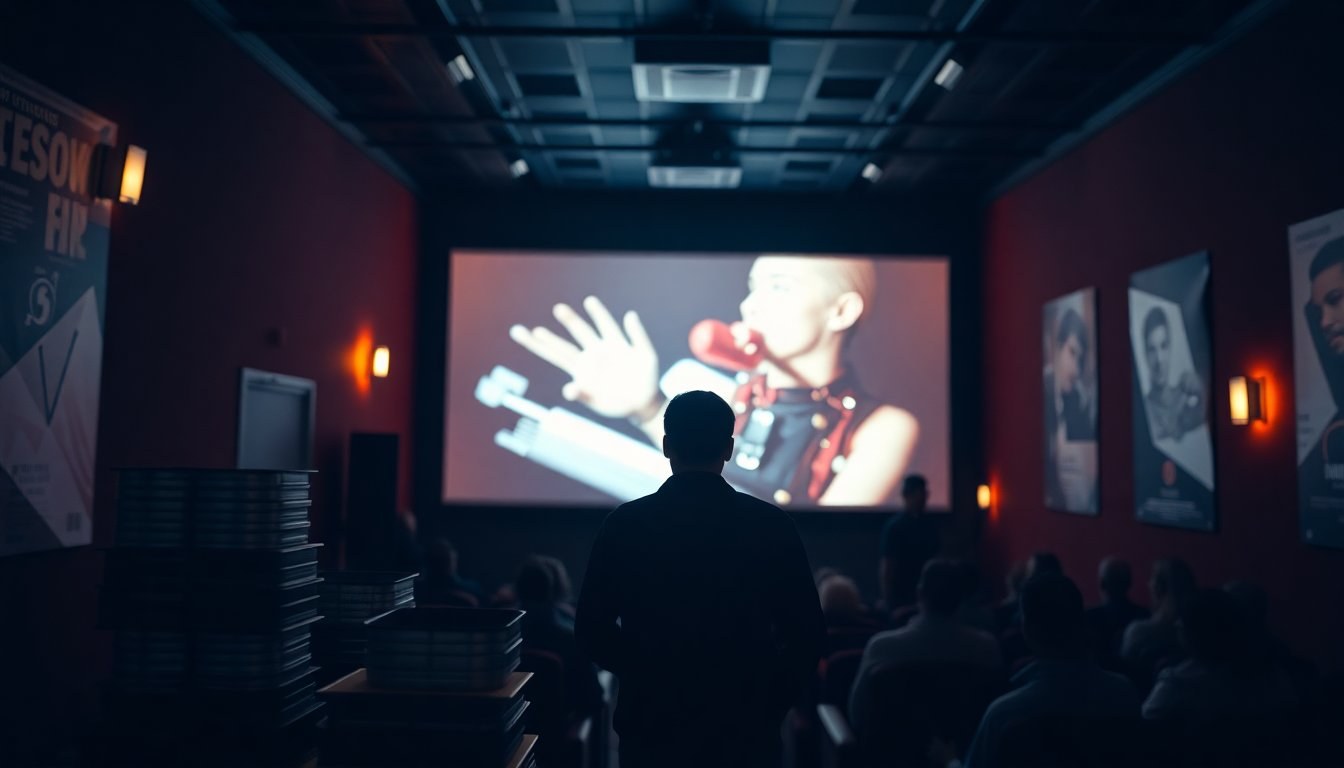
The news opens with an industry move and a creative unveiling: Monument Releasing has acquired James N. Kienitz Wilkins’ latest feature, The Misconceived, and we are presenting the film’s first trailer and poster. The picture, which uses 3D-rendered imagery and motion-capture techniques, first screened in the Harbour section at the International Film Festival Rotterdam on 31 Jan 2026 and later had its U.S. premiere as Opening Night of the Museum of the Moving Image’s First look 2026 on 23 Apr 2026. Monument Releasing plans a U.S. theatrical rollout anchored by a special 35mm engagement at Anthology Film Archives running from May 8–14.
This release is presented as both a distribution milestone and a creative statement. The film continues a character arc established in Wilkins’ earlier work and reframes it inside a story about home renovation, single parenthood and the precarious realities of today’s arts economy. The project was co-written with Robin Schavoir and balances bitter humor with formal experimentation, positioning itself as an acidic satire of the contemporary creative class. Alongside the distribution update, audiences can now view the newly released trailer and promotional artwork that accompany Monument’s announcement.
Story, cast and creative team
The Misconceived follows Tyler, a character who returns from Wilkins’ earlier feature, and chronicles the compromises and small humiliations of a failed filmmaker turned single parent trying to keep creativity alive while paying the bills. The ensemble includes Jesse Wakeman, Jess Barbagallo, John Magary and Callie Hernandez, and the film was produced by Emily Davis and James N. Kienitz Wilkins with Joey Frank serving as an executive producer. The filmmakers use motion capture and virtual production tools to craft an uncanny domestic landscape that reads like a renovation manual and a social critique at once; this approach is explicitly presented as an experiment in form rather than conventional realism.
Festival trajectory and distribution plan
The film’s festival path began at Rotterdam and continued with a U.S. opening at MoMI’s First Look program, confirming early institutional interest in Wilkins’ hybrid aesthetic. Monument Releasing’s acquisition sets a theatrical path that begins with a curated presentation: a weeklong 35mm program at Anthology Film Archives from May 8–14, which highlights a commitment to physical film presentation even as the movie interrogates digital production techniques. The distributor is positioning the film for an art-house theatrical life that will be supported by the online debut of the trailer and further promotional materials like the new poster.
Style, themes and critical context
Visual approach and technical choices
Wilkins and his collaborators deliberately blur lines between digital fabrication and embodied performance. The film’s aesthetic relies on 3D-rendered environments and motion-capture performances that create an uncanny domesticity, a space where the ordinary work of renovation becomes a stage for labor anxieties. This use of virtual tools functions as a mode of commentary: formal decisions mirror the film’s thematic insistence on the precariousness of creative work. The production’s embrace of both mo-cap and a later 35mm presentation invites viewers to reflect on medium-specific textures and the politics of exhibition.
Reception and critical remarks
Early responses have focused on the film’s sharp social vision and formal risk-taking. Critics have noted that Wilkins and co-writer Robin Schavoir pick up concerns about artistic authenticity, labor and urban cultural life first explored in earlier films, and rework them through a satirical lens. One reviewer framed the movie as a corrosive but fertile satirical treatment of the so-called creative class, observing that the film’s abrasiveness is matched by a rich interest in cinematic form. Festival audiences have responded to both the discomfort and the humor embedded in the performances and the digital mise-en-scène.
Why this release matters
Beyond the immediate excitement of a new trailer and the novelty of a 35mm engagement for a digitally constructed film, the acquisition by Monument Releasing signals confidence in politically sharp, formally adventurous cinema. James N. Kienitz Wilkins, a New York–based filmmaker whose work has shown at TIFF, Berlinale, NYFF, Locarno, CPH:DOX and others, including a Whitney Biennial inclusion in 2017 and retrospectives at RIDM and Metrograph, brings several prior features into conversation here: Still Film, The Plagiarists, The Republic and others. For viewers and programmers interested in the intersections of labor, form and distribution strategy, the film’s rollout and the newly released promotional materials are worth attention.
Watch the exclusive trailer and view the poster to see how Wilkins’ work translates an economy of creativity into a visually unusual domestic drama. The combination of festival recognition, a specialty distributor, and a limited 35mm presentation suggests that The Misconceived is being positioned to reach both cinephile audiences and critics who track experimental narrative work.


