
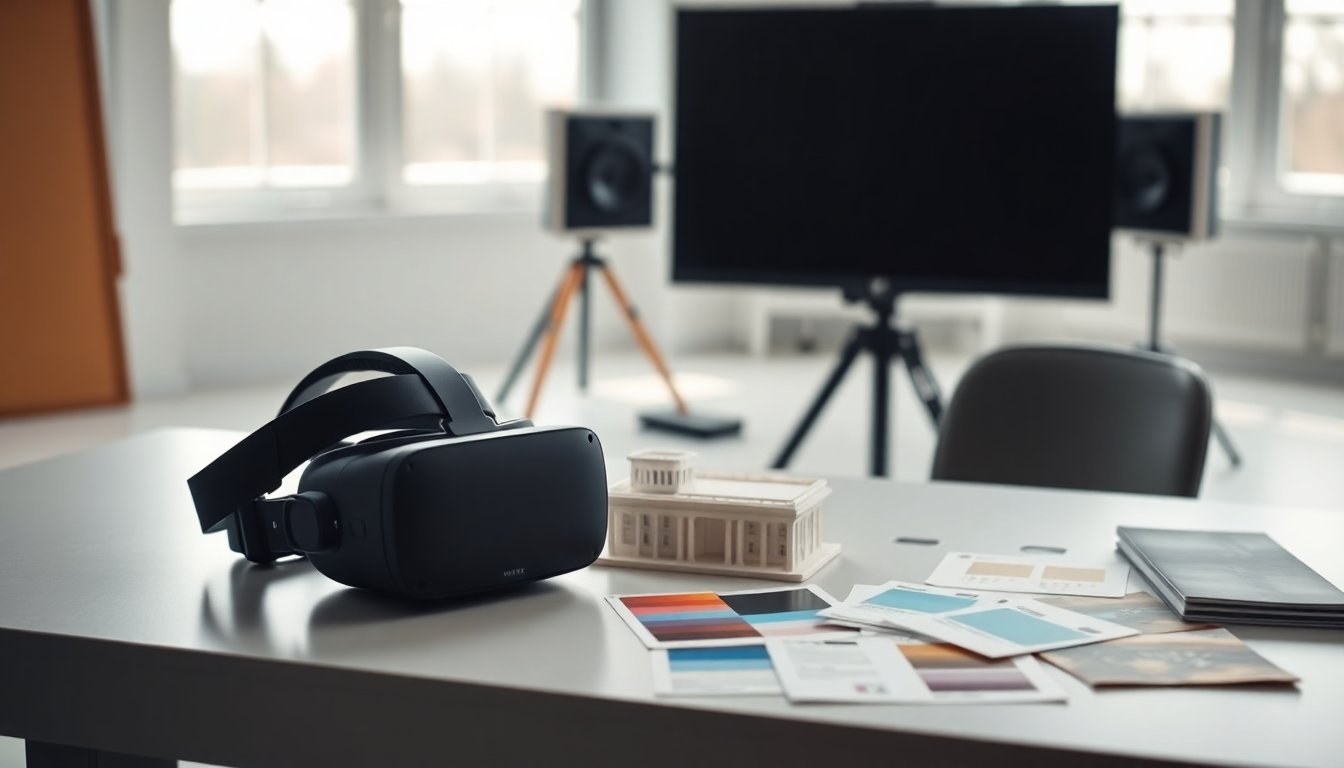
The Helsinki company Fireframe Studios, created by Supercell co-founder Mikko Kodisoja, has begun production on a block of feature films designed from the ground up for immersive formats. Founded in 2026, the studio brings together filmmakers, game designers and virtual production technicians to pursue a form of immersive-native storytelling that fuses cinematic technique with real-time technology. In doing so, Fireframe aims to treat capture and exhibition as a single unified process rather than two separate phases of filmmaking.
That approach reflects Kodisoja’s background at Supercell, where global titles such as Clash of Clans and Brawl Stars were built as evolving ecosystems rather than one-off narratives. At Fireframe, that philosophy shows up in projects that are conceived as worlds first, with films functioning as entry points into larger creative universes. The company’s Helsinki virtual production facility is central to the strategy: it uses an LED volume and bespoke technical pipelines to capture scenes directly for presentation across multiple premium formats.
First titles and creative leadership
The first feature to enter production is Puzzle Box, an English-language horror film written and directed by Mikko Kodisoja and starring Henry Lloyd-Hughes and Charlie Murphy. Filmed on Fireframe’s stages in Helsinki, the story follows a fragmented family who retreat to a remote winter villa where a mysterious artifact is discovered in the rubble of a nearby home. As the children explore, the artifact releases trapped entities and the family is forced to confront what must be sacrificed to end the threat. The narrative is deliberately built around a central device that can carry multiple storylines across different mediums.
A gaming sensibility in filmmaking
Kodisoja has described his method as building the world before the plot, a workflow familiar to game creators where story, play systems and character arcs are tightly integrated. Fireframe treats the artifact at the heart of Puzzle Box as a piece of worldbuilding with its own rules and narrative potential. This mode of development enables what the studio calls immersive-native design—stories that are intended to evolve across films, games and other experiences rather than being retrofitted to new platforms after completion.
The broader slate and collaborators
Fireframe’s lineup extends beyond Kodisoja’s debut. Announced projects include Dragonlord, an action-fantasy from director and actor David Sandberg (known for the viral short Kung Fury), and an action-horror title from the Norwegian duo the Higton Brothers, creators of the Snapchat hit Dead of Night. Also on the slate is Martina, a miniature-style adaptation directed by Diego Vazquez Lozano that has already wrapped production and is in post-production after being introduced at Comic-Con Madrid 2026. Together, these projects illustrate Fireframe’s ambition to span genres while keeping immersive technique at the core.
How the slate fits the studio’s goals
Each film is intended to take advantage of the studio’s technical setup and creative philosophy. By assembling filmmakers with backgrounds in viral shorts, serialized horror and miniature filmmaking, Fireframe seeks to demonstrate that the same virtual production apparatus can serve disparate aesthetics and storytelling needs. The selection of collaborators signals an intent to reach global audiences with distinct voices, while maintaining a consistent production model optimized for premium viewing formats.
Technology, capture and format strategy
Fireframe operates a purpose-built, Helsinki-based virtual production stage featuring an LED volume and custom technical workflows designed to capture and encode native data during principal photography. The studio emphasizes that this captured information is not merely a backdrop but a core asset that preserves fidelity for later presentation. By capturing the native data up front, the films can be prepared for theatrical projection, streaming platforms and other high-end formats without extensive reworking or quality loss.
The studio argues that historically capture and playback have been handled independently: films were shot and later reformatted for special releases. Fireframe’s model flips that script by designing projects from day one to function across different experiences. This allows filmmakers to consider camera capture, environmental lighting and interactive possibilities at the same time, unlocking new creative choices and technical efficiencies while keeping narrative quality central to the production.
Outlook and industry implications
As Fireframe scales its slate, it aims to prove that a hybrid team of game developers, filmmakers and virtual production engineers can produce market-ready films that are optimized for contemporary distribution channels. The studio’s work in Helsinki builds on Kodisoja’s experience at Supercell and reflects a growing industry interest in merging interactive and cinematic disciplines. If successful, Fireframe could influence how future films are conceived, captured and distributed, demonstrating that designing for immersive, multi-format experiences from the outset can expand storytelling possibilities without sacrificing craft.


