
Jane Schoenbrun’s next film, Teenage Sex and Death at Camp Miasma, will begin rolling out on August 7, 2026, in select territories. Backed by MUBI and produced alongside Plan B, the project signals a deliberate push into the arthouse-horror space while courting streaming audiences.
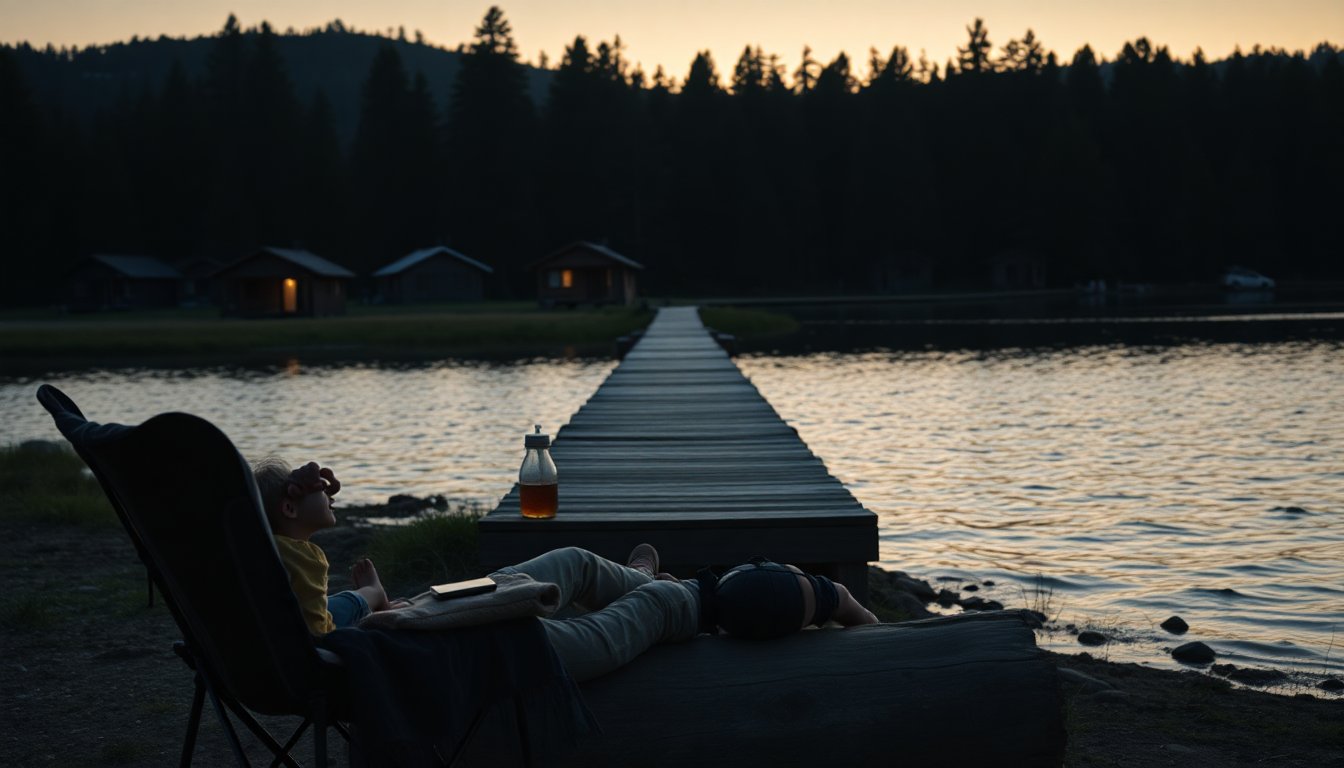
A tonal pivot after I Saw the TV Glow, Schoenbrun’s new feature toys with slasher conventions while centering intimate queer stories. Early stills and marketing lean into mood and texture over plot, framing the film as both tribute and critique of the summer-camp horror tradition—familiar visual cues reframed to probe identity, memory and desire.
Performances and premise
At the heart of the film are Hannah Einbinder and Gillian Anderson. Einbinder plays a young director bent on reviving a faded slasher franchise; Anderson is the retired “final girl,” a once-iconic survivor who has withdrawn from public life. The official synopsis promises a descent into “a blood-soaked world of desire, fear, and delirium,” and the film appears intent on using visceral genre beats to explore psychological and sexual complexities rather than delivering gore for its own sake.
Creative approach and tone
Schoenbrun keeps a provocative, personal voice—one that blends reverence for slasher mechanics with experimental, character-driven detours. The film alternates between lean, suspenseful staging and moments of more ornate camerawork; abrupt sonic and editing shifts underline the protagonist’s emotional dislocations. In practice, the slasher imagery functions less as spectacle and more as a stage for interpersonal conflict: mentorship, authorship and the costs of reinvention take center stage.
Why this matters
The picture tests how contemporary audiences respond when genre revival meets pointed interrogation. By foregrounding female trauma, queer desire and the afterlives of cult fame, Schoenbrun is asking whether revitalization requires homage, subversion—or a blend of both. Industry watchers see the MUBI–Plan B partnership as an intentional strategy: festival-friendly auteurism with a clear path to curated streaming, a combination that can broaden both critical reach and commercial potential.
Production, distribution and early positioning
Public details about the shoot and rollout remain sparse: a set of images and brief statements have been released, but no full schedule or wide release plan has been published. MUBI financed the film and will handle distribution across multiple territories—including North America, Latin America, the U.K., Ireland, Germany, Austria, Benelux, Spain, Italy, Turkey, India, Australia and New Zealand—while The Match Factory is managing remaining worldwide sales. Scythia Films’ Daniel Bekerman provided local production services. Plan B’s involvement adds a high-profile producing partner experienced at shepherding auteur-driven projects to wider audiences.
Festival reaction will be pivotal. Early screenings and reviews will shape how buyers and critics categorize the film—as a straight genre revival, a queer reimagining of slasher codes, or something more hybrid. Expect the next public moves to be additional stills, a trailer and festival placements that clarify the film’s intended trajectory.
Cast and collaborators
Beyond Einbinder and Anderson, the ensemble includes Patrick Fischler, Dylan Baker, Jasmin Savoy Brown, Quintessa Swindell and Kevin McDonald. Schoenbrun wrote and directed, retaining close authorial control and sustaining the intimate, surreal sensibility that marked their earlier work. The cast functions as a creative ensemble rather than background ornament, reinforcing the director’s ongoing collaborative circle.
Themes and formal choices
The film interrogates authorship, franchise fatigue and the ethics of revival. How do you resurrect a story without simply repeating its sins? Schoenbrun explores this through a relationship between a young filmmaker craving validation and an enigmatic veteran whose legacy is both a shield and a wound. Sexuality after transition and bodily dissociation inform the emotional core, lending the gore and camp sharper thematic bite. Visual motifs—secluded woods and lakes, sudden bursts of violence, a recurring harpoon-like image—nod to classic summer-camp slashers while reframing their signifiers to ask what those images mean today.
Technical notes
Sound design and editing appear to be used as active narrative forces, producing tonal jolts that mirror the protagonist’s inner turmoil. Shifts between restrained suspense and more baroque set pieces underscore the film’s tug-of-war between nostalgia and reinvention.
A tonal pivot after I Saw the TV Glow, Schoenbrun’s new feature toys with slasher conventions while centering intimate queer stories. Early stills and marketing lean into mood and texture over plot, framing the film as both tribute and critique of the summer-camp horror tradition—familiar visual cues reframed to probe identity, memory and desire.0
A tonal pivot after I Saw the TV Glow, Schoenbrun’s new feature toys with slasher conventions while centering intimate queer stories. Early stills and marketing lean into mood and texture over plot, framing the film as both tribute and critique of the summer-camp horror tradition—familiar visual cues reframed to probe identity, memory and desire.1
A tonal pivot after I Saw the TV Glow, Schoenbrun’s new feature toys with slasher conventions while centering intimate queer stories. Early stills and marketing lean into mood and texture over plot, framing the film as both tribute and critique of the summer-camp horror tradition—familiar visual cues reframed to probe identity, memory and desire.2