
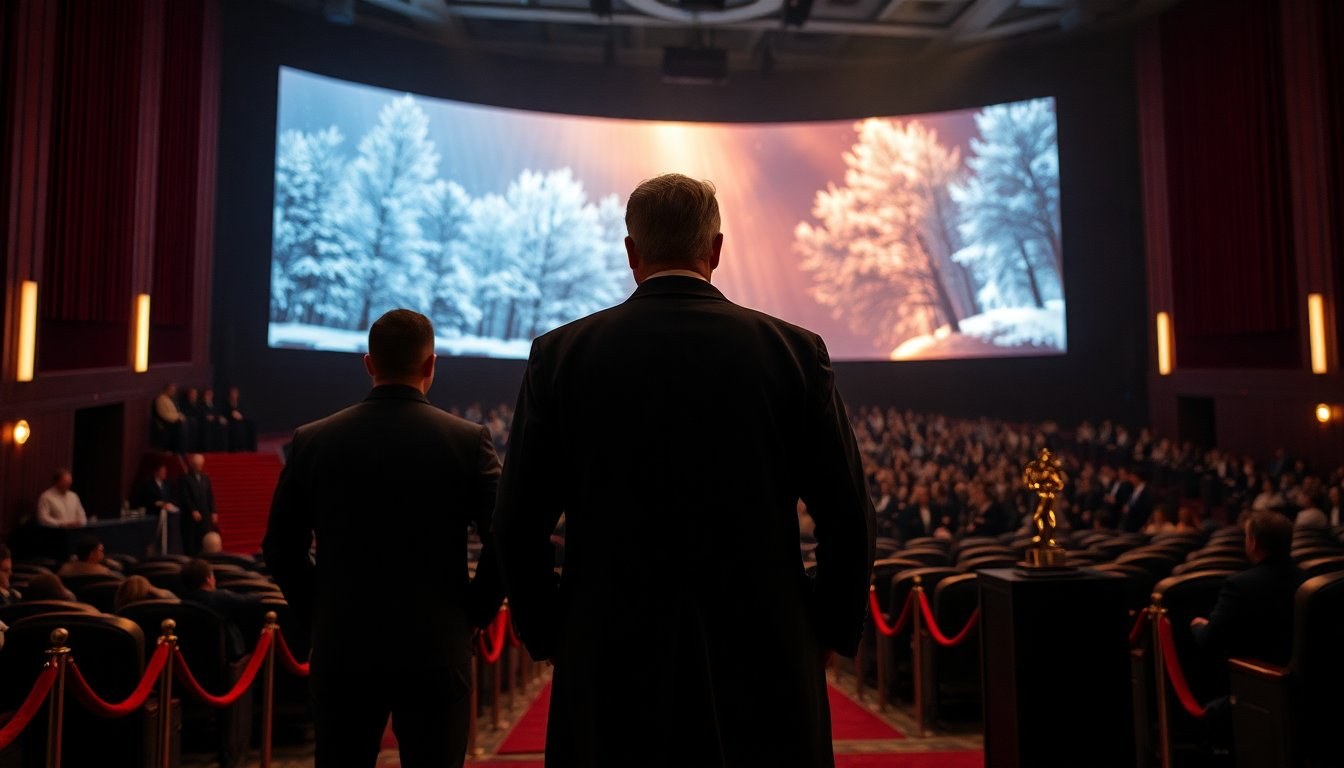
The announcement that Narnia: The Magician’s Nephew will open in wide IMAX on Feb. 12, 2027 (with sneak previews in IMAX beginning Feb. 10, 2027) and arrive on Netflix on April 2, 2027 reframes how industry observers view the film’s awards prospects. The move from an originally planned Thanksgiving release to a winter event creates a different kind of momentum: one built on spectacle, exhibition, and a stretched theatrical window rather than the compact fall awards corridor. For a movie that adapts C. S. Lewis’s origin tale and brings Aslan’s creation to the screen, that trade-off between timing and scale is meaningful.
The project’s pedigree is unmistakable: writer-director Greta Gerwig leads a cast including David McKenna, Beatrice Campbell, Emma Mackey, Carey Mulligan, Daniel Craig, and Meryl Streep, with a production team that lists Mark Gordon, Amy Pascal, and Gerwig among the producers. The score by Mark Ronson and Andrew Wyatt and a large visual-effects push are built to benefit from big-screen presentation. That emphasis makes the IMAX-first plan easier to understand: the distributor is prioritizing how audiences experience the film in theaters before it flows to a global streaming audience.
The release strategy: eventized opening and theatrical breathing room
Moving a high-profile fantasy into a February wide release is unconventional compared with the traditional awards-season playbook, but the decision has logic. By positioning the film as an eventized release in IMAX, the studio creates a window for box office legs and audience word-of-mouth that does not have to compete directly with late-year blockbusters. The longer theatrical presence before a planned streaming debut on April 2, 2027 allows the film to collect audience reactions, build momentum, and occupy premium screens for a sustained period. In effect, the release is optimized around theatrical experience rather than a compressive awards-campaign timeline.
Why February and IMAX matter
Choosing February and an IMAX launch minimizes head-to-head competition with major fall tentpoles and gives Narnia room to breathe on premium-format screens. The film’s heavy reliance on creature work and visual spectacle—particularly the cinematic realization of Aslan—plays naturally to large-format projection. That emphasis mirrors an intentional strategy: sell an experience that compels audiences to see it in theaters first. At the same time, this approach treats the awards window as flexible rather than fixed, acknowledging that strong critical and industry support can come regardless of release month.
Greta Gerwig’s creative priorities and the awards calculus
Gerwig’s past choices offer context for parsing this timing. Her career shows a consistent pattern of taking on beloved or established properties—then reshaping them with clear audience-first instincts rather than overt awards-stage engineering. From her breakout to her adaptations, her stated motivators often revolve around the creative challenge and the desire to make something that invites communal viewing. That sensibility helps explain why she and the distributor would elect to chase a theatrical event rather than hold firm to a late-fall awards-season launch: the immediate goal is to make a film that people will pay to see on the biggest screens.
Does this hurt or help awards chances?
It does not necessarily harm the movie’s chances with voting bodies. Recent industry patterns have shown that a late-fall premiere is no longer the only route to awards recognition; films released earlier in the year have built campaigns and accrued nominations. Netflix’s broader ambition for its prestige slate—still seeking a first Best Picture win—means the streamer will likely mount a full campaign if the film garners critical momentum. Ultimately, the decision signals a belief that quality, visibility, and cultural conversation can persuade voters irrespective of calendar placement, adopting a mindset more akin to “if you build it, they will come” when the aim is both audience and awards attention.
In short, the switch to an IMAX-centered February release crystallizes a strategy that prioritizes audience experience and exhibition over conventional awards calendaring. With a starry cast, an experienced production team, and creative leadership that has repeatedly balanced art and popular appeal, Narnia: The Magician’s Nephew will arrive in a format meant to showcase its spectacle—and leave the question of nominations to the reception it ultimately elicits from critics, audiences, and awards voters alike.


