
Hitster to be adapted for television by fremantle with initial commissions in three markets
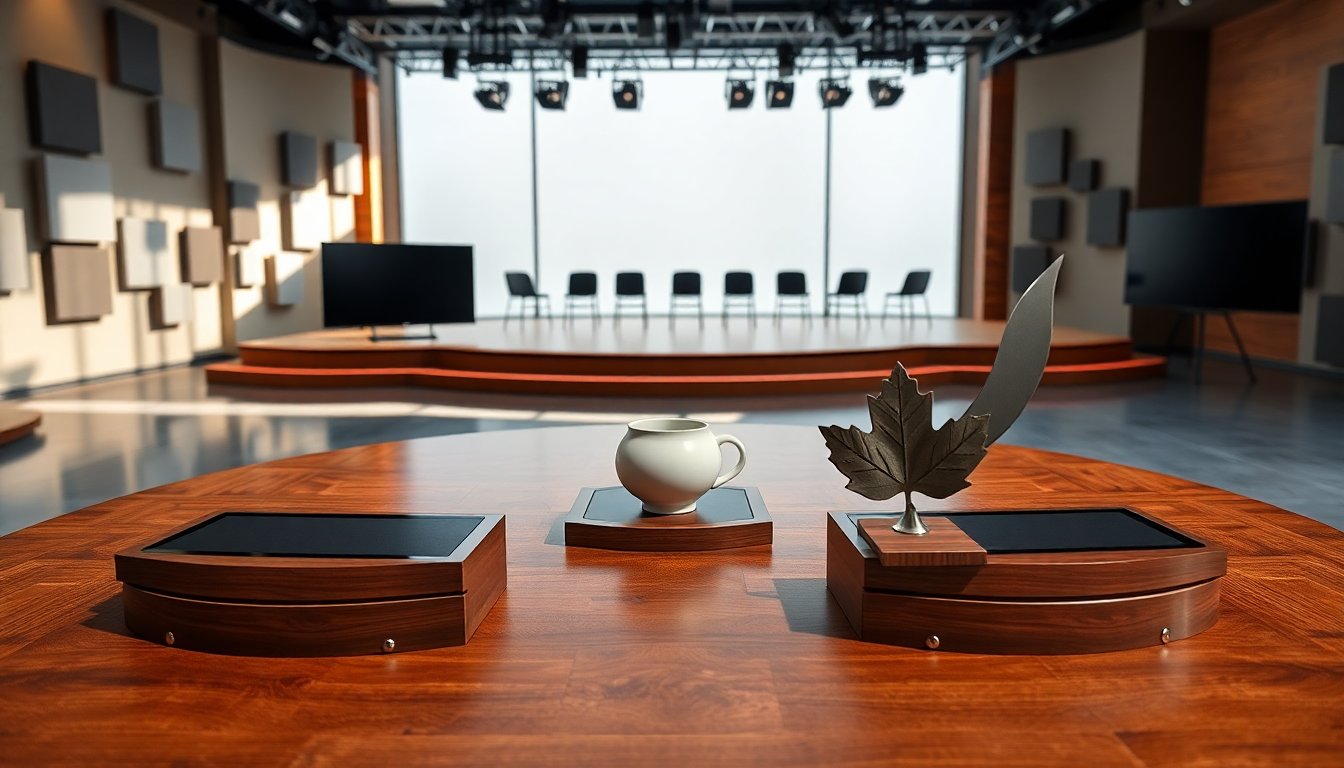
Hitster, a Stockholm-born party game, is being adapted for television by Fremantle and creative partners. Initial commissions have been awarded in the Netherlands, Germany and Canada. The move shifts the title from living rooms and shops to studio stages configured for communal, play-along viewing.
Invented by Markus Carleson and first played at a dinner party on June 24, 2019, the game grew through retail success across Northern Europe, Spain and Canada. It also reached holiday charts in the U.S. and U.K., helping build the audience that attracted broadcasters.
The television format aims to translate the game’s social mechanics into a broadcast experience. Producers say the studio versions will encourage audience participation and communal viewing, with sets and staging designed to support play-along interaction.
From a practical vantage, this adaptation highlights a recurring commercial logic. Sustainability is a business case when formats extend product lifecycles into media and merchandising. From an ESG perspective, producers and licensees will face decisions on packaging, set design and distribution that affect carbon footprint and circularity.
Leading companies have understood that converting a physical product into a media format can unlock new revenue streams while raising operational choices. For Hitster, the television project offers a pathway to reach larger audiences and to monetise IP beyond retail sales.
Fremantle holds international production and distribution rights for the television adaptation of Hitster. The company has assigned its Amsterdam-based unit, Blue Circle, to work with creative partner NewBe on developing the on-air format. Early production commitments include eight episodes for RTL4 in the Netherlands and six episodes for RTL Deutschland, the latter produced in partnership with UFA and NewBe. A Canadian rollout is planned, produced by Attraction and Productions Déferlantes in collaboration with Quebecor Content across multiple seasons.
These agreements represent Hitster’s first confirmed television adaptations. The deals were structured to secure local production expertise in each market while centralising format control and international distribution with Fremantle. From a commercial standpoint, the approach allows the format to scale quickly across territories while preserving consistent branding and format integrity.
Sustainability is a business case: from an ESG perspective, scaling a single, replicable format can reduce production redundancy and lower incremental resource use compared with bespoke local formats. Leading companies have understood that format exports can create recurring revenue streams with comparatively modest incremental carbon and cost footprints.
From kitchen experiment to studio spectacle
From kitchen experiment to studio spectacle, the format retains a simple but revealing origin. Markus Carleson created the mechanic to entertain private gatherings. He designed a timeline-based challenge that rewards instinctive musical recall rather than encyclopedic knowledge.
For television, the core idea remains intact. Two teams composed across generations listen to well-known tracks and race to place songs in chronological order. The team that correctly positions 10 tracks advances to a prize round. The format converts home-party tension into studio drama while preserving the informal energy of the original game.
Design and audience engagement
The show leverages cross-generational appeal to broaden audience reach. Younger viewers recognise contemporary hits; older viewers supply historical context. This dynamic creates natural moments of shared surprise and debate on air.
Producers emphasise pacing and staging to maintain momentum. Short song clips, visible timelines and real-time scoring sustain viewer attention. Interactive features for second-screen engagement and clipable moments for social platforms extend reach beyond broadcast.
From a commercial perspective, the format offers clear monetisation paths. Advertising, branded segments and format licensing can generate recurring revenue with limited incremental production complexity. Sustainability is a business case: the relatively compact production footprint can lower scope 1-2 emissions compared with large-scale formats while supporting repeatable international rollouts.
From an ESG perspective, the show’s low-complexity set and modular design favour circular design principles and easier lifecycle management. Leading companies have understood that integrating these elements reduces cost and reputational risk while improving scalability.
Practical implementation focuses on licensing clarity and replication rules. Standardised music clearance processes, consistent episode templates and audience interaction mechanics help local producers reproduce the format without diluting the original intent. Early adaptations have preserved the mechanic while tailoring cultural references and music selection to local markets.
Expected developments include expanded digital-first versions and short-form spin-offs optimised for streaming platforms. The format’s strength lies in its simplicity: a timeline, familiar songs and human recall that translates easily from living room to studio.
The format’s strength lies in its simplicity: a timeline, familiar songs and human recall that translates easily from living room to studio. Producers highlight the format’s instant playability and its capacity to generate conversation and shared anecdotes.
Who is making the show and where
Fremantle is presenting the series as a high-energy, feel-good experience designed to create communal moments and personal stories. The studio presentation leans into nostalgia through live clips, performances and animated crowd reactions. These elements are intended to encourage viewers at home to play along.
A set photo released exclusively to media shows warm orange lighting, lively presenters at consoles and packed audience tiers. The image reflects the original game’s party atmosphere and the studio’s focus on audience interaction.
Producers say the format is engineered to tap both pop-culture devotion and cross-generational competition. They describe the show as engineered to produce shareable moments and easy-to-recount segments.
They describe the show as engineered to produce shareable moments and easy-to-recount segments. Fremantle will assemble production teams that combine its own units with established local houses.
Strategic fit and international potential
Fremantle has paired its in-house teams with local producers to accelerate launch and adapt the format to market tastes. In the Netherlands, Blue Circle and NewBe will produce an initial eight-episode run for RTL4. Germany’s adaptation will pair NewBe with historic producer UFA, delivering six episodes for RTL Deutschland. Canada’s entry will be produced by Attraction and Productions Déferlantes, with backing from Quebecor Content and a planned multi-season commitment.
From a commercial perspective, the strategy spreads risk and shortens time to air. Local partners bring talent pipelines, studio capacity and regulatory knowledge. Fremantle supplies format control, creative oversight and international distribution networks.
From an ESG perspective, these partnerships can reduce travel footprints and support local crews. Sustainability is a business case when production hubs, crew reuse and regional supply chains lower scope 3 emissions.
Leading companies have understood that mixing global formats with local execution creates scalable returns. Fremantle’s recent work with NewBe on the Netflix reboot of Heartbreak High is cited as a precedent for successful creative alignment. The current slate aims to replicate that balance across three markets.
The current slate aims to replicate that balance across three markets. Fremantle is positioning the property as a plug-and-play option for broadcasters seeking mass-appeal, family-friendly programming. The company’s strategy has two clear goals: scale a proven retail and social format into broadcast success, and preserve the game’s DNA while adapting it for television.
Creative stewardship and brand partners
Fremantle will act as creative steward for the format, overseeing adaptations and brand alignment. It will assemble production teams that pair its in-house units with established local houses to ensure fidelity to the format and local resonance. Producers will guard core mechanics while permitting culturally specific touches that enhance viewer connection.
Broadcasters value the format’s simplicity and social nature. Its structure supports real-time viewer participation and creates discrete, shareable moments. Executives describe these moments as catalysts for appointment viewing and post-broadcast conversation.
From a commercial standpoint, the format offers clear advantages for commissioning partners. Its low-concept mechanics reduce production risk and shorten time to air. The predictable episode structure aids multiplatform distribution and advertiser integration. Leading companies have understood that repeatable formats with high social visibility can drive long-term audience loyalty.
Brand partnerships are being scoped to align with the show’s family positioning and interactive elements. Sponsors will be invited to participate in-program in ways that feel native to the format. This approach aims to preserve viewer trust while unlocking ancillary revenue streams.
From an ESG perspective, Fremantle is evaluating production practices and supply chains to limit environmental impact. Sustainability is a business case for broadcasters and partners who prize responsible production. Producers will be asked to report on scope 1-2-3 emissions where feasible and explore circular design options for set and prop reuse.
The company expects the format’s social dynamics and brand-friendly profile to support commissioning in diverse markets. Next steps include finalizing local production partners and pilot scheduling to test viewer engagement metrics and advertiser response.
Hitster moves into production amid wider interest
Jumbo Group and NewBe have worked with Fremantle to ensure the television version echoes the tabletop experience. The creative brief prioritized retaining the game’s competitive yet inclusive tone. Producers also emphasised music as an emotional connector across generations.
Fremantle’s global team says the goal is to shape televised moments that mirror the spontaneous stories and shared memories the original game inspires. Early design choices aim to preserve the communal feel and low-friction mechanics that drive group viewing.
As Hitster moves into production, the format will be watched for ratings and as a template for converting retail entertainment into scalable TV formats. Early commissioning across three markets indicates demand for shows that fuse nostalgia, music and simple mechanics.
Next steps include finalising local production partners and pilot scheduling to test viewer engagement metrics and advertiser response. Producers and broadcasters will monitor how well the televised format preserves the party-game spirit that launched the brand.