
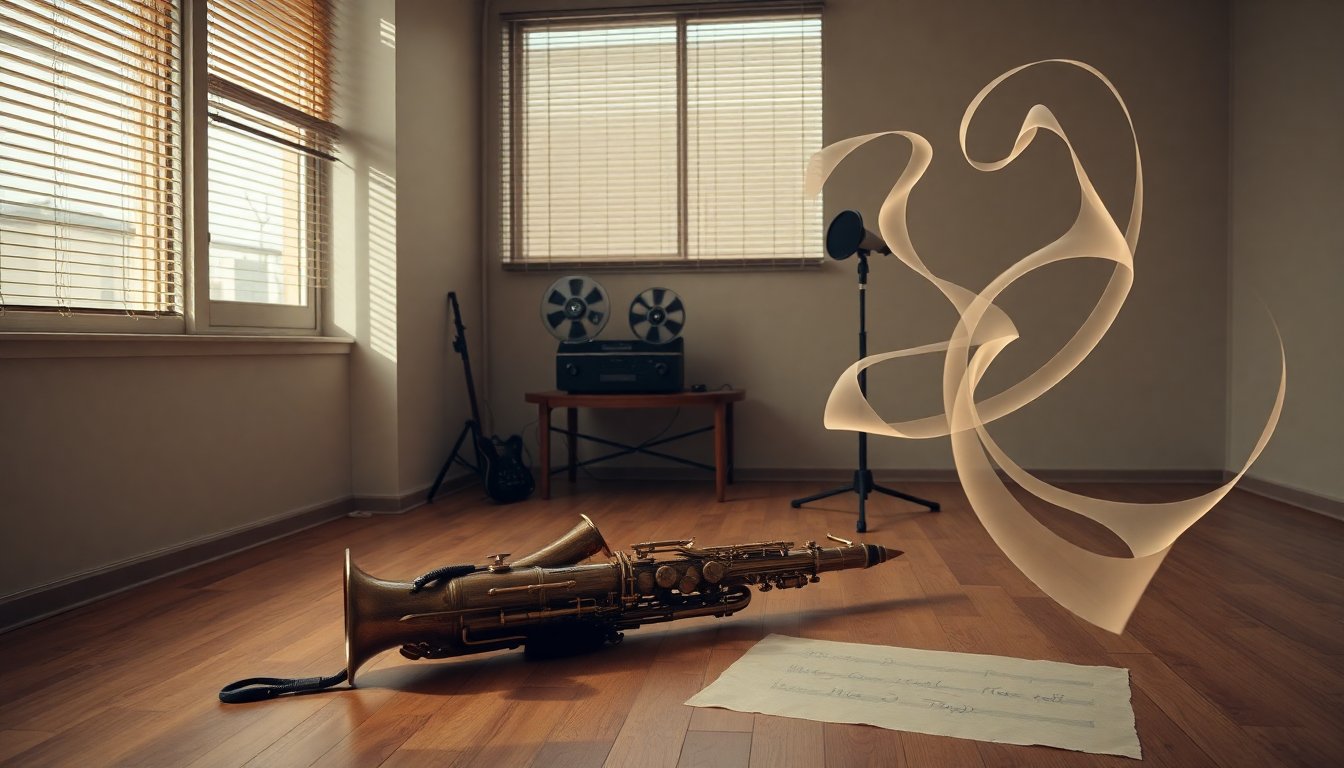
The composer Colin Stetson has a track record of unsettling listeners, from the films Hereditary and The Menu to the Red Dead Redemption games. For the Netflix miniseries Something Very Bad Is Going to Happen, Stetson consciously avoided reusing familiar motifs. Rather than repeating a past formula, he began in territory that might feel recognizable — low winds and sparse sax textures — then deliberately let the music evolve as the story unspools around Rachel Harkin, played by Camilla Morrone, and her fiancé Nicky Cunningham, played by Adam DiMarco. The result is a score that relocates dread into fresh sonic spaces while staying connected to character.
Stetson explains that the aim was to create a single, coherent musical arc rather than a patchwork of ideas. He describes the idea of a throughline — a guiding connective tissue that ensures the score changes feel purposeful and integrated. The pilot, written by Haley Z. Boston, Alana B. Lytle, and Ben Bolea, sparked him to pursue textures that mix the intimate and the unsettling. By leaning into both lo-fi intimacy and sudden, violent momentum, Stetson shaped a palette that supports the show’s left turns and human revelations instead of simply providing jump-scare wallpaper.
Three sonic pillars and unconventional sources
On reading the pilot, Stetson identified three core ideas that would ground his work. First, the physical setting — much of the story happens in a cabin — suggested using natural, tactile sounds; percussion derived from tree creaking becomes a rhythmic and atmospheric element. Second, he turned to the Mellotron for thematic material; the Mellotron is an electro-mechanical keyboard that plays back magnetic tape recordings, and its warped timbres offered a nostalgic yet ghostly quality. Third, Stetson amassed a palette of woodwinds, especially clarinets, to act as a cold, cutting countervoice to the organic percussive elements. These pillars allowed for interplay between the earthy and the eerie throughout the series.
How those choices shaped texture
Combining creaking wood with analog tape keys and reedy winds produces an unusual ensemble sound, one that resists easy categorization as simply orchestral or electronic. Stetson used the clarinets to deliver an icy, sometimes aggressive timbre that contrasts with the warm, creaking rhythms of the trees. The Mellotron provided thematic glue, giving recurring ideas a slightly off-kilter warmth. By marrying these textures, the score can feel familiar in one moment and alien the next, matching the narrative’s tendency to upend expectations while keeping an emotional center.
Workflow and episode-specific choices
Stetson’s process mixed pre-composition and reactive scoring. He wrote a large portion of the music before seeing final edits so directors could grasp the intended mood early on; for the climactic episodes, however, he composed directly to picture. He credits intense tracking sessions — setting up days to record whatever came to mind and then sorting through what resonated — as essential to finding the right material. In later episodes he took bolder detours: one installment leans heavily into synth textures, while the finale knots disparate elements together to resolve the series’ sonic journey.
Playing every instrument and carrying the load
For much of the score Stetson performed the parts himself, an approach that helped maintain control over the music’s nuances and ensured the sound world remained unified. He notes that the music undertakes a lot of storytelling responsibility — sometimes less obvious than dialogue but crucial for tone. Whether sketching fragments inspired by the script or refining cues to picture, his approach was decisive: read, commit, record. That immediacy can be heard in the way motifs breathe and shift with the characters’ emotional arcs.
Serving character and subverting expectation
Above all, Stetson wanted the music to illuminate human truth rather than reduce the story to a simple monster tale. The miniseries sets up situations in early episodes that pay off in emotionally satisfying ways, and the score’s evolution helps make those payoffs feel earned. By steering clear of repeating his prior haunted signatures wholesale, Stetson gives audiences a sound that supports the series’ focus on relationships and uncertainty. The result is a soundtrack that unsettles but also deepens the viewer’s understanding of Rachel and Nicky as they approach a wedding week full of surprises.
Something Very Bad Is Going to Happen is available to stream on Netflix, and listeners who follow Stetson’s trajectory will find this work both a continuation of his uncanny sensibility and a fresh step into new territory. The composer’s willingness to experiment with instrument combinations, recording techniques, and episode-specific directions demonstrates how a score can be both innovative and intimately tied to story.