
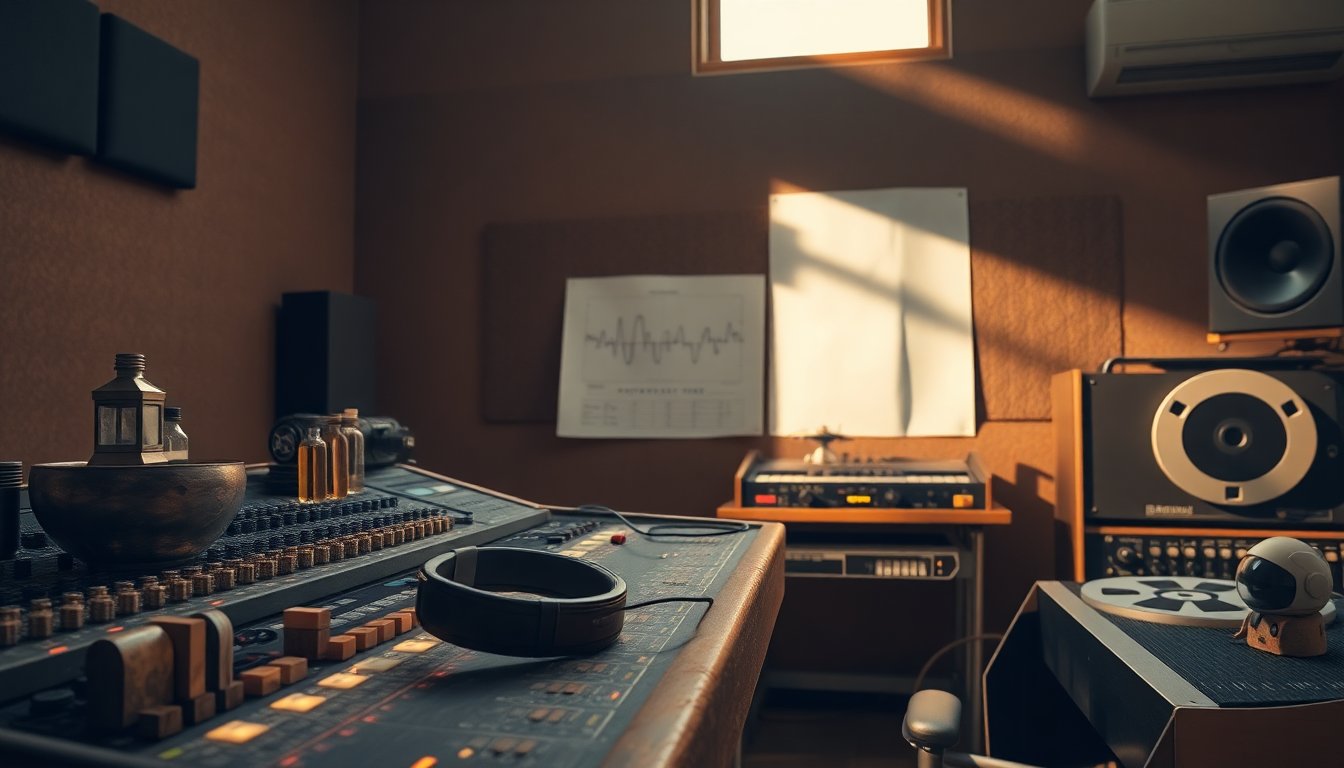
The London-based composer Daniel Pemberton approached Project Hail Mary with a clear brief from directors Phil Lord and Christopher Miller: make something large in scope yet rooted in human feeling. Early in the process Pemberton experimented with unconventional timbres, percussive detail, and vocal textures so that the music could support both cosmic awe and close-up friendship. The result is a score that benefits from theatrical playback—Pemberton himself encourages audiences to seek out screenings with a strong sound system so listeners can appreciate the subtle micro-details embedded in the mix.
Beyond simply underscoring scenes, the score had to wear many hats. It needed to express wonder at interstellar scale, underscore the film’s humour, and deepen the bond between Ryan Gosling’s Dr. Ryland Grace and the alien Rocky. That tonal balancing act is what the creative team labelled hopecore, a shorthand for optimistic, emotionally forward music that avoids sentimentality while remaining heartfelt. Pemberton treated that label as a compositional constraint to be explored, not a recipe to be followed literally.
Early collaboration and being on set with the edit
Pemberton’s working relationship with Phil Lord and Christopher Miller predates this production, and that trust allowed him to join the project at a formative stage. He sent demos to the directors and those sketches even made their way to Ryan Gosling on set, creating an unusual feedback loop between performance and score. Pemberton spent prolonged stretches in the edit suite in Los Angeles, writing cues adjacent to the filmmakers as scenes evolved, which let him adapt musical ideas in near real time. This close involvement was crucial for a film where the score runs almost continuously and must weave around dense dialogue and long, single-actor sequences.
Building an orchestra of uncommon sounds
Rather than rely solely on a conventional symphony, Pemberton assembled a hybrid palette that foregrounded touch and physicality. He collected an assortment of instruments and human-sourced noises—woodblocks, clapping, stomps, steel drums, and children’s choir—then combined them with manipulated voices and processed samples to create textures that feel both organic and novel. The aim was to make the music feel like an extension of human presence aboard the spacecraft, even when the imagery points to the vastness of space. Every physical imperfection—finger taps, breath noises, the thud of a hand—became part of the score’s DNA.
Crystal sounds and human percussion
One of Pemberton’s most distinctive choices was to feature the cristal baschet, an instrument built around glass rods played with wet fingers that feed resonant metal structures. He recorded performances with specialist Thomas Bloch in Paris, capturing an eerie, glassy timbre that reads as both fragile and otherworldly. In parallel, Pemberton embraced body-played rhythms—hand claps, foot stomps and even a week-long experiment where he recorded himself tapping a wooden floor while lying on his back for seven minutes to capture the precise intimacy he wanted in the cue titled Time Go Fishing. These choices reflect a compositional philosophy that prizes immediate, tactile sound over polished anonymity.
Voice as instrument
Vocals were treated not simply as lyric carriers but as raw material. Pemberton recorded choirs and solo singers and then transformed those recordings into sample instruments, stretching and shaping them into pads, percussive hits and odd noises that retain a human origin while sounding unfamiliar. The manipulation of voice allowed him to support emotional beats—humour, tenderness, danger—without resorting to familiar cinematic tropes. The singers’ timbres anchor the audience to the characters while the processing points outward, into the unknown.
Balancing intimacy with the cosmos
The core challenge was reconciling two different musical impulses: the grandeur expected of space cinema and the intimacy required for a story about friendship. Pemberton avoided leaning heavily on past conventions and instead created motifs that could scale: small, human gestures that could expand into sweeping statements when the moment demanded it. The score’s pacing reflects that strategy—quiet, tactile moments build or recur so that the larger, more majestic cues land with emotional weight. The album clocks in at roughly two hours while the film runs two hours and thirty-six minutes, which helps explain why the score occupies such a prominent role throughout the picture.
Risk, iteration, and the freedom to fail
Pemberton emphasizes that a lot of the final score only came together because the production allowed for early experimentation and failed attempts. He wrote cues that were intentionally odd—like the track titled Erratic Maneuver Detected, which uses woodwinds, vocal snippets and frenetic percussion to introduce Rocky’s ship—and then refined the successful ideas into recurring material. The creative process involved throwing many strange ideas at the wall, keeping what resonated, and letting the emotional through-lines dictate which motifs endured. For Pemberton, that openness to risk is what made it possible to craft a score that feels both new and deeply human.
Ultimately, the music of Project Hail Mary is designed to be experienced as part of a communal, theatrical encounter. Pemberton’s blend of idiosyncratic instruments, body-sourced percussion, and carefully shaped vocal textures aims to make the audience feel the film’s optimism and curiosity at a visceral level. If you want to hear the tiny details he hid in the mix—the wooden taps, the crystalline resonances, the breath-like samples—try the loudest, cleanest screening you can find. The film’s emotional payoff owes as much to those micro-elements as to any visual effect.