
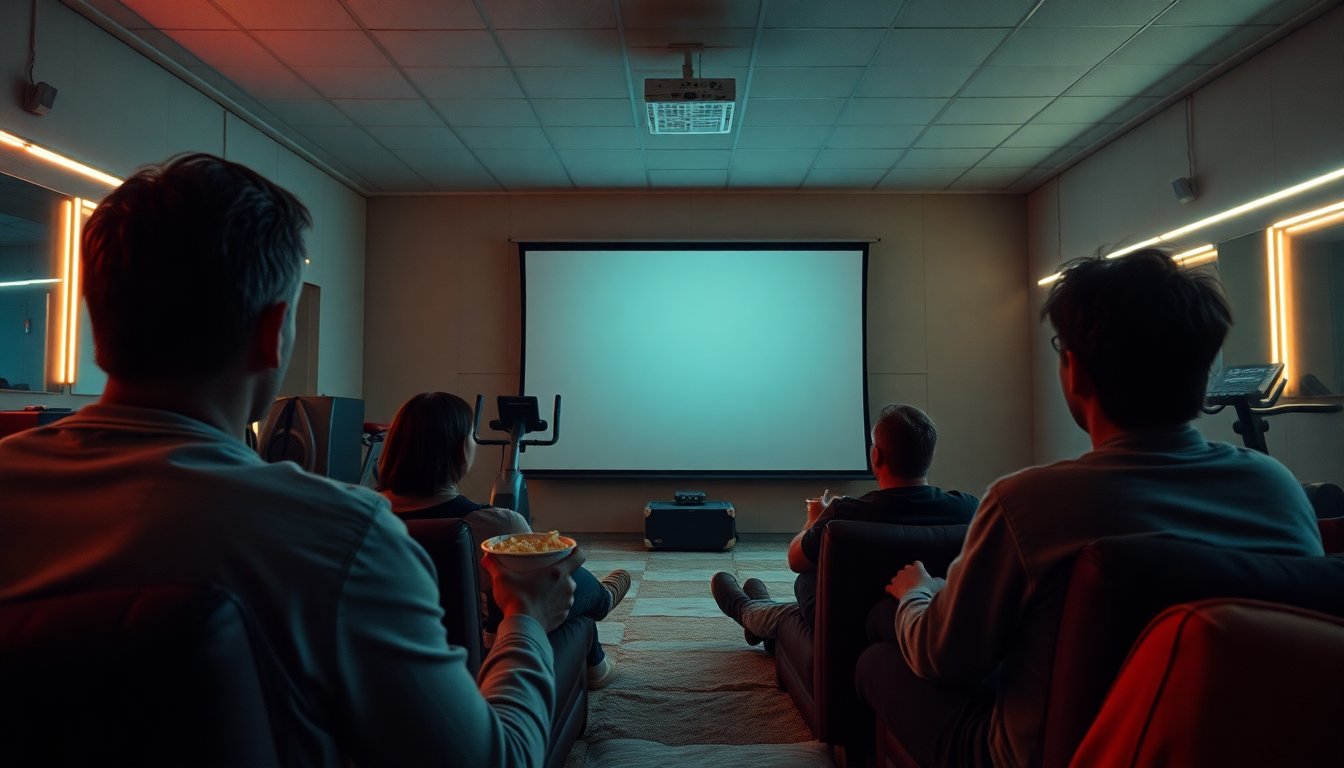
The ritual is simple: every Friday, IndieWire After Dark curates a late-night screening and asks colleagues to join the communal act of rewatching oddball cinema. One week the bait was obvious — a neon-soaked, demon-haunted fitness club called Death Spa (1988) — and the usual volunteer call produced a surprising reply from veteran critic David Ehrlich. What began as a lighthearted nudge became an exploration of why certain films survive as cult film curiosities. That exchange illuminated how a movie made to be ridiculous can still provoke serious conversation about taste, genre, and context.
Before the projector rolls, it helps to name what we mean by our terms: an midnight movie is a film adopted by late-night audiences for its oddness, transgressive tone, or communal viewing pleasures; a so-bad-it’s-good label suggests intentional or accidental excess that becomes enjoyable through shared response. In this frame, Death Spa — also marketed as “Witch Bitch” and directed by Michael Fischa — behaves like a text built for midnight revelers: brash kills, synthetic music, and an aesthetic that refuses to be somber. The film’s co-writers, James Bartruff and Mitch Paradise, stitch together melodrama, techno-paranoia, and slasher shenanigans in a package that asks to be yelled at, riffed on, and loved for its audacity.
The anatomy of a midnight favorite
Midnight films endure because they offer an experience more than a tidy lesson. At heart, these pictures trade on extremes: costume, gore, and spectacle amplify emotional responses, and the viewer’s role shifts from passive consumer to active participant. Death Spa (1988) trades in gym culture anxieties — vanity, competition, and performative fitness — while channeling a certain 1980s excess. The movie’s high-concept setting, a hi-tech Los Angeles health club haunted by jealousy and a vengeful spirit, becomes fertile ground for inventive set-piece deaths and memorably bizarre one-liners. When a cult crowd encounters a film like this at midnight, the pleasure often comes from communal astonishment rather than solemn appraisal.
What makes Death Spa special
The movie’s charms are specific: bright production design, committed overacting, and a willingness to try anything for a laugh or a shock. Compared to contemporaries such as Killer Workout, Death Spa pushes harder into surreal, body-focused violence and embraces an almost competitive inventiveness in its death scenes. Its soundtrack of synths and pop flourishes places it in conversation with European horror traditions while remaining unapologetically American in tone. Michael Fischa stages sequences that feel modeled on arcade logic — a world governed by cruelly arbitrary hazards — which is exactly the kind of logic that fuels midnight movie fandom.
Killer machines and human vanity
The film doubles as a comic indictment of performative fitness culture: characters often seem more interested in display than in empathy, a flaw the ghost exploits. Devices — from exercise equipment to a smoothie machine — become instruments of doom, and the spectacle underlines a moral that is as ridiculous as it is grim. That intersection of social satire and corpses explains why viewers laugh and flinch in equal measure. The effect is not subtle, but the bluntness is intentional: by exaggerating vanity and gadget worship, the film becomes a ghastly mirror for behavior that still feels recognizable.
Why critics with different tastes can both win
Inviting a critic like David Ehrlich — someone known for precision and an eye for craft — into a viewing of Death Spa (1988) was an experiment in taste exchange. The point was never conversion; it was curiosity. When serious critics and guilty pleasures collide, both perspectives illuminate different values: one catalogs ambition and artistry, the other celebrates the pure thrill of cinematic mischief. Those conversations matter now as much as ever, because disagreement about movies can be generative instead of divisive. Sharing a strange film is an act of openness to someone else’s idea of fun.
Where to watch and what to bring
For those ready to test this idea at home, Death Spa is currently available streaming free on Tubi. Approach it as you would any midnight movie: gather a small audience, bring a tolerance for loud synths and glittering bad taste, and prepare to talk afterward. Whether you come for the inventive kills, the cultural satire, or to see how a critic reacts, films like this prove that cinema’s margins still matter. A late-night screening can turn a silly cult picture into a lively lesson about why watching together changes what a movie can be.