
The Netflix adaptation of One Piece has taken a deliberate approach to pacing, choosing to rearrange certain story beats so that moments which occur later in the manga and anime can appear earlier on screen. In season 2, that strategy manifests as a brief but significant flashback that places a familiar face in the narrative sooner than readers originally expected. This choice functions both as a subtle nod to existing fans and as an emotionally resonant scene that stands on its own for newcomers.
At the heart of this adjustment is the appearance of Brook during a sequence centered on the whale Laboon and the crew who once sang to him. The scene is compact, almost incidental if you do not recognize the character, yet it supplies background that deepens the whale’s relationship with the musicians who loved him. By seeding this connection early, the series reframes later events and heightens the poignancy of the original tragedy without demanding prior knowledge.
Why the early reveal matters
Introducing Brook ahead of his manga debut changes how viewers experience the Laboon interlude. In the source material, the Rumbar Pirates appear in a flashback and the true identity link to Brook is revealed much later, making the reunion and its echoes more of a delayed emotional payoff. Here, by showing the violinist among the sailors who entertained the whale, the live-action series makes the bond immediately tangible. The result: the audience senses that Laboon was a cherished companion, not merely an abandoned creature, and the music he loved—Bink’s Brew—lands with deeper meaning because the singer is no longer an unknown name.
Who is Brook and what this scene reveals
Brook’s role and tragic arc
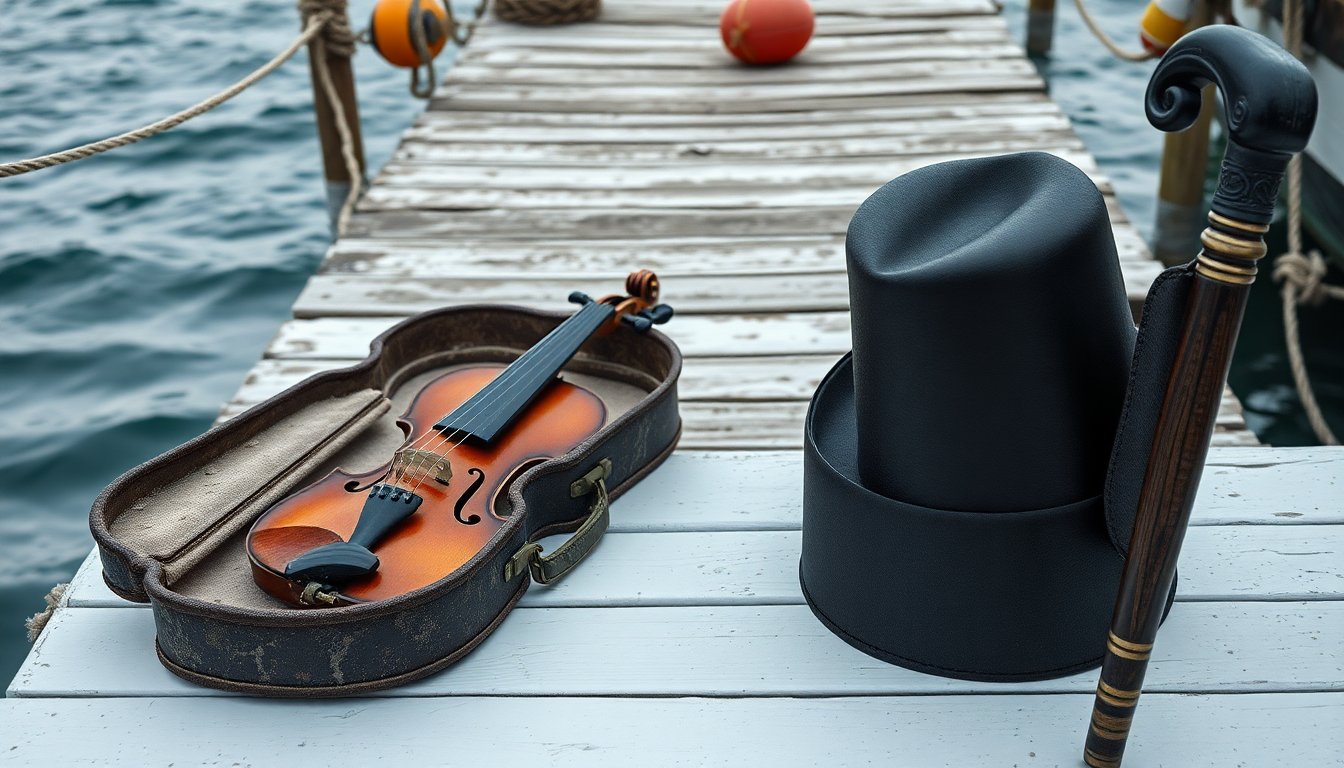
Brook is the musician who sailed with the Rumbar Pirates, a crew defined by their love of song and the whale they befriended. In the larger canon, their journey into peril leads to devastating loss: illness and hostile attacks decimate the crew, and while the rest die, Brook’s fate diverges because of the Yomi Yomi no Mi, sometimes described as the revive-revive fruit. That power grants a single resurrection, but in Brook’s case his soul returned so late that he rose as a skeleton. The live-action flashback gives viewers a brief glimpse of Brook as a living, warm-hearted musician before that dark turn, emphasizing the human cost behind the later skeletal image.
Performance and casting
The role is played by Martial Batchamen, who brings a gentle exuberance to the part of the violinist. His portrayal slips seamlessly into the scene: he laughs in the signature way many fans will recognize, offers comfort through music, and promises a reunion that becomes a haunting regret in the original arc. This cameo functions as both faithful homage and dramatic shorthand—Batchamen’s presence makes the promise of reunion believable and gives the whale’s loneliness a clearer origin.
How the scene reshapes Laboon and Luffy’s interaction
One of the most notable shifts in the live-action adaptation is how the show handles Luffy’s encounter with Laboon. Instead of turning to a physical confrontation, the sequence leans on song and memory: Luffy echoes the tune Bink’s Brew, invoking the same melody that once soothed the whale. This creative choice aligns with Luffy’s character—his instinct is to connect rather than to fight—and it underscores a theme central to both versions: music as a carrier of memory. By allowing Luffy to comfort Laboon through song, the adaptation emphasizes continuity between generations of pirates and the way certain melodies can preserve love even after loss.
Implications and fan reception
For long-time followers, the early appearance of Brook reads like thoughtful fan service: it rewards recognition without demanding it, because the scene holds emotional weight for all viewers. For newcomers, the moment simply adds depth to the whale’s backstory and strengthens the episode’s emotional core. The adaptation’s decision demonstrates how rearranging chronology can retain the spirit of the original while creating a version that suits the demands of live-action storytelling. Whether the series will eventually reach Brook’s later, more famous form as the skeletal musician among the Straw Hat Pirates remains a promising thread for future seasons.
Overall, the early introduction of Brook in Netflix’s One Piece season 2 illustrates an adaptive choice that balances respect for source material with smart narrative economy. It offers a quiet thrill to fans who spot the reference and a meaningful, standalone beat for viewers discovering the story for the first time.