
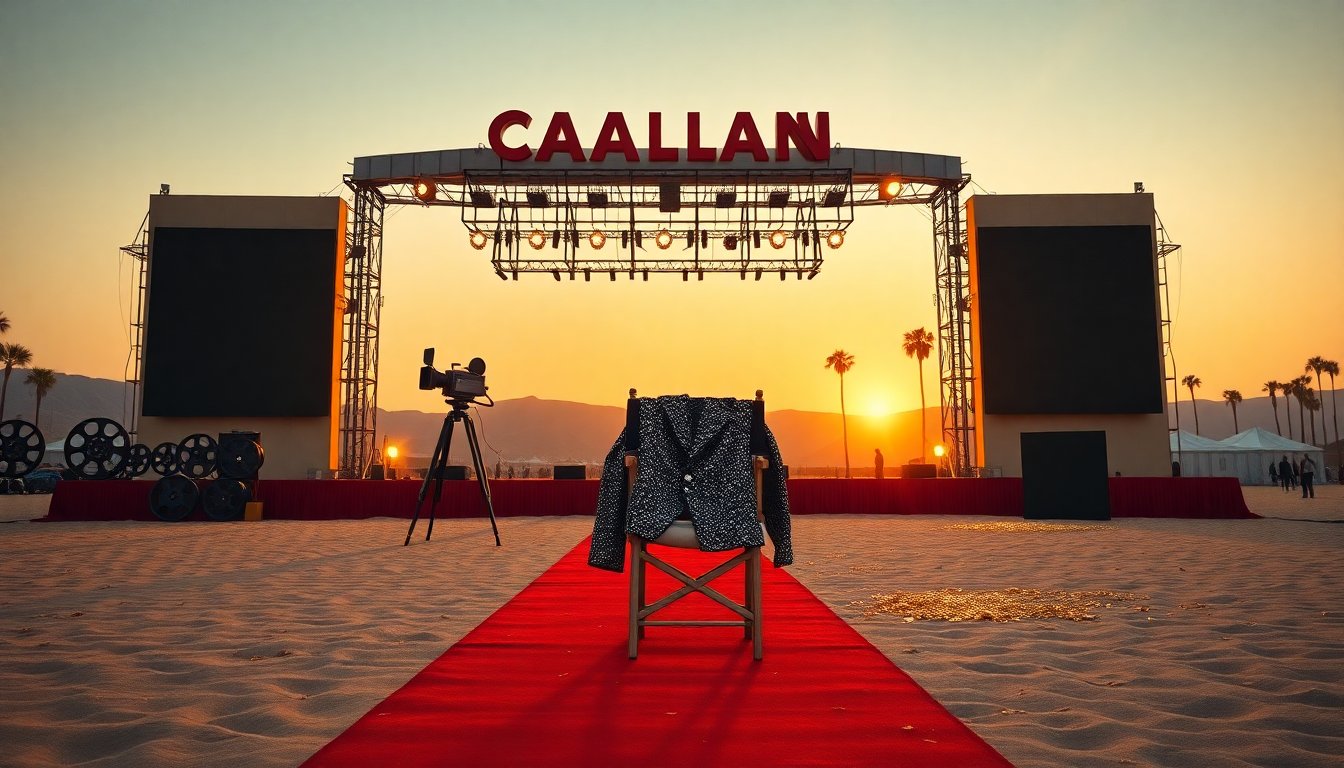
The rise of Sabrina Carpenter from festival opener to main-stage star reached a clear milestone on Friday, April 10, 2026, when she closed out the first night of Coachella 2026 as the festival’s headliner. The performance blended pop hits with staged vignettes and celebrity cameos, creating an evening that was part concert, part short film festival. Carpenter framed the evening around Sabrinawood, a self-styled Hollywood playground that stitched together glitzy set pieces and theatrical transitions so the crowd could move through song like scenes in a movie.
A cinematic opening and arrival
Carpenter opened with a striking black-and-white film sequence that set a noir tone: a gravel-road traffic stop with a gravelly-voiced officer played by Sam Elliott, followed by the singer’s real-world arrival in a vintage car. She stepped down a catwalk modeled after a miniature Walk of Fame and launched into “House Tour”, immediately marrying the film intro to live spectacle. The choice to begin with a short cinematic prologue reinforced the show’s through line: this was a night of staged moments rather than a plain concert. The production design—Hollywood Hills facades, a rising sign that read Sabrinawood, and a shifting stage—kept the visual narrative in motion while the songs tied the scenes together.
Set design, costumes and theatrical shifts
Throughout the set Carpenter moved between deliberately crafted environments: a recording studio, a dive bar, a dance rehearsal room and finally a Broadway‑like cityscape. Costuming echoed those changes with dancers alternating between dog suits for “Manchild”, black-feathered burlesque showgirls for “Feather”, and circus-inspired ensembles later in the show. Those transformations were part of the appeal; the night felt like a sequence of vignettes where wardrobe and choreography signaled a new scene. Carpenter’s humor threaded the segments—she teased the audience about her 2026 festival appearance and the ambition behind this larger, more cinematic headlining slot.
Cameos and spoken interludes
Several high-profile guest moments punctuated the evening. Susan Sarandon delivered an extended monologue from a car that reflected on youth and ambition, while Will Ferrell appeared as a beleaguered electrician in a comic bit that returned the set to performance. The voice of Samuel L. Jackson dropped into a mid‑set moment to egg on a song, and other familiar faces surfaced in short theatrical beats. These cameos functioned as connective tissue, providing pauses in the musical flow and amplifying the Hollywood motif that underpinned the entire production.
Choreography and memorable visual moments
Movement and staging were integral to the event’s storytelling. Carpenter and her company used a runway, platform throne lifts, and interactive crowd moments—inviting phone lights to become a field of stars—and even a water effect that drenched the front rows during the finale. A throne rose from an old car as she sang “Tears”, while a fountain activated below, blending cheeky spectacle with staged theatrics. These choices favored cinematic optics over stripped-down intimacy, and they reinforced the show’s identity as a pop-meets-Hollywood tableau.
Song selection and live premieres
The setlist leaned heavily on material from Short n’ Sweet and Man’s Best Friend, with several live debuts including “When Did You Get Hot”, “Sugar Talking” and “We Almost Broke Up Last Night”. Carpenter wove in earlier viral hits such as “Espresso”, and the arrangement moved between playful country flourishes, pop anthems and sultry burlesque-inflected numbers. Reporters noted that the show contained roughly twenty songs and stretched to a festival-length runtime that allowed for both spectacle and moments of direct fan interaction. The artist’s recent commercial momentum—highlighted by awards and arena tours—was on display in how confidently she navigated big production cues alongside crowd-pleasing choruses.
Reception and what it signals
The response was split in places—some festivalgoers left during the longer spoken segments while others stayed riveted—but overall the performance read as a statement of scale. Carpenter closed with an emotive sequence that took the audience from the mid-tempo “Juno” into the ecstatic rush of “Espresso”, and finished with a theatrical exit: a drive-off in a classic car after “Goodbye” and “Tears”. For many, the night underscored her transition from rising pop personality to a headline act who uses cinematic concepts and celebrity cameos to build a coherent stage world. Whether fans called it audacious or indulgent, the set made clear that Carpenter is shaping a distinct live identity—one that treats a festival slot as a chance to tell a story as much as to play a setlist.