
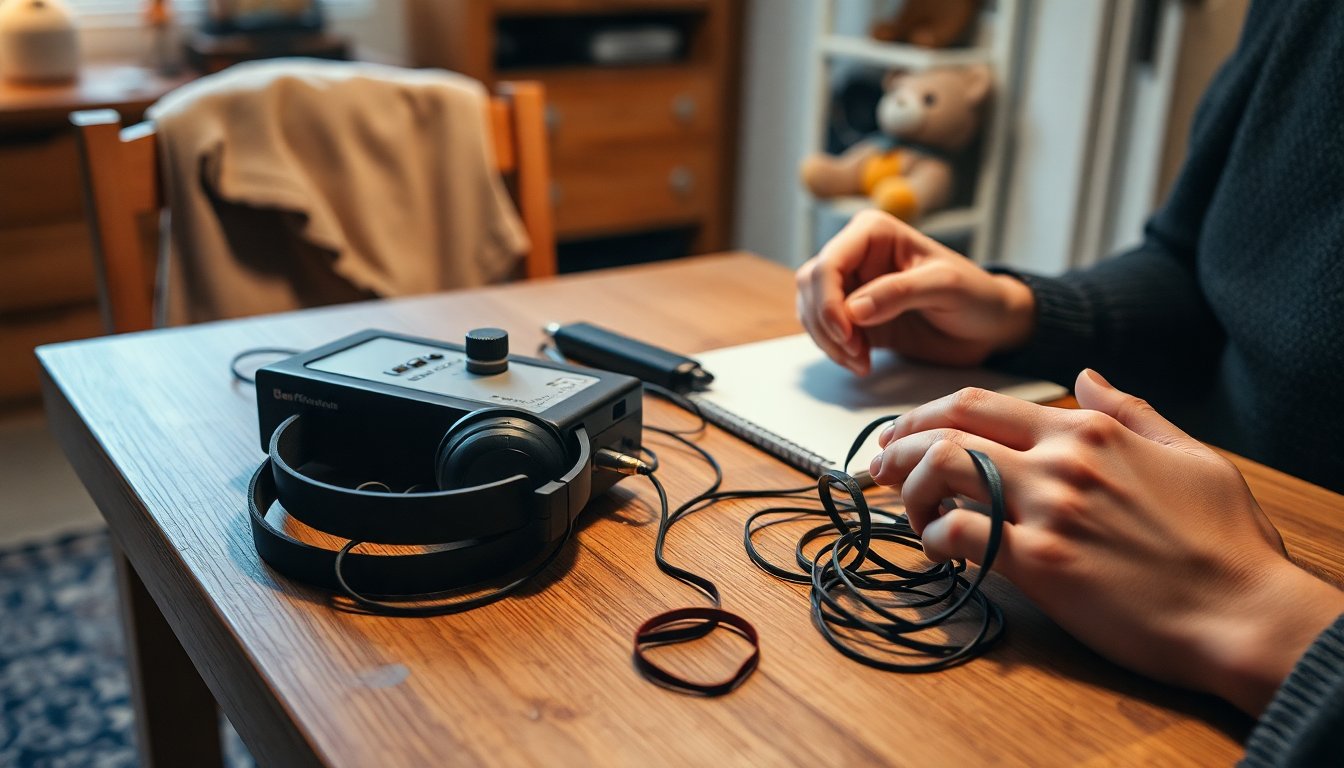
Undertone began as a private reckoning and evolved into a compact, eerie feature that has been moving festival audiences. Director Ian Tuason used his own house — the place where the events that inspired the story actually occurred — as the film’s primary set, and cast Nina Kiri as Evy, a podcaster navigating grief and the mechanics of a strange recording that may be unraveling her. The movie blends intimate domestic caregiving with an escalating supernatural or psychological thread, and its production choices underscore that duality.
The film’s structure places one performer at the center for long stretches, prompting comparisons to an one-woman show staged for the camera. That concentrated focus forces viewers to track small gestures and sudden noises, and it makes each decision about sound and space feel consequential. Audiences first encountered the movie at genre festivals — including a notable Fantasia screening last summer and a subsequent presentation at Sundance — and the festival response helped propel A24 to acquire distribution for a theatrical release on Friday, March 13.
From personal memory to cinematic setting
Tuason’s script draws directly from his caregiving experience and the complex feelings it produced. Shooting in the actual family home transformed the set into more than a backdrop: it functioned as a repository of memory, smell, and small domestic details that anchor the film’s emotional stakes. The production was intentionally lean — a tiny crew working closely in tight rooms — which preserved a sense of immediacy. That intimacy is important, because the movie isn’t selling spectacle so much as the suffocating, repetitive rhythms of looking after someone who is dying and the self-questioning that follows.
Evy: performance, layers, and the podcast device
Portraying a listener and a performer
Kiri approaches Evy as a character who performs in different registers: private caregiver, public podcaster, and a person increasingly under strain. To create those shifts she balanced attention to dialogue with an awareness of how voice work functions on a recorded medium. The recorded material Evy examines — the disturbingly raw tapes about a couple named Jessa and Mike — serves as a mirror that slowly distorts Evy’s inner life. Adam DiMarco provides the offscreen presence of Justin, Evy’s longtime friend and podcast partner, largely as a voice in the dining room scenes, while Michèle Duquet appears as Evy’s ailing mother in the upstairs room where much of the film’s heartbreak lives.
Caregiving, guilt, and the looped horror
The film treats family duty as a source of real horror: the repetitive questions, the spiritual weight of Catholic guilt, and the replaying of moments that feel like mistakes. Tuason and Kiri describe that experience as a kind of loop — denial, temporary escape, and then the return to responsibility that can trigger renewed shame. This cyclical pattern becomes an internal engine for the movie’s tension; it’s what makes the small, domestic beats feel ominous. The recordings that Evy and Justin dissect are both plot device and psychological trap, pulling the protagonist deeper into a narrative that echoes her own unresolved feelings.
Production choices, festival life, and audience experience
The shoot was compact and collaborative: early production used an acting double for the offscreen partner and later reshoots brought in DiMarco for a handful of live-upstairs interactions, enhancing the rapport heard in the podcast sequences. That improvisational, resourceful approach kept the focus on performance and sound design rather than visual effects. Festival reactions — loud, immediate, and visceral — convinced A24 the film could find a broader audience. The distributor’s decision to schedule a theatrical opening on Friday the 13th leans into the film’s tonal identity while also recognizing its sensory strengths: punchy audio mixes and carefully staged silences that reward attentive viewing in a dark room.
How to watch and what lingers
Both Tuason and Kiri have spoken about the viewing context. Kiri has suggested that the film works in different settings — alone at home, in a packed theater, or somewhere in between — but she acknowledges the power of theatrical sound for a movie that relies on sudden, intimate noises. What lingers after the credits is less a tidy explanation than a tonal aftereffect: the sense that memory can fold into story, that guilt can be its own haunting, and that a home can be both refuge and the site of unresolved dread. The outcome feels deliberately open; viewers leave with questions about what is supernatural and what is the echo of human grief.
For audiences following the film’s path from small-house production to festival standout to distributor pickup, Undertone offers an unusual case study in how modest resources and personal material can produce something affecting and unsettling. The film’s economy of means foregrounds performance and sound, creating a claustrophobic world where every ordinary gesture might be the spark for something larger. As the conversation around the movie continues, its success underscores how intimate storytelling can find a wide audience when the work remains honest to its source.