
Yuen woo-ping returns to director’s chair with emphasis on practical craft
Yuen Woo-ping has returned to directing with a deliberate aim: The film, Blades of the Guardians, prioritizes practical production methods over digital effects.
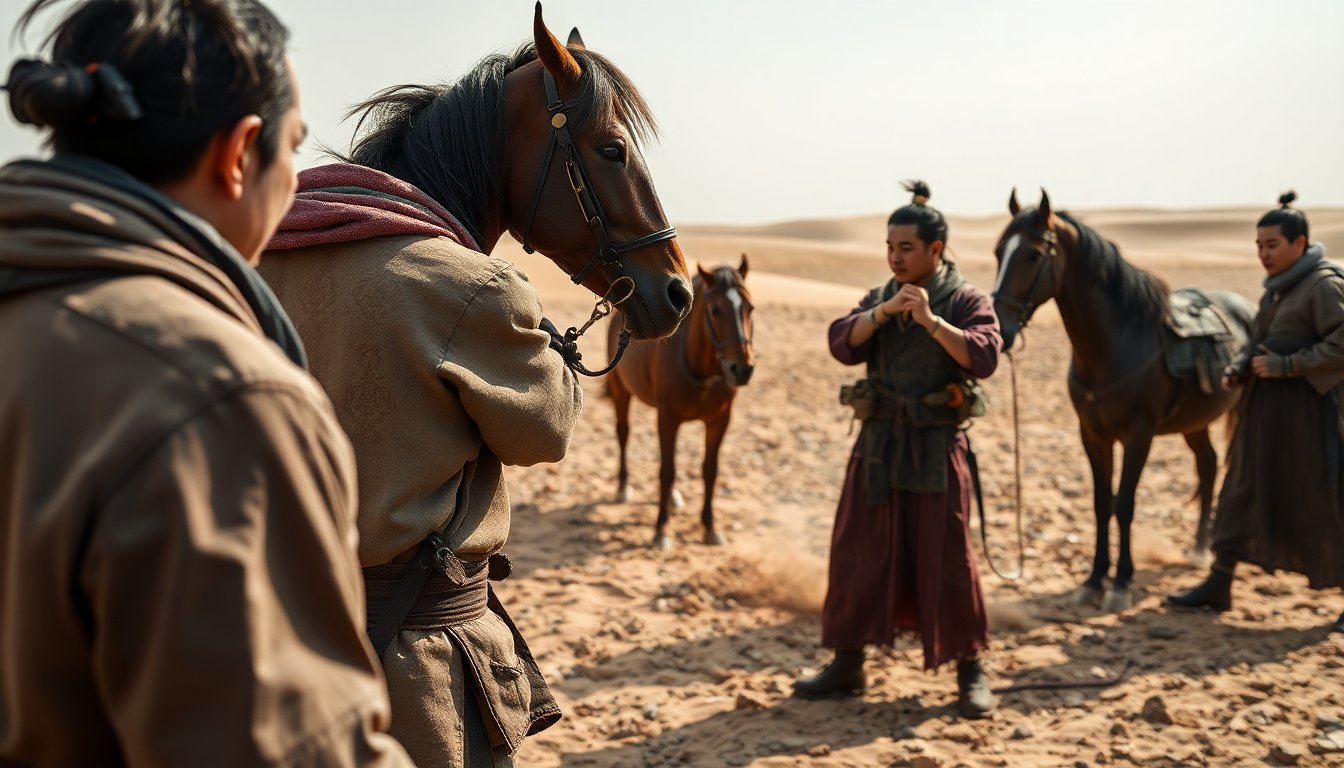
Production favored tangible elements. Scenes were shot on desert locations and the crew used real horses. Recruits were selected for their ability to perform demanding choreography without digital substitution.
The creative choice shifts emphasis to physical craft and the visual grammar of martial arts cinema. Fight staging, camera movement and on-set choreography are foregrounded rather than heavy post-production enhancements.
Producers say the approach intends to evoke the textures and kinetic immediacy of earlier wuxia classics. Observers note the decision reduces reliance on visual effects and highlights performers’ physical skills.
The film’s release schedule and distribution details have not been specified.
The film adapts Xu Xianzhe’s graphic novels set in the Biao Ren universe. It follows a mercenary known as Biao Ren across the Western Regions during the Sui dynasty. What begins as an escort mission evolves into a political and personal crucible. The journey serves both as a literal trek across harsh terrain and as a mechanism for revealing character. North American distribution was handled by Well Go USA, and the film opened widely on February 26, .
Practical filmmaking and the return of old-school techniques
The production emphasizes practical effects and choreography over digital augmentation. Fight sequences rely on staged combat, wire work, and carefully rehearsed group movements. Production design favours physical sets and location shoots to evoke the period landscape. Costume and prop work were executed to mirror the visual texture of the source material.
Director Yuen Woo-ping and his team framed scenes to prioritize performer movement and camera placement. That approach places physical craft at the centre of storytelling. The result is a film that foregrounds tactile filmmaking techniques commonly used in classic wuxia cinema.
The result is a film that foregrounds tactile filmmaking techniques commonly used in classic wuxia cinema. Yuen approached production with a persistent philosophy: prioritize in-camera solutions whenever feasible. He scouted and filmed in desert locations to capture the landscape’s scale and texture. He staged sequences with live horses and relied on trained stunt performers to execute complex action safely and convincingly.
Yuen said many signature Hong Kong devices originated from practical necessity. Most notably, he used wirework deliberately as an expressive tool rather than a shortcut. In this film those techniques are integrated into choreography and mise-en-scène to reinforce tone, heighten physicality and preserve a palpable sense of craft.
Building on those techniques, Yuen organized the choreography around three guiding principles: clarity, weight and consequence. He treated each confrontation as a form of staged conversation. Every beat is designed to carry narrative weight and reveal character. Unnecessary flourishes are removed so that action always advances story and emotional stakes.
That aesthetic shapes several of the film’s set pieces. A dramatic desert clash emphasizes footing, line of attack and the cost of each move. An extended, multi-actor sword sequence foregrounds timing, spatial awareness and physical commitment. In both examples, the choreography is intended to read clearly on camera while retaining a palpable sense of craft.
Assembling a cast built for action and performance
Assembling a cast built for action and performance
After prioritizing clarity in choreography, the production faced a practical casting challenge: performers had to act convincingly and execute demanding stunts. The creative team recruited extensively from wushu practitioners and veteran action actors to meet that requirement. The film’s core combat trio — Wu Jing, Jet Li and Max Zhang — are all martial arts champions. Their shared training provides an immediate physical shorthand on screen and enables fluid, balletic exchanges in the film’s most elaborate clashes.
The production pairs generational talent with cross-genre performers to widen the film’s reach. Nicholas Tse and Yosh Yu lend contemporary action credibility. Veteran actor Tony Leung Ka-fai adds dramatic weight. The cast also features pop-culture figures, including Jun (Wen Junhui) of Seventeen and Winwin of NCT, which broadens appeal across demographic groups. Yuen said casting aimed to reflect the spirit of Xu’s graphic characters while balancing stunt proficiency with acting range. Casting choices prioritized performers who could sell physicality and emotion in equal measure.
Jet Li’s high-profile return
Jet Li’s high-profile return anchors several of the film’s most physically demanding scenes. Director Yuen told production that casting Li opposite Wu Jing was essential to make their confrontations plausible. Li’s presence intensifies the choreography and raises the standard for fight staging across the cast. Co-stars reported adapting rehearsals and timing to match the rhythm of Li’s sequences. Early critics and preview audiences singled out his cameo as a standout element that reconnects the film to the aesthetics of traditional martial arts cinema. The performance functions both as a technical benchmark and as a thematic bridge between eras of Hong Kong and mainland action filmmaking.
Training, tone and generational exchange
Building on the film’s role as a technical benchmark and as a thematic bridge between eras of Hong Kong and mainland action filmmaking, the production emphasised training, tone and generational exchange. Several younger cast members underwent intensive physical preparation to secure their roles. The director insisted that each performer develop a distinct voice within the genre rather than imitate established masters. That approach is intended to generate new ideas within a familiar framework while preserving the film’s stylistic lineage.
Yuen’s career — which spans choreography for Jackie Chan-era films and creative work on international titles such as The Matrix and Crouching Tiger, Hidden Dragon — underpins his insistence on combining practical daring with considered characterisation. The film’s choreography and stunt work are therefore presented as extensions of character, not merely spectacle.
Structure, reception and possibilities for continuation
The film’s structure balances extended action set pieces with quieter sequences that develop relationships and motives. That balance aims to situate physical feats within a coherent dramatic arc. The production frames its action as both a technical achievement and a thematic conversation across generations of filmmakers and performers.
Public and critical reception remain to be fully established through wider release and review cycles. Industry observers have highlighted the film’s attempt to renew genre conventions while acknowledging its debt to established practice. The narrative emphasis on mentorship, rivalry and legacy leaves space for further instalments or spin-offs, should producers and rights holders opt to expand the project.
Expectations for continued development hinge on commercial performance and critical appraisal. Future decisions will likely consider audience response to the film’s blend of practical stunts and character-driven scenes, and whether that blend sustains demand for additional stories in the same universe.
Structure and set pieces
The film unfolds like a road movie, a chain of encounters and locations that gradually expose internal tensions and shifting alliances. A central relationship between former comrades turned rivals builds steadily and culminates in a climactic duel that reframes earlier scenes and clarifies the emotional stakes beneath the spectacle.
Critics and early audience responses highlighted the film’s action choreography and the precision of its wirework. Reviewers noted the production’s willingness to stage large-scale sequences openly rather than conceal them behind rapid cuts or heavy CGI. That approach reinforces the film’s emphasis on physicality and clear spatial geography during action set pieces.
The balance between practical stunts and character-driven moments remains central to assessments of the film. Observers are weighing whether that balance deepens the narrative and whether it will sustain demand for further stories set in the same universe.
Film leaves room for expansion within Xu Xianzhe’s universe
Observers are weighing whether that balance deepens the narrative and whether it will sustain demand for further stories set in the same universe. Yuen has suggested the adaptation establishes a cinematic world with room to expand. He noted the graphic novels contain multiple characters and story arcs that could support sequels or spin-offs.
Yuen said he has invested several years assembling and shooting the project and implied a pause before considering follow-ups. He also indicated the door remains open: the film functions as a self-contained epic while acting as a launching point for further exploration of Xu Xianzhe’s universe.
Production and creative credits
The film runs 126 minutes. It was produced by Peace Film Production. The screenplay is credited to Yu Baimei, Chao-pin Su, Chan Tai Lee and Larry Yang.
For viewers seeking a blend of practical stuntcraft, traditional wuxia aesthetics and modern production values, Blades of the Guardians represents a notable return to form for a director who helped shape contemporary action cinema.