
Alison McAlpine’s short film perfectly a strangeness has quietly become one of the year’s most talked-about shorts. After premiering at Cannes, the compact, hypnotic piece traveled to more than 70 festivals worldwide and picked up a nomination for Best Documentary Short Film at the 98th Academy Awards. It arrives on the Criterion Channel on March 1, with the Oscars ceremony following on March 15.
A desert fable told through sensation
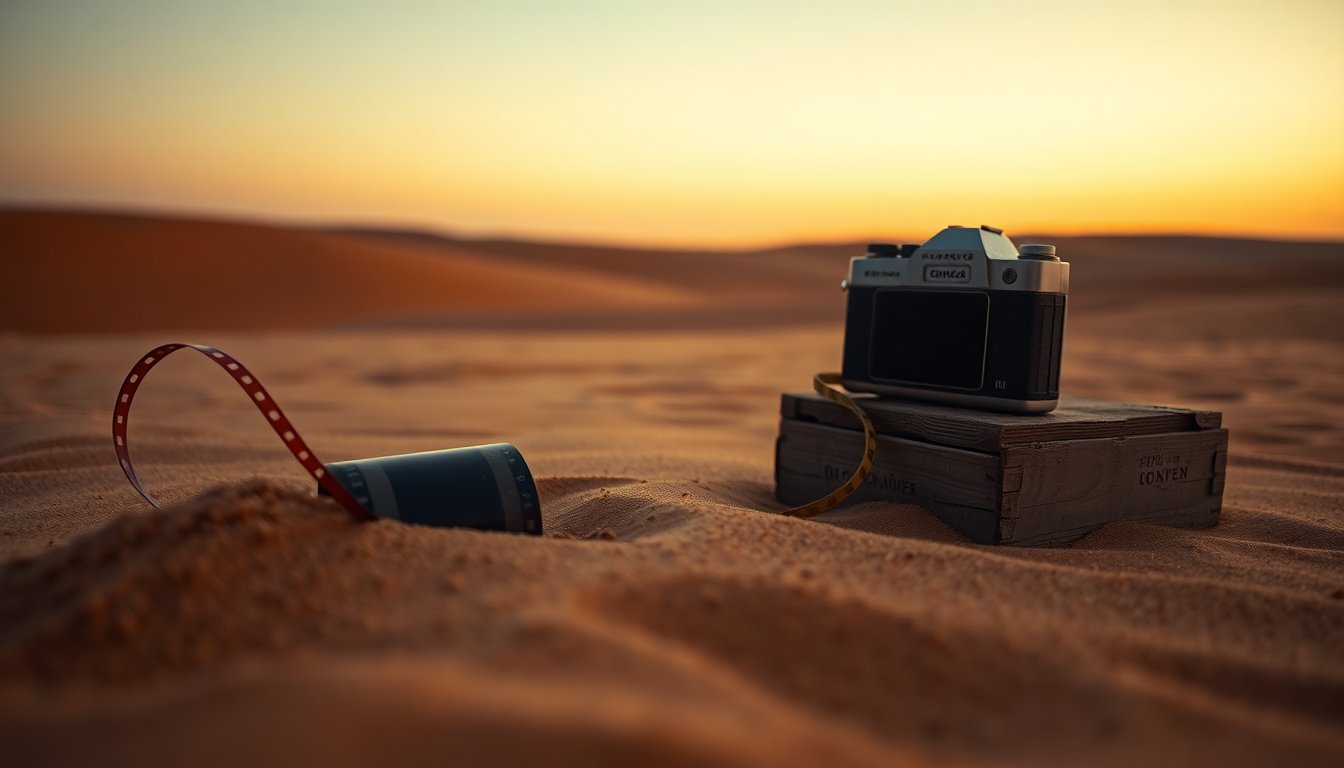
perfectly a strangeness feels like a brief fable set in an unmoored desert. The story—three donkeys stumble upon an abandoned astronomical observatory—serves less as exposition than as a portal. McAlpine favors texture over explanation: close-ups of sand, the slow pivot of light, and stretches of silence invite viewers to inhabit a nonhuman perspective. Mood and associative imagery carry the emotional weight, letting the film’s surfaces and silences do the storytelling.
Craft, curation, and the festival circuit
That restraint has paid off. Programmers have picked up the film for lineups that prize atmosphere and formal risk, and critics have lingered over its tactile details. The path from Cannes to a Criterion presentation and an Oscar nod shows how formal ambition, when paired with smart curation, can create momentum: festivals give the film context and an attentive audience; curated platforms extend its life beyond the screening room.
Small choices, big effects
McAlpine’s decisions—how long a cut lingers, the balance between wind and the observatory’s echo, the placement of a hoofbeat—are tiny levers that reshape tone and focus. In a recorded conversation released with the Criterion program, editor and sound designer Walter Murch unpacks those micro-choices. The talk makes clear how editorial rhythm and sonic layering compress narrative energy into a compact sensory experience that reads differently on a big screen than it does on paper.
Mentorship and method: a conversation with Walter Murch
Murch—whose credits include Apocalypse Now and The Conversation—appears as both a practical influence and a sounding board. Their exchange mixes technical detail with broader reflections on perception and craft: a single cut can change a character’s interiority; a subtle reverb can suggest scale. McAlpine describes an early, informal connection—sending Murch a late-night link to her earlier feature Cielo—that evolved into a supportive mentorship, helping shape the short’s editorial and sound strategies and opening doors on the festival circuit.
Sound as storyteller
A recurring theme in their discussion is sound’s narrative power. The film’s sound design—dry wind, distant metallic echoes, the clack of hooves and the hush of breath—does more than set mood. It acts as a kind of narrator, proposing emotional contours and spatial depth where words are absent. The effect is at once contemporary and rooted in mid-century experimentation, joining field recording, musique concrète instincts, and documentary sensibility.
Why this matters for filmmakers and programmers
perfectly a strangeness demonstrates that tight, formally daring work can travel far when paired with thoughtful presentation. Festivals and curated platforms don’t just distribute films; they create contexts that invite deeper viewing. And careful craft—precise edits, layered ambiences, a confident trust in silence—can make a short feel larger than its runtime.
Where to watch
perfectly a strangeness streams on the Criterion Channel starting March 1. If you want to see how a handful of disciplined creative choices can stretch a simple premise into something resonant and strange, this short is a clear example.