
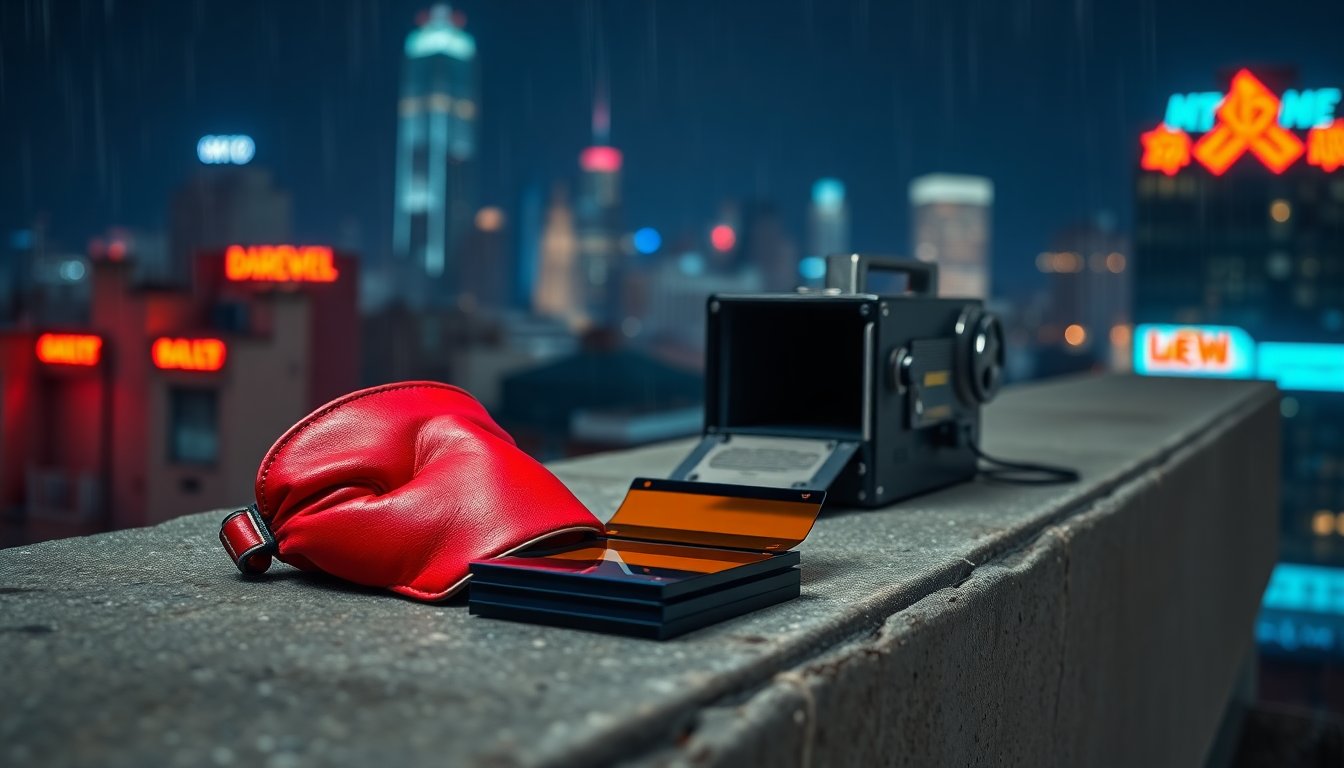
The revival series Daredevil: Born Again reintroduced Matt Murdock to the MCU with a carefully considered visual identity that extends beyond costumes and choreography. From the first episode, which premiered on March 4, 2026, directors placed an emphasis on cinematography as storytelling: they alternated the aspect ratio whenever Matt accessed his heightened perception, and layered a palette of hues to mark emotional shifts. This article examines how those color choices evolved into a consistent visual language—a system of recurring lighting and tinting that signals inner states, allegiances, and narrative turning points without relying on exposition.
Color as shorthand for character and mood
Rather than treating lighting as mere aesthetics, the creative team turned color into a narrative shorthand. Red frequently accompanies Matt Murdock’s vigilante presence, linking to the classic Daredevil iconography, while white uplighting commonly marks moments where Wilson Fisk, also known as Kingpin, prepares for public or violent action. Meanwhile, a chilly blue palette grew to represent Benjamin Poindexter’s transformation into Bullseye. These choices create an immediate psychological cue for viewers: the palette primes expectations, so a single wash of colored light can carry thematic weight and accelerate comprehension during complex scenes.
What the colors communicate
Each hue carries layered meanings. The red pulses that surround Murdock serve as a visceral marker of his connection to the streets and his heightened senses, while the stark white often frames Fisk in positions of power and calculation, separating his public persona from the darkness beneath. The adoption of blue for Bullseye functions both as an emotional indicator—calm exterior giving way to internal rage—and as a nod to the comics, where the character wore a blue suit. Together, these motifs form an efficient, visual code the series uses repeatedly to guide audience interpretation.
Serendipity on set: how blue was discovered
One of the most striking examples of the show’s evolving palette came during Season 1 Episode 8, titled “Isle of Joy” (released April 8, 2026), which centers on Bullseye in custody. According to directors Aaron Moorhead and Justin Benson, the team stumbled onto the blue motif while shooting a corridor sequence. A gaffer installed programmable bulbs in the fixtures and, when switched to what the crew jokingly called party mode, the otherwise grim prison corridor took on an eerie, rhythmic glow. The directors filmed a take that faded into blue at the end, and the immediate reaction convinced them to integrate that specific tint as a persistent characteristic of Bullseye’s internal state.
The practical and thematic payoff
That improvised moment proved to be more than an on-set novelty. The blue effect provided a clean visual counterpoint to Daredevil’s carmine imagery and allowed the filmmakers to telegraph psychological change without dialogue. The directors and crew consciously expanded on that discovery, using blue as an escalating signal whenever Poindexter’s calm fracturing becomes imminent. The choice also respects the character’s comic-book history, providing fans with a subtle, respectful echo of Bullseye’s traditional costume while serving the show’s more cinematic aims.
Lighting choices that reinforce dual identities
Beyond isolated discoveries, the series uses lighting to juxtapose characters and their secret faces. Cinematographer Hillary Fyfe Spera explained how the pilot established a recurring parallel: shots of Murdock moving through a crowd are intercut with Fisk standing on a balcony, and the two are lit differently to highlight internal conflict. In that opening sequence, a pulsing red washes over Murdock’s face as he stops, while Fisk is bathed in a cool, pulsing white. That contrast sets up a visual rhythm the show revisits, clarifying that both men contend with alternate identities—Daredevil and Kingpin—even when they occupy the same urban space.
Production history also shaped the series’ look. Season 1 underwent extensive reshoots that left traces in the finished episodes, yet the commitment to a coherent visual language persisted, helping smooth narrative transitions. When the show returned for Season 2 in 2026—kicking off on March 24, 2026—critics noted a slower opening and a crowded story, but most agreed the lighting and color strategy remained a compelling strength. In short, the series demonstrates how deliberate and improvised lighting decisions can combine to create a cinematic vocabulary that both honors source material and serves the story on screen.


