
The arrival of The Blood Countess at the 2026 Berlinale presented a collision of auteurism, theatrical design and star power. Ulrike Ottinger, a veteran of the German New Wave, teams with Nobel laureate Elfriede Jelinek to bring a stylized interpretation of the Erzsébet Báthory legend to the screen. At the center of this baroque confection stands Isabelle Huppert, whose portrayal of the immortal countess becomes both the film’s lodestar and its gravitational problem.
On paper the film is an intoxicating mix: a centuries-spanning vampire myth, a hunt for a book capable of stripping immortality, and a Vienna rendered as a theatrical labyrinth. Visually and tonally The Blood Countess leans into the camp and the operatic, with production and costume design that repeatedly demand attention. Yet it is Huppert’s quietly commanding work that transforms pageantry into something memorably unsettling.
Performance as axis: Huppert’s minimalist excess
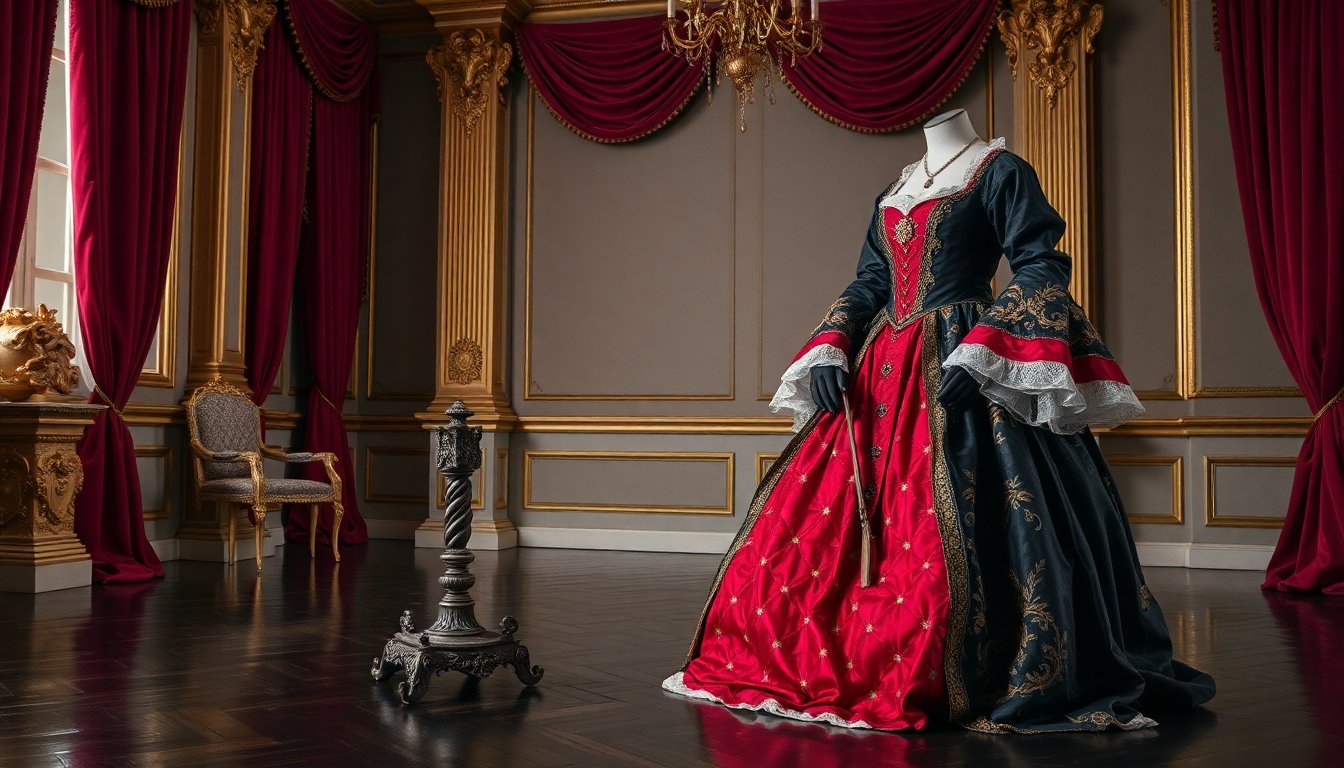
Huppert’s approach is paradoxical: she plays a flamboyant, bloodthirsty noblewoman while using remarkably restrained tools. Rather than broad theatrics, she relies on the economy of gesture—the tilt of a chin, a deliberate smile—to make Erzsébet fully present. The result is a figure who reads as both icon and predator: visually striking in crimson costume, yet emotionally controlled. This low-key intensity allows small actions—a shrug, a sidelong look—to become charged with menace.
Comparisons are useful to understand this method. In earlier work Huppert has inhabited dualities and monstrousness with an ease that renders extremes believable; those qualities are evident here. Where many supporting players lean into Ottinger’s heightened palette, Huppert remains anchored, creating an asymmetry that is simultaneously magnetic and destabilizing for the film as a whole.
World-building and visual language
Ottinger and cinematographer Martin Gschlacht compose Vienna as a stage for ritual and satire. The city is photographed as a sequence of near-empty alleys, subterranean passages and baroque interiors that feel half museum, half dream. Production designer Christina Schaffer and costume designers Katharina Forcher and Jorge Jara clothe the film in vivid textures: walls covered in reproductions of Arcimboldo paintings, a polka-dot cafe saturated in blood-red motifs, and a barge wrapped as if it were a ceremonial gift. These choices amplify the film’s theatricality and underline Ottinger’s intent to make place function as character.
Within this mise-en-scène, Ottinger and Jelinek populate the narrative with a gallery of eccentric types. Two self-styled vampirologists, a fastidious police inspector, and a roaming relative who rejects his family’s diet create a patchwork of comic and grotesque counterpoints. Conchita Wurst’s cameo as an emcee at a vampire gala signals the film’s willingness to embrace extravagance and parade it proudly.
Structure and pacing issues
Despite its visual and performative highs, the film struggles with momentum. The running time stretches, in part, because Ottinger repeatedly fragments the central quest with diversions and subplots. One such diversion follows a young Báthory relative who is a vegetarian and another tracks his psychoanalyst; these arcs, while intended to add texture and irony, frequently deflate the forward propulsion of Erzsébet’s search for the dangerous book. The tonal shifts between camp, satire and Gothic spectacle can feel uneven, leaving the film longer than it deserves.
Script and character balance
Working from a screenplay Ottinger wrote with Jelinek, the film thrives on clever naming and verbal play—characters named to suggest both humor and scholarly pretense. Still, the script sometimes elevates charm over depth. The more conventional emotional arc assigned to the vegetarian relative is one example: a familiar coming-of-age beat that sits awkwardly beside the brisk, archetypal energy of the countess herself. As a consequence, the supporting cast can register as uneven when measured against Huppert’s focused clarity.
Context and resonance
Ottinger conceived the project decades ago and brought it to life on a reported budget of €8 million, shooting in a compressed schedule. The director’s choice to place the myth in Vienna reflects a fascination with layered history and grotesque grandeur, and she describes the film as an artistic appropriation of genre rather than a conventional update. Politically, the film gestures at contemporary anxieties: the wealthy’s attempts to prolong life are read as a vampiric refusal to accept mortality.
For festival audiences the premiere at the 2026 Berlinale offered a distinct blend of spectacle and auteurist statement. The Blood Countess is at once a costume drama, a burlesque, and a philosophical provocation about power, longevity and image. It will likely be remembered most for Huppert’s unforgettable central turn—an instance of an actor shaping a film’s gravity even as the surrounding architecture strains to keep pace.