
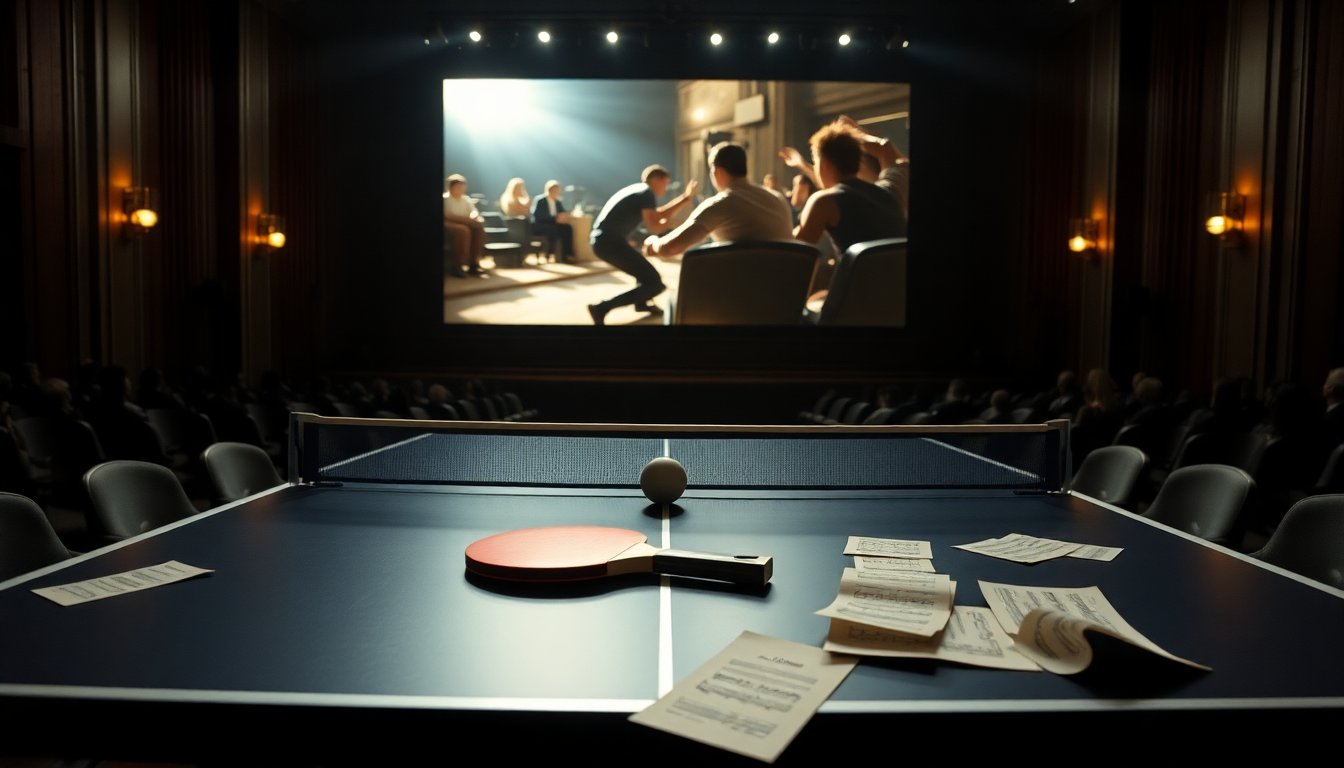
As the 2026 Oscars approach, Marty Supreme has garnered significant attention with nine nominations. However, it notably lacks a nomination for Best Original Score, raising eyebrows given the film’s distinctive storytelling and compelling musical backdrop.
Directed by Josh Safdie, Marty Supreme presents a fresh take on the sports drama genre. It follows a relentlessly ambitious table tennis player, portrayed by Timothée Chalamet. Spanning two and a half hours, the film offers a thrilling exploration of ambition and perseverance that is likely to spark discussions for years.
The artistry of the score
While the film is celebrated for its narrative depth and character arcs, the score composed by Daniel Lopatin warrants equal recognition. Despite its acclaim, Marty Supreme was surprisingly left out of the Best Original Score category, a decision that has perplexed both critics and audiences.
Lopatin, known for his collaborations with the Safdie brothers on films such as Good Time and Uncut Gems, infuses his signature style into Marty Supreme. The score blends elements of vaporwave and 1980s synth music, creating an expansive soundscape that enhances the film’s emotional impact.
Historical context and emotional connection
What distinguishes Marty Supreme‘s score is its anachronistic quality. Set in the early 1950s, before the rise of synthesized music, the score lends the film a timeless feel, making the protagonist’s journey both historical and universally relatable. The music not only complements the visual storytelling but also deepens the emotional resonance of Marty’s struggles.
The omission of recognition for such a distinctive score prompts questions about the Academy’s traditional preferences. Recent winners in the Best Original Score category have often favored conventional orchestration, frequently neglecting innovative compositions like Lopatin’s.
Challenging the status quo
The Academy Awards have faced ongoing criticism for their adherence to established norms. The trend of favoring traditional scores over avant-garde compositions reflects a reluctance to embrace change. The last synth-heavy score to win an Oscar was Vangelis’ Chariots of Fire in the early 1980s, a film that, despite its anachronism, conformed to classic sports drama conventions.
With nine nominations, Marty Supreme illustrates that unconventional films can resonate within the Academy. However, the exclusion of its score highlights the challenges facing innovative artists in a tradition-dominated landscape. While the nominees for Best Original Score will undoubtedly leave their mark, Lopatin’s work in Marty Supreme is a standout that merits acknowledgment.
The impact of the Midnight Critics Circle Awards
Interestingly, Marty Supreme has received recognition beyond the Oscars. At the Midnight Critics Circle (MCC) Awards, it won Best Picture, with Chalamet also securing the Best Actor award. These accolades from critics underscore the film’s influence and appreciation for its unique vision.
The MCC also recognized other films, such as It Was Just an Accident, which won several awards including Best Director and Best Original Screenplay for Jafar Panahi. These awards highlight the diverse landscape of cinematic storytelling that often challenges the conventional narratives celebrated by the Academy.
Directed by Josh Safdie, Marty Supreme presents a fresh take on the sports drama genre. It follows a relentlessly ambitious table tennis player, portrayed by Timothée Chalamet. Spanning two and a half hours, the film offers a thrilling exploration of ambition and perseverance that is likely to spark discussions for years.0