
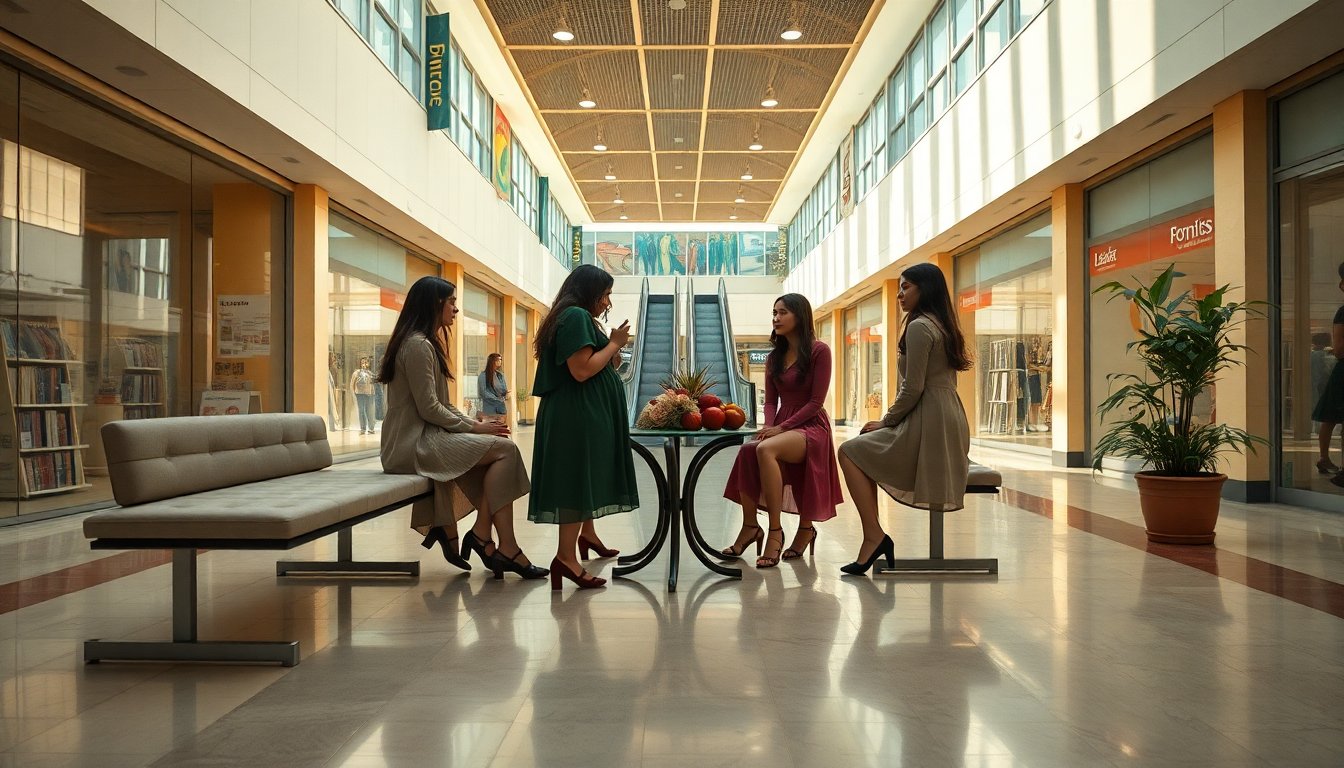
Forbidden Fruits, the feature debut from director Meredith Alloway, arrives as a high-concept mash-up: a mall-bound coven comedy that aims to bite but often chews indecisively. Premiering at SXSW in 2026 and opening wide on March 27, 2026 via IFC Films and Shudder, the film plants its action in a strangely nostalgic Dallas-area shopping center and tracks a quartet of young women whose bond is part retail routine and part ritual. Lili Reinhart plays Apple, the group’s magnetic leader; Victoria Pedretti is Cherry, the exaggerated sex-symbol; Alexandra Shipp plays Fig, the pseudo-scientific brain; and Lola Tung arrives as Pumpkin, the newcomer pulled into their orbit.
The movie’s core conceit is straightforward: Apple runs an after-hours, basement-based clique that performs witchlike ceremonies between shifts at the boutique called Free Eden. Co-written by Alloway and Lily Houghton (adapting Houghton’s 2019 play), the screenplay intends to lampoon modern female-branding and consumer culture while delivering genre thrills. That ambition is clear, but the execution often misreads its own tone. Visuals, costume choices and certain set pieces feel intentionally referential, calling back to late-’90s cults and glossy teen satires, even as the narrative drifts into darker, more explicit territory.
Plot and themes
The plot hinges on a simple escalation: when Pumpkin arrives from a nearby pretzel stand and questions the group’s rituals, the Fruits’ fragile hierarchy begins to crack. What starts as mock-ritual and petty cruelty slides into literal bloodletting, hexes and some deliberately surreal religious imagery—Marilyn Monroe is invoked as a kind of pop shrine, and ritual objects range from the whimsical to the grotesque, such as a bedazzled cowboy boot used in a scene of ritual sipping. Those swings signal that Alloway wants to interrogate female friendship, performative identity and the commodification of intimacy, but the film piles on motifs—creepy dolls, sudden weather events—rather than building a unified argument.
Satire and its limits
The movie tries to function as a satire of the post-#girlboss era where image and commerce replace sincerity, yet it rarely commits to being mean enough to sting. The Fruits adopt the trappings of witchcraft without necessarily being literal witches, and that choice could have sharpened the critique of performative sisterhood. Instead, Alloway often stacks genres—horror, camp comedy, social satire—so their edges blunt one another. The result is a film that has many incisive moments but lacks the single-mindedness needed to make its satire feel decisive rather than scattershot.
Performances that vary in tone
The cast delivers a mixed but frequently magnetic set of performances. Lili Reinhart anchors the film with a controlled menace that suggests a more focused movie lurking beneath the surface; her Apple is poised, dangerous and magnetic in a way that keeps the film watchable even when the plotting falters. Victoria Pedretti leans into an almost cartoonish hypersexuality with Cherry—equal parts laugh-out-loud and discomforting—and finds the film’s funniest and most unsettling moments. Alexandra Shipp brings a steady charisma to Fig, grounding some of the script’s sillier beats, while Lola Tung as Pumpkin functions as an audience entry point but is not given enough interiority to fully pay off her hinted mysteries. A brief cameo from Emma Chamberlain as Pickle adds a spark of absurdity.
Technical execution and tone
On a technical level, the movie is uneven. The production design nails a hyper-curated retail world—Free Eden reads like a pastiche of lifestyle-brand imagery—but cinematography and lighting often flatten those choices, muting what should be a visually loud environment. Editing tendencies toward repetition slow the film’s momentum, and while a playful soundtrack complements the aesthetic, it cannot fully disguise structural redundancies. Costume design oscillates between inspired and baffling—there are intentional hits of boldness, like a dressing-room tutu scene or bubble shorts that underline the film’s theatricality—but sometimes those choices feel more costume party than critique.
Why it still matters
Despite its failings, Forbidden Fruits possesses moments of true invention: an absurd escalator sequence, genuinely brave late-act nastiness, and a willingness to treat the grotesque with full stylistic commitment. Those elements mean the film could find a devoted audience among genre fans who appreciate a film that is messy yet defiantly original. As a debut, it announces Meredith Alloway as a director with a distinct eye and appetite for tonal risk, even if she hasn’t yet learned how to corral all those impulses into a tidy thesis. For viewers chasing camp, critique and blood in roughly equal measure, it’s a gamble worth taking.