
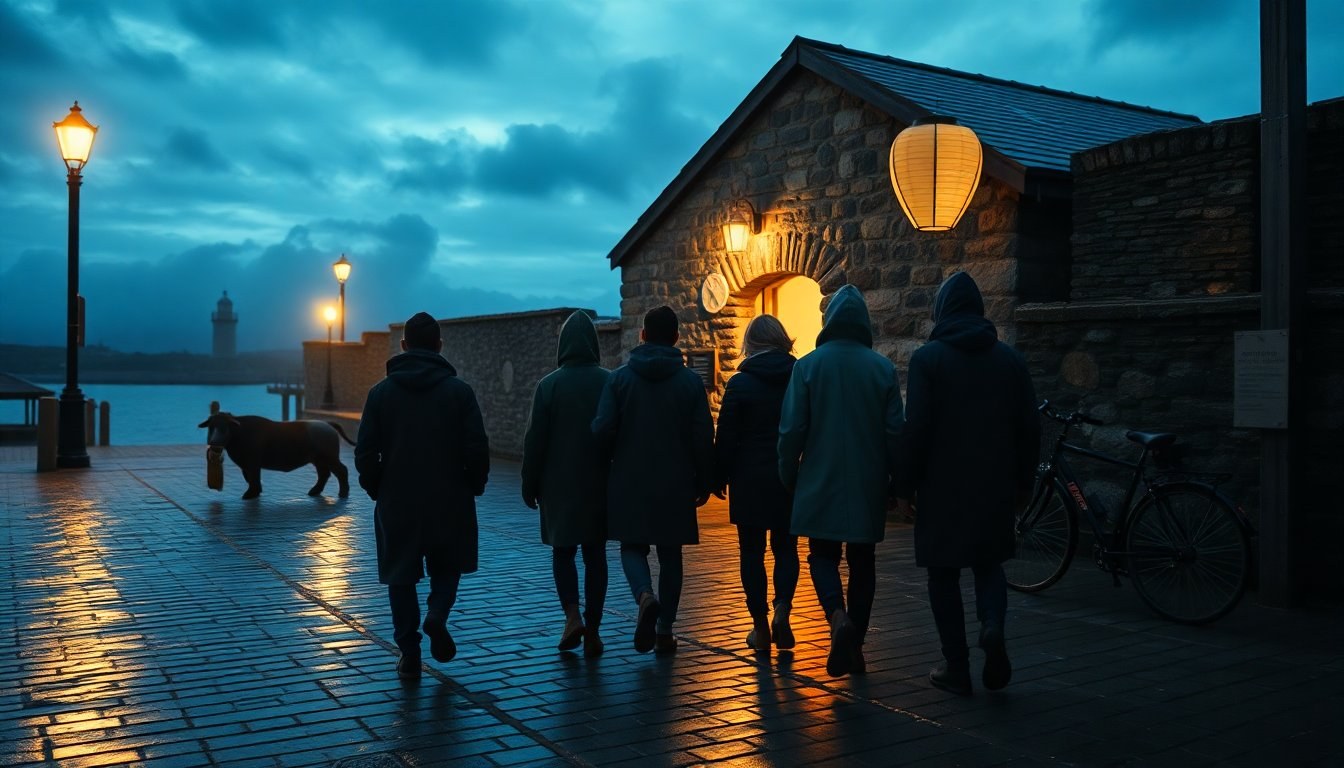
The arrival of My Brother the Minotaur on Apple TV feels like a welcome throwback to stories where a tight group of friends unravels strange happenings together. This new series leans into the familiar pleasures of cooperative sleuthing while wrapping that structure in a distinctly Irish flavor. Its combination of light comedy and an overarching mystery makes it easy to watch in single sittings or savor over several days. The show balances laughter with tension and places emotional stakes at the center, so the mystery never eclipses the characters who carry it.
The setting is the small island of Bryony, where a boy named Lorcan navigates ordinary childhood alongside a not-so-ordinary secret. The series introduces a cast of schoolmates and family members who form the core investigation team. Behind the scenes, the project is a co-production between Dog Ears and Cartoon Saloon, the latter known for films like The Secret of Kells and Wolfwalkers. Creator Donal Managan brings a sensibility shaped by that pedigree, resulting in a show that feels handcrafted rather than mass-produced.
Story and characters
At its heart the series tells the story of Lorcan, a Minotaur who has been raised in a human household and attends school with his adopted brother Charlie and two close friends, Dana and Harper. The plot takes off when Lorcan begins to experience disturbing dreams featuring a rabbit-faced creature from Celtic lore called a Pooka. As those nightmares start to intrude on waking life, Charlie—who imagines himself an amateur investigator—pulls the group into a search for answers. The investigation slowly peels back an adult conspiracy to keep an entire fantasy realm hidden, which opens questions of belonging and secrecy without ever abandoning the series’ accessible tone.
Central relationships
What keeps the show grounded is the relationship dynamics among the four youngsters and their family. Lorcan’s sense of not fully belonging is a recurring emotional current, while Charlie provides the initiative that moves the plot forward. Dana and Harper contribute humor and perspective, though at times they feel ordained to support the duo rather than follow their own arcs. Still, the series treats issues like identity and displacement with a light touch that allows younger viewers to engage, while offering older audiences real emotional payoffs during quieter moments.
Animation and production
The look of the show blends bold character design with richly detailed backgrounds: figures are drawn with thick lines and simplified shapes that recall early-2000s Western cartoons, while landscapes carry the textured, rustic sensibility fans associate with Cartoon Saloon. In scenes involving the Pooka the series leans into shadow, using lighting to generate suspense that can genuinely startle young viewers. The difference between a film budget and a television budget is visible, yet the overall visual package remains striking and consistent across the ten-episode run, reinforcing both mood and story through color and composition.
Studio pedigree and voice cast
The production benefits from experienced creative leadership and a notable voice roster. Donal Managan’s prior work with Cartoon Saloon informs the series’ design and storytelling choices. The cast includes Ely Solan as Lorcan, Billy Jenkins as Charlie, Billie Boulet and Luciana Akpobaro as the friends, and recognizable names like Michael Sheen in a delightfully over-the-top supporting role and Brian Cox as the warm grandfather figure. Their performances help sustain the show’s emotional core, elevating dialogue and giving nuance to both comedic beats and tense revelations.
Pacing, episodes, and themes
The season consists of ten episodes that mostly run between twenty-two and twenty-eight minutes, with a finale extended to about forty minutes, allowing a more expansive climax. Episode titles are playfully formatted like role-playing entries—references such as gateways and labyrinths hint at the series’ love for discovery and adventure. The narrative unfolds at a steady, economical pace, revealing breadcrumbs without overstaying its welcome. The result is a show that manages to be exciting and contemplative, culminating in a cliffhanger that promises more world-building and deeper mysteries in future installments.
Ultimately, My Brother the Minotaur succeeds because it treats its young characters as full people and pairs that humanism with a well-crafted serialized mystery. It incorporates elements of Celtic folklore, friendship-driven detective work, and coming-of-age concerns into a package that feels both fresh and comfortingly familiar. For families looking for animated fare that respects children’s intelligence while entertaining adults, this series is a notable addition to the family programming landscape on streaming platforms.


