
Lead
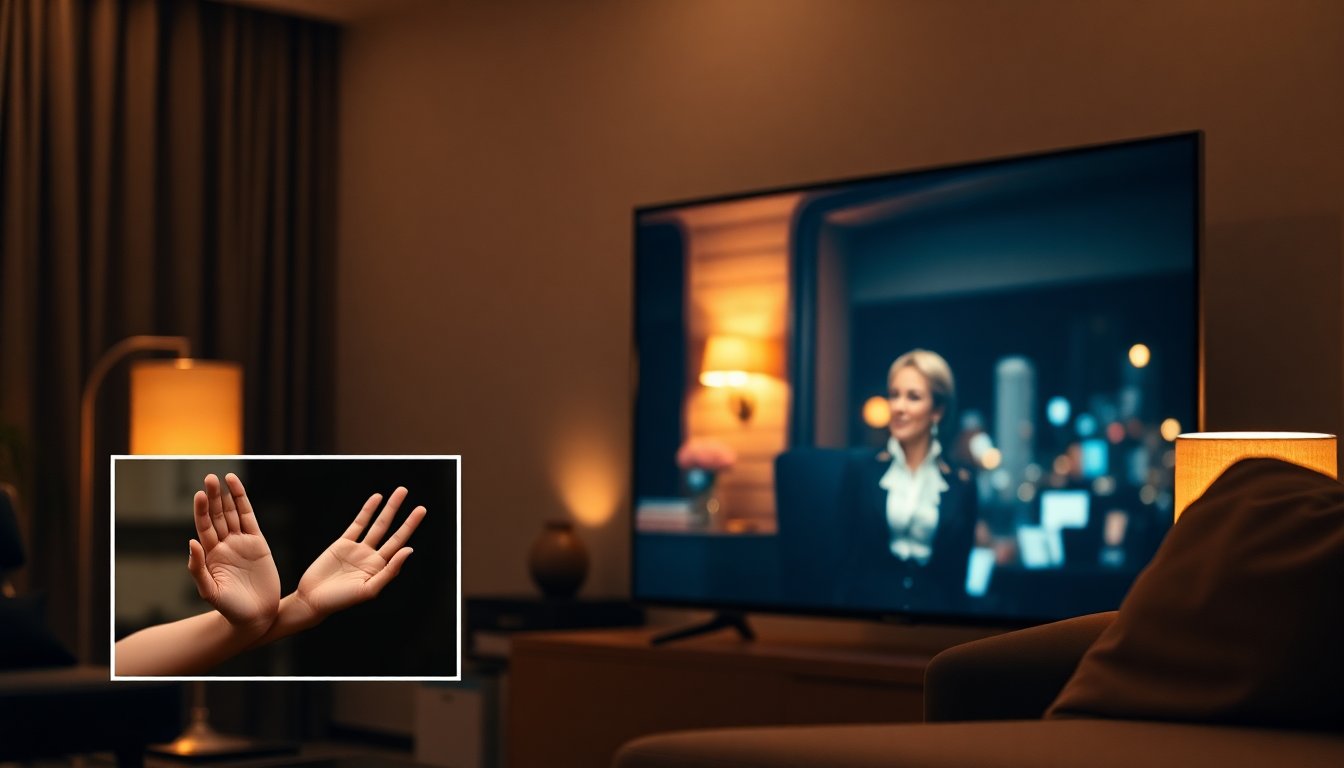
SignUp Media is bringing American Sign Language (ASL) front and center for this year’s Best Picture contenders. Under a program called The Oscars Project, the company will roll out picture-in-picture ASL interpretation for all 10 Best Picture nominees—delivering eight overlays via a free Google Chrome extension on March 2, with the remaining two already live on partner platforms. The goal: let Deaf and hard-of-hearing viewers experience films in their native language, preserving tone, pacing and emotional nuance in ways captions alone cannot.
What The Oscars Project actually does
– ASL picture-in-picture (PiP) overlays: Certified interpreters appear in a small, optional video window that runs synced to the film.
– Easy access: Overlays are activated through a free Google Chrome extension; users can toggle the PiP window on or off.
– Human interpretation, not automation: SignUp Media emphasizes native signing performed by Deaf and hearing interpreters rather than machine-generated captions.
Why this matters
Captions are vital—but not the whole story. ASL has its own grammar and expressive tools that convey tone, timing and cultural context. For many Deaf viewers, an interpreter who mirrors acting choices can make a scene feel immediate and shared the way sighted audiences experience it. That’s the promise here: parity of experience, not just compliance.
Release details and the films involved
– March 2: Eight PiP ASL overlays become available via SignUp Media’s Chrome extension.
– Already live: Two interpretations are available on partner streaming services, completing coverage of all 10 Best Picture nominees.
– Titles receiving PiP support: Bugonia; F1; Frankenstein; Hamnet; Marty Supreme; Sentimental Value; The Secret Agent; Train Dreams.
– Earlier accessibility tracks: BASL for Sinners and an ASL interpretation of One Battle After Another on HBO Max.
Interpreter lineup and production approach
SignUp assembled creative teams blending professional performers with interpreters rooted in Deaf communities. Casting prioritized both linguistic fluency and theatrical instinct so that signing carries the same emotional register as on-screen performances. Named interpreters include:
– João Gabriel Ferreira (The Secret Agent)
– Everett Glenn (Marty Supreme, F1)
– JoAnn Benfield (Sentimental Value)
– Rach Burton (Bugonia)
– Rosina Mae (Hamnet)
– Scott Keller (Train Dreams, Frankenstein)
Many interpreters worked from home studios equipped with HD cameras, professional lighting and teleprompter rigs to ensure clear, high-contrast signing that reads on diverse screens.
Technical, legal and user-experience variables
Deploying PiP ASL at scale is a complex choreography:
– Synchronization: PiP windows must stay tightly synced across different playback speeds and devices.
– Rights and licensing: Studios and distributors must clear on-screen interpreter feeds for each title and territory.
– Discoverability and UX: Adoption depends on how easy the Chrome extension is to find, install and control during playback.
– Interpreter supply and quality control: Availability of certified interpreters—especially for high-profile live events—shapes cadence and consistency.
Market context and business case
Accessibility has moved beyond legal boxes into brand and product differentiation. Data and investor conversations show platforms increasingly view inclusive features as part of retention strategies. Estimated audience figures underline the potential:
– The 2026 American Community Survey: ~11 million Americans report serious hearing difficulty.
– Gallaudet University (2026): ~6 million ASL users in the U.S.
Early pilots pairing live ASL with streams report higher real-time engagement and longer average watch times compared with caption-only feeds. SignUp Media points out that per-hour production and integration costs for PiP ASL can be comparable to closed captioning and audio description—meaning the incremental investment may scale more favorably as distribution widens.
Sector impacts and friction points
– Platforms: May feel pressure to offer native-language interpretation, especially around cultural moments like awards season.
– Studios and distributors: Might start baking interpreter tracks into distribution plans earlier to simplify rights and workflows.
– Accessibility vendors: Could see growing demand for certified Deaf interpreters and localization services.
– Talent and unions: New operational norms and compensation frameworks will be needed for standardized overlay work.
What The Oscars Project actually does
– ASL picture-in-picture (PiP) overlays: Certified interpreters appear in a small, optional video window that runs synced to the film.
– Easy access: Overlays are activated through a free Google Chrome extension; users can toggle the PiP window on or off.
– Human interpretation, not automation: SignUp Media emphasizes native signing performed by Deaf and hearing interpreters rather than machine-generated captions.0
What The Oscars Project actually does
– ASL picture-in-picture (PiP) overlays: Certified interpreters appear in a small, optional video window that runs synced to the film.
– Easy access: Overlays are activated through a free Google Chrome extension; users can toggle the PiP window on or off.
– Human interpretation, not automation: SignUp Media emphasizes native signing performed by Deaf and hearing interpreters rather than machine-generated captions.1
What The Oscars Project actually does
– ASL picture-in-picture (PiP) overlays: Certified interpreters appear in a small, optional video window that runs synced to the film.
– Easy access: Overlays are activated through a free Google Chrome extension; users can toggle the PiP window on or off.
– Human interpretation, not automation: SignUp Media emphasizes native signing performed by Deaf and hearing interpreters rather than machine-generated captions.2