
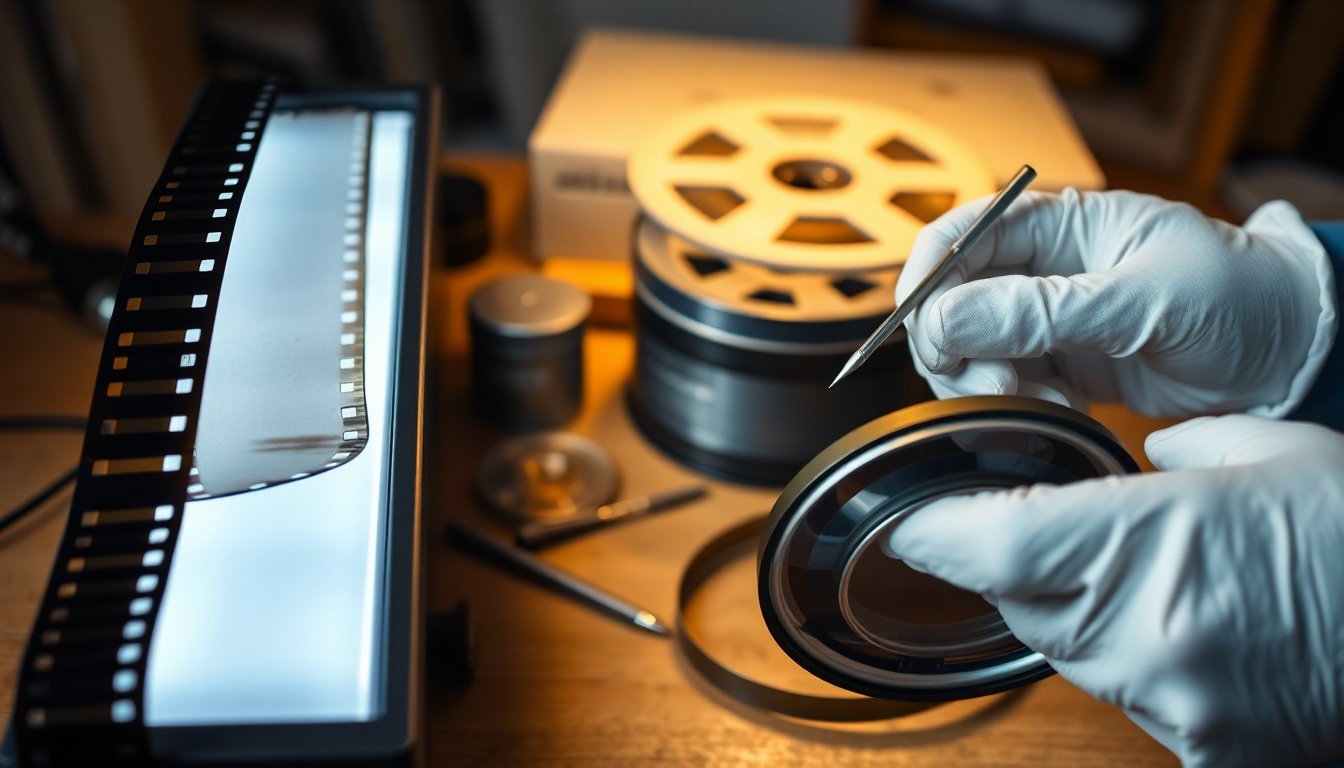
The return of La maison des bois marks a rare archival revival: Maurice Pialat’s seven-part drama, long available only in poor transfers, has been given new life through a meticulous 4K restoration. Completed in 2026 by the French National Audiovisual Institute from the original 16mm negative image and the corresponding 16mm magnetic tape, this work aims to recover the texture and grain of the original elements while stabilizing image and sound for contemporary exhibition. The restored program will be presented theatrically by Janus Films, with screenings beginning on April 22 at Film at Lincoln Center in New York City. A new trailer and a striking poster have been released to introduce audiences to the revived edition.
Commissioned for television in 1971, La maison des bois unfolds across nearly 400 minutes, a duration that allows the film to operate as both a domestic saga and a panoramic study of a nation in transition. Pialat collaborated with screenwriter René Wheeler to construct a narrative that privileges observational detail and character over melodrama. The result is often described as miniseries-scale storytelling rendered with cinematic intimacy: scenes breathe, routines accumulate meaning, and the camera lingers on ordinary rituals—schoolrooms, church services, the local tavern—to show how the long shadow of war reshapes everyday life. This balance of the epic and the intimate is central to why the work is considered a landmark.
Story and characters
At the story’s core are the Picards: Albert, a game warden played by Pierre Doris, and his wife Jeanne, portrayed by Jacqueline Dufranne. They live on the edge of a marquis’s estate—whose presence is embodied by Fernand Gravey—and raise two teenagers, Marcel (Henri Puff) and Marguerite (Agathe Natanson). The family also shelters three abandoned boys, whose inclusion expands the household into a small community coping with scarcity and loss. Among them, Hervé (Hervé Lévy) emerges as a magnetic figure whose transition from childhood to adolescence offers a human anchor for the series. His furtive hopes for a reunion with his soldier father (Paul Crauchet) and his evolving role within the Picard household give the narrative emotional momentum.
Restoration process and exhibition
The restoration is notable for its source material and method: technicians worked from the original 16mm negative image and the 16mm magnetic tape sound elements, a workflow that privileges authenticity over heavy-handed digital correction. The French National Audiovisual Institute’s effort focused on cleaning, color stabilization, and frame-by-frame repair to preserve the film’s original grain structure while improving clarity—an approach important to maintain Pialat’s naturalistic aesthetic. Presenting a nearly 400-minute work in theatrical contexts requires programming that respects runtime, so screenings by Janus Films at institutions such as Film at Lincoln Center are likely to be curated experiences, inviting viewers to engage with the piece as both television history and cinematic art.
Why this restoration matters
Beyond technical achievement, the restored edition reasserts the series’ cultural significance: critics and historians often call La maison des bois one of television’s great accomplishments and describe it as Pialat’s magnum opus. The work’s strength lies in its refusal of melodramatic spectacle in favor of human-scale observation—the quiet rituals and social bonds that persist through upheaval. Themes of longing, loyalty, and resilience thread through the Picards’ daily life, making the drama a study of how communities endure when the world is altered by conflict. In reviving the series with care, archivists enable new audiences to reassess its place in both television and film history.
Where to watch and what to expect
The restored La maison des bois will begin screenings on April 22 at Film at Lincoln Center, presented by Janus Films. Interested viewers can preview the project via the newly released trailer and poster, which have circulated online ahead of the theatrical run. For many, this is an opportunity to experience a landmark television work in a venue optimized for attentive viewing, where sound and image restoration can be fully appreciated. Whether encountered as a museum-style marathon or through scheduled screenings, the film asks for time and attention, rewarding those who come prepared to observe the small, consequential moments that define its portrait of postwar life.