
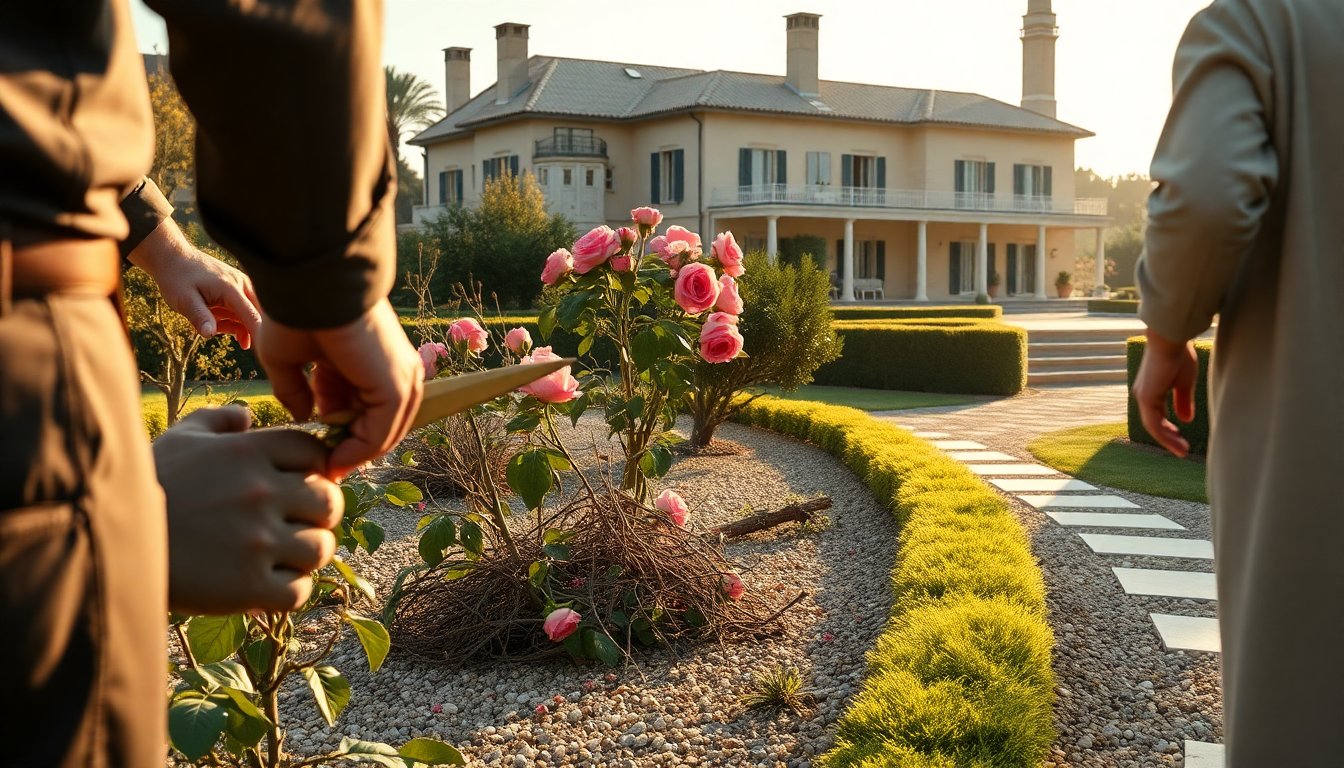
Rosebush Pruning arrived at the Berlinale not as a stealth art-house debut but as a carefully staged pivot: Karim Aïnouz has corralled a cast better known for mainstream work into a film that prefers discomfort to easy answers. Shot in sun-drunk Catalonia, the story unfolds in a single, lavish villa where boredom and inherited privilege slowly reveal simmering resentments. The result is less plot-driven drama than a study of power—tonal shifts between dark comedy and menace keep the audience off balance, while a restrained visual style sharpens the sense of claustrophobia.
Making the film
Aïnouz and his team leaned into the villa as a character. The production chose a concentrated, location-based shoot in Catalonia so the Mediterranean light—and the house’s particular geometry—could shape performances and camera movement. Interiors are framed tightly; exterior passages are staged as long, patient corridors. The shoot favored natural daylight and long takes over elaborate rigs and rapid cutting, which lent a tonal consistency but also forced a rigid shooting schedule: key scenes had to be captured when the light was right. Local crews and compact rehearsal blocks helped keep costs and continuity under control.
Casting and rehearsal
The ensemble—Jamie Bell, Callum Turner, Riley Keough, Lukas Gage, Elle Fanning, with Tracy Letts as the patriarch—was assembled to prioritize chemistry over marquee spectacle. Rehearsals were intensive and compressed, with scene-by-scene workshopping and improvisation tethered to scripted beats. That approach built a lived-in familiarity among the actors, allowing them to risk subtlety and discomfort. The trade-off was logistical: a tight timetable meant some originally attached names couldn’t take part, and the pace increased pressure on crews. Yet the payoff is visible in performances calibrated around micro-expressions and small physical choices rather than broad declarations.
Performance and tone
Turner functions as an unsettling, unpredictable force who punctures the family’s brittle etiquette; Fanning plays an outsider whose quiet gestures reframe scenes; Letts’s blind patriarch blends magnetism and menace. Aïnouz and screenwriter Efthimis Filippou steer the film toward satirical absurdity without reducing people to cartoons. Long takes and restrained direction push actors to communicate through posture, timing and gaze—silence becomes an active dramaturgical tool. That strategy rewards patient viewers: gestures accumulate meaning and tonal dissonance generates moral unease. It also risks alienating audiences seeking clear narrative signposts.
Style and design
Visually, the film alternates between warm, naturalistic tableaux and moments punctuated by stylized shadow. The editing pattern favors lingering master shots interrupted by sharp reframing, a technique that redirects sympathy and punctures complacency. Sound design often foregrounds domestic ambience—plates clinking, distant traffic—then isolates a single disruptive noise to fracture the scene’s rhythm. Production design layers luxury with decay, so wealth reads as both a material comfort and a moral shroud.
Themes
At its core Rosebush Pruning is about the corrosive effects of concentrated privilege: how wealth masks coercion, how domestic routines can conceal structural violence. The film treats incest, abuse and murder not as titillating beats but as symptoms of an insulated ecosystem. Satire operates as a diagnostic instrument here—awkward laughter isn’t a release but a prompt to look more closely. The tonal oscillation between farce and threat forces viewers to ask where complicity begins and accountability ends.
Festival rollout and press dynamics
The Berlinale premiere illuminated another layer: how festival publicity can reshape a film’s narrative. A pressline exchange—fans and journalists pressing for off-topic answers, an actor deflecting a franchise rumor, Tracy Letts breaking tension with a quip and calling a question about U.S. politics “awkward”—served as a reminder that unscripted moments often travel farther than prepared statements. Pamela Anderson’s off-camera comments about reinvention added a human-interest thread that may broaden media pickup. For better or worse, these interactions feed into distribution conversations: buyers watch both the film and the surrounding chatter.
Pros and cons
Strengths
– Ensemble chemistry: intensive rehearsal yields layered, risk-taking performances. – Tonal precision: the film’s controlled rhythm and formal rigor create memorable, unsettling moments. – Festival-ready: provocative material and auteur pedigree make it attractive to programmers and critics.
Risks
– Accessibility: the reliance on silence, ambiguity and tonal shifts may frustrate viewers expecting conventional clarity. – Distribution hurdles: provocative subject matter and polarizing reception can limit broad commercial appeal. – Production trade-offs: the compressed schedule excluded some talent and left less time for on-set experimentation.
Practical paths for release
Rosebush Pruning is primed for a festival-first strategy followed by specialty theatrical windows and curated streaming placements. Marketing should foreground its creative team and the film’s tonal ambition rather than a simple plot synopsis—audiences need a reliable expectation-setting. For programmers and educators, the film makes fertile ground for post-screening discussions and classroom dissections of tone management, satire, and performance-driven storytelling. Community screenings paired with moderated conversations will likely clarify the film’s intent for wary viewers.
Making the film
Aïnouz and his team leaned into the villa as a character. The production chose a concentrated, location-based shoot in Catalonia so the Mediterranean light—and the house’s particular geometry—could shape performances and camera movement. Interiors are framed tightly; exterior passages are staged as long, patient corridors. The shoot favored natural daylight and long takes over elaborate rigs and rapid cutting, which lent a tonal consistency but also forced a rigid shooting schedule: key scenes had to be captured when the light was right. Local crews and compact rehearsal blocks helped keep costs and continuity under control.0
Making the film
Aïnouz and his team leaned into the villa as a character. The production chose a concentrated, location-based shoot in Catalonia so the Mediterranean light—and the house’s particular geometry—could shape performances and camera movement. Interiors are framed tightly; exterior passages are staged as long, patient corridors. The shoot favored natural daylight and long takes over elaborate rigs and rapid cutting, which lent a tonal consistency but also forced a rigid shooting schedule: key scenes had to be captured when the light was right. Local crews and compact rehearsal blocks helped keep costs and continuity under control.1
Making the film
Aïnouz and his team leaned into the villa as a character. The production chose a concentrated, location-based shoot in Catalonia so the Mediterranean light—and the house’s particular geometry—could shape performances and camera movement. Interiors are framed tightly; exterior passages are staged as long, patient corridors. The shoot favored natural daylight and long takes over elaborate rigs and rapid cutting, which lent a tonal consistency but also forced a rigid shooting schedule: key scenes had to be captured when the light was right. Local crews and compact rehearsal blocks helped keep costs and continuity under control.2