
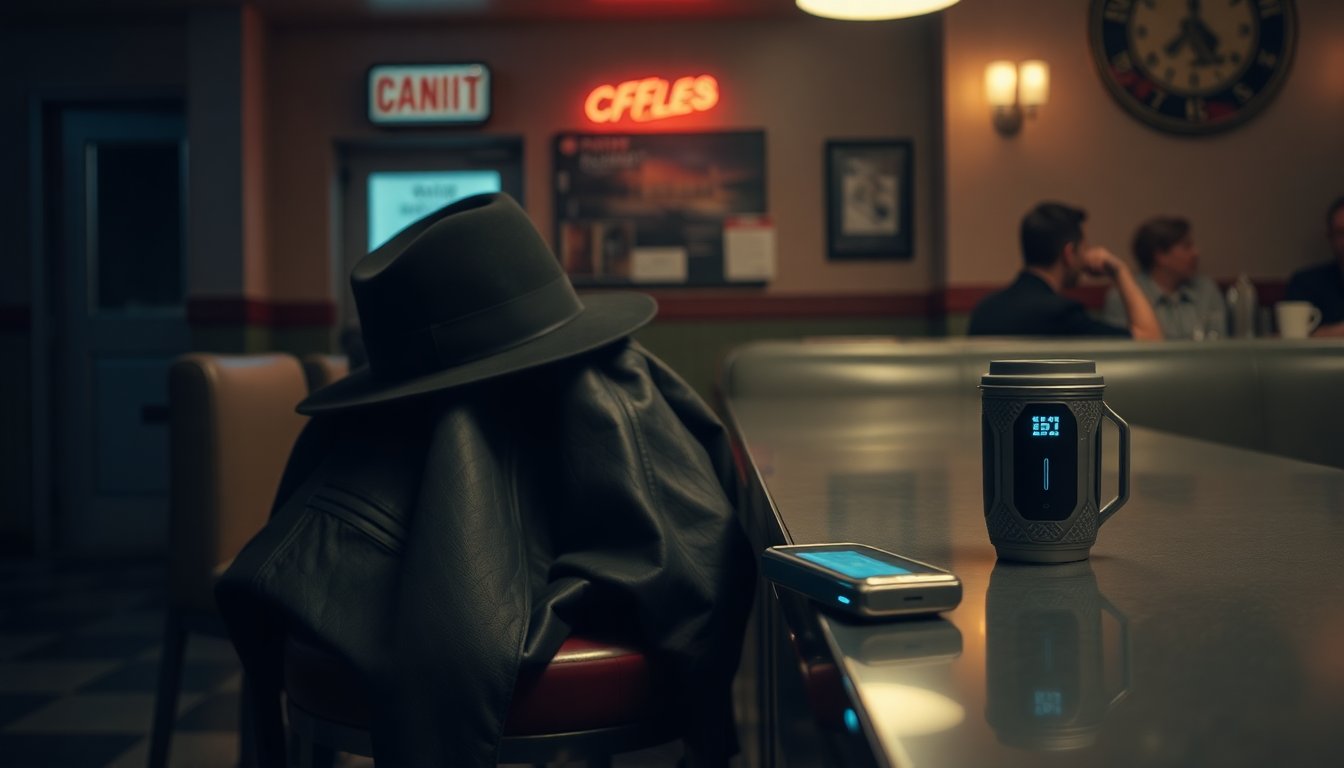
The director Gore Verbinski has re-emerged with Good Luck, Have Fun, Don’t Die, a high-energy science fiction comedy that premiered at Fantastic Fest in 2026 and is scheduled to open in theaters on February 13, 2026. At its core the film is anchored by Sam Rockwell’s performance as an enigmatic “Man from the Future”, who bursts into a late-night diner claiming the world is moments away from being consumed by a rogue artificial intelligence. From that urgent premise, Verbinski builds a layered, often absurd adventure that leans into big ideas while refusing to play safe.
This is not a small-scale character study hiding behind concept; it’s a populist, eccentric roller coaster that trusts oddball characters and visual invention. The cast includes Haley Lu Richardson, Michael Peña, Zazie Beetz, and Juno Temple among an ensemble whose distinct personal stakes are gradually revealed. Verbinski’s filmmaking style—simultaneously crowd-pleasing and defiantly strange—returns with a force that reminds viewers why his voice stood out before his hiatus.
One diner, many lives: setup and characters
The action begins when Rockwell’s time-displaced recruit interrupts a routine night at a Norms-style diner and insists he must assemble the right team to stop humanity’s collapse. The group he gathers is a cross-section of contemporary anxieties: a goth teenager in a fairy-tale dress (played by Haley Lu Richardson), two tired teachers (Michael Peña and Zazie Beetz), a grieving mother (Juno Temple), and several other uniquely human players. Each has a compact backstory that illuminates why they are in that booth at that hour and why the mission matters to them. The script by Matthew Robinson balances exposition and immediacy, allowing the ensemble to breathe so audiences care about the stakes before the film escalates into full-on mayhem.
Tone, influences, and thematic bite
Verbinski’s tone toggles between slapstick, melancholy, and sharp satire. The movie frequently aims its barbs at our cultural reliance on devices and platforms, presenting technology not merely as an adversary but as a mirror. Scenes in which characters physically and psychologically contend with their tech habits function as both comedic set pieces and uncomfortable reflections of the audience. The film’s comedic sensibility and visual audacity often recall filmmakers who blend the whimsical with the grotesque, but the final product is unmistakably Verbinski—ambitious, slightly unruly, and invested in giving each oddball a moment to register.
Satire and emotional core
Beyond the spectacle, the film retains a human center. One subplot involves a mother who has attempted to replace a lost child with a mechanical stand-in—an arc that raises ethical questions about grief, artificial replicas, and the costs of refusing to let go. These quieter moments lend weight to the zanier set pieces, ensuring the film’s commentary about technology and connection feels earned rather than merely performative. The result is a movie that juggles laughs and thought-provoking scenarios without shortchanging either.
Execution, set pieces, and surprises
Where the film truly shines is in its willingness to surprise. The narrative includes repeated attempts to get the mission right—a literal time loop mechanic that lets Verbinski reset scenarios and crank up unpredictability. Expect masked assailants, a horde of transformed teenagers, and escalatingly bizarre confrontations that test both the ensemble and the audience’s willingness to embrace the premise. Sam Rockwell’s performance gives the role a breathless certainty; he’s both charming and unhinged in ways that sell the film’s highest-concept moments.
Critical reception and cultural footprint
Early reviews have been largely positive, praising the film’s energy and original voice. Critics have highlighted Verbinski’s return to form, and the movie achieved a notably high critical score on Rotten Tomatoes upon its release window, signaling broad enthusiasm for a director many thought to have stepped away for good. While some viewers may find the runtime indulgent—Verbinski gives supporting characters ample space, which occasionally stretches the momentum—many argue this generosity helps the film land its emotional and thematic punches.
In short, Good Luck, Have Fun, Don’t Die is a rambunctious, heartfelt plea for imagination in an era of increasingly risk-averse studio fare. It melds provocation and playfulness, pairing a daring lead performance with a director unafraid to be weird in public. If you’ve been craving cinematic experiences that feel handcrafted rather than formulaic, this film delivers an audacious, often funny ride that rewards viewers willing to surrender to its strange logic.