
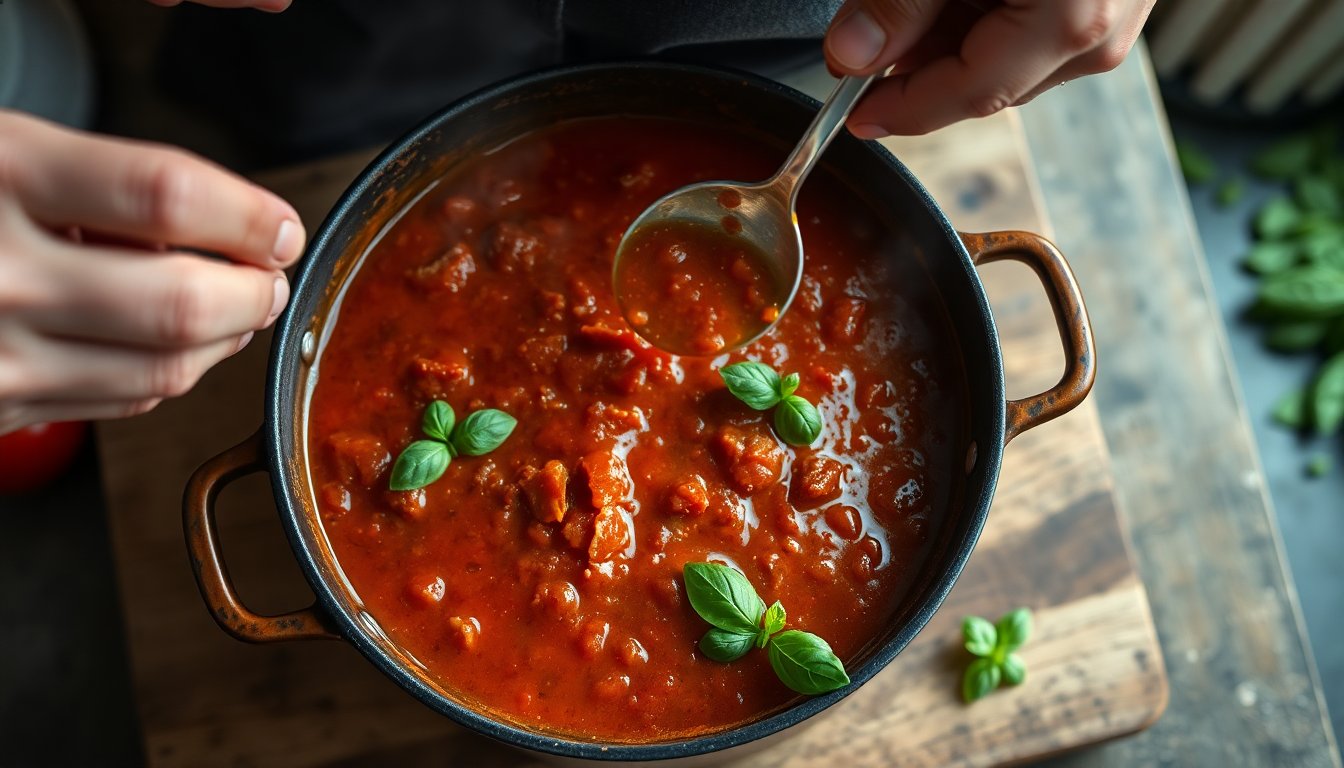
a sensory ode to slow-cooked tomato ragù
Il palato non mente mai — the phrase lands like a warm spoon against the palate. The palate never lies. Imagine tomatoes collapsing slowly into a glossy, fragrant sauce. Sweet acidity meets a whisper of smoke and a low, satisfying umami that lingers. This is not merely cooking. It is memory condensed into a pot.
the story behind the sauce
Dietro ogni piatto c’è una storia. Ragù began in peasant kitchens where filiera corta meant tomatoes picked at dawn and meat traded within a village. It evolved as a way to celebrate local terroir and available cuts. In 2026, with seasonality and sustainability guiding choices, ragù has become a manifesto: which tomato, which cut of meat, and which fat you allow to render will dictate the soul of the finished dish.
Accessible technique for a restaurant-quality ragù
As a chef I learned that time is an ingredient and choices made early shape the final dish. Continue from the previous choices: which tomato, which cut of meat, and which fat you allow to render will dictate the soul of the finished ragù.
Begin with a classic soffritto of finely diced onion, carrot and celery gently sweated in olive oil until translucent. Use ripe plum tomatoes or a trusted passata for consistent acidity and sweetness. Choose minced beef alone or a mix of beef and pork to add depth and balanced fat.
Brown the meat separately to develop a pronounced Maillard crust, then transfer it into the simmering tomatoes. Deglaze the meat pan with a splash of stock or red wine to lift the caramelized fond. This step concentrates flavour and increases umami without masking the tomato’s brightness.
Maintain low temperature during the long simmer to preserve sweetness and avoid broken emulsions. Add a bay leaf and a modest amount of stock. Simmer gently for at least two hours, uncovered, until the sauce coats the back of a spoon and the flavours have married.
Technical tips: skim periodically to keep the sauce clear and focused. Finish off the heat with a knob of unsalted butter to create a silkier texture through gentle emulsification. Reserve salt for late-stage seasoning so the reduction does not become overly concentrated.
Behind every dish there’s a story of technique and terroir: using locally sourced tomatoes or a short supply chain elevates the final plate. Practical adaptation: scale simmering time and liquid for volume, and strain for a smoother consistency when service demands a polished presentation.
Flavor building: umami, acid balance and fermentation
Building on practical adaptations for large batches, focus next on concentrated taste elements that carry through long simmers. The palate never lies: small, deliberate anchors create a ragù that reads clearly on the plate.
Begin with a classic soffritto to lay the foundation of umami. Add an aged Parmigiano rind early in the simmer to release savory glutamates. Caramelize a spoonful of tomato paste at the start to concentrate sugars and deepen color.
Aim for clean acid balance. Brightness from fresh tomatoes must be tempered to avoid sharpness. A teaspoon of red wine vinegar or a splash of good red wine during cooking will lift the sauce without dominating it. Taste and adjust in stages rather than at the end.
For subtle modern complexity, incorporate a fermented element such as a small spoonful of aged miso. Use it sparingly to enhance depth while respecting the dish’s tradition and terroir. As a chef I learned that a restrained fermented note can unify flavors without masking them.
Technically, add solids early and fine-tune liquids during the middle phase of simmering. Strain to refine texture for service when a polished presentation is required. Behind every dish there’s a story; each of these techniques tells one about patience, provenance and balance.
territory and sustainable filiera
Behind every dish there’s a story; each of these techniques tells one about patience, provenance and balance. Il palato non mente mai—the palate never lies—and it recognizes the fingerprints of place.
The first imperative is sourcing. Choose tomatoes from a local cooperative, meat from pasture-raised animals and olive oil from a nearby mill. These choices signal terroir and reduce the carbon cost of transport.
Filiera corta shortens supply chains. It increases traceability, supports small producers and preserves regional biodiversity. Farmers can disclose seed variety, breed selection and preservation methods. Chefs and food writers can then report verifiable facts to diners.
As a chef I learned that ingredient selection is technical and sensory at once. Varietal choice affects acidity and texture. Animal breed and husbandry change fat distribution and flavor. Milling methods alter polyphenol content in oil. These are measurable differences that shape a ragù’s final profile.
Food policy and guides matter. Organizations such as Slow Food and Gambero Rosso document producers practicing sustainable cultivation and transparent supply chains. Their lists help restaurateurs and consumers prioritize ethical quality.
Behind every dish there’s a story about land, people and time. By demanding provenance, chefs protect craft, safeguard biodiversity and offer diners a clearer taste of place.
Serving and sensory experience
By demanding provenance, chefs protect craft, safeguard biodiversity and offer diners a clearer taste of place. Serve the ragù on fresh tagliatelle or place a spoonful atop polenta for textural contrast. Finish with a fine grate of Parmigiano-Reggiano and a light drizzle of extra-virgin olive oil. The first mouthful should reveal layered sensations: tomato warmth, savory depth, a hint of herb or citrus, and the comforting fat that carries flavors across the palate. The palate never lies — if the balance is right, it will tell you.
An invitation
As a chef I learned that patience and respect for ingredients return tenfold. Reclaim an afternoon for a patient pot of ragù: select ripe, seasonal tomatoes and honour short supply chains. Let slow heat and time coax acidity into sweetness and collagen into silk. Taste as you go, adjust seasoning in small increments, and let the sauce reveal its character. Behind every dish there’s a story of soil, season and hands — let terroir speak through every bite.
further reading and practical guides
Behind every dish there’s a story of soil, season and hands — let terroir speak through every bite. The palate never lies, and technique helps that truth reach the table.
For networks of producers and guidance on provenance, consult Slow Food. For regional recipes rooted in tradition, refer to Gambero Rosso. For methods that lift rustic preparations to fine-dining clarity, review the Michelin Guide.
Use these sources as complementary tools. Combine producer contacts with tested recipes and targeted techniques. Prioritise seasonal ingredients, clear supply chains and reproducible methods that preserve flavour and respect the land.
As a chef I learned that precise technique amplifies terroir: control heat, respect resting times and match texture to sauce. Behind every dish there’s a story — ensure yours is traceable, articulate and delicious.