
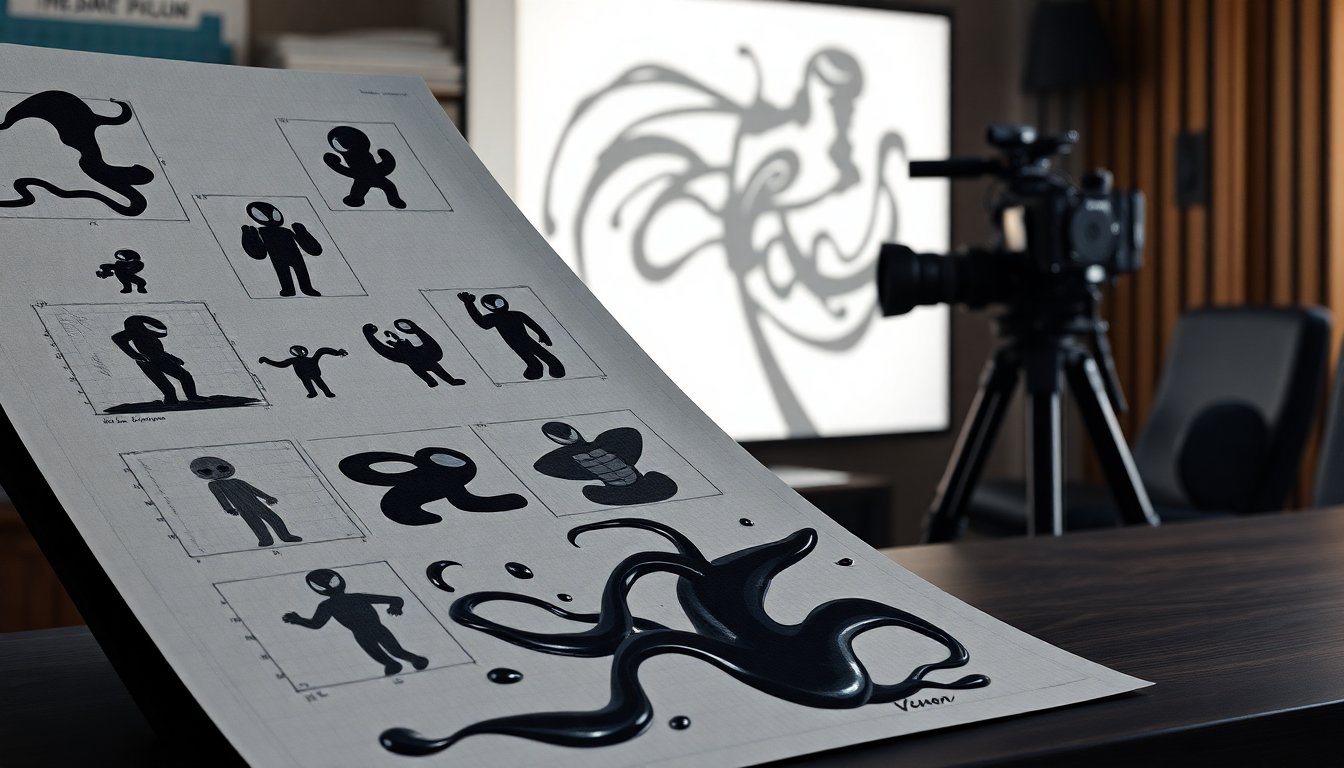
Sony Pictures develops animated Venom with directors of recent horror revival
Sony Pictures has entered early development on an animated feature centered on Venom, the studio said. The project will be directed by Zach Lipovsky and Adam B. Stein, the duo credited with revitalizing a recent horror franchise.
The move marks a shift for a character long associated with live-action blockbusters, television, video games and comic books. Studios have historically deployed Venom in large-scale, live-action formats; animation would represent a different creative direction.
The announcement did not include a production timeline, release window or further casting details. Sony described the film as being in “early development,” indicating the project remains at a preliminary stage.
Transaction data shows studios increasingly exploring animation as a platform for established comic-book properties. In entertainment, location is everything; format and audience placement can reshape a franchise’s commercial trajectory.
Industry analysts note that animated features allow different visual approaches and potential international market strategies compared with live-action tentpoles. Brick and mortar always remains a useful analogy: the underlying IP is the asset, while the chosen format determines its presentation and reach.
Who is making this animated Venom?
Sony Pictures said the animated project is in early development with the filmmakers behind the studio’s recent horror revival attached to direct. The company did not disclose an animation studio or producers on the record.
The move keeps creative control within Sony’s ecosystem while allowing a different production model. Animation reduces dependence on practical effects and complex scheduling tied to shared live-action universes. It also permits more radical visual design and tonal shifts without disrupting continuity in the studio’s theatrical slate.
The directors come to the project with recent success in genre filmmaking, a track record that likely influenced Sony’s decision. Transaction data shows studios increasingly favor filmmakers who can translate box-office awareness into new formats, especially when legacy franchises show uneven returns.
Questions remain about the film’s relationship to the existing live-action entries and to Sony’s wider Marvel partnerships. Studio statements so far frame the project as a reinvention of the character’s cinematic presentation rather than a direct sequel or a connected timeline.
Expect further announcements to clarify the creative team, the animation partner and the film’s position within Sony’s broader character strategy. Brick and mortar always remains a useful analogy: the underlying IP is the asset, while the chosen format determines its presentation and reach.
Brick and mortar always remains a useful analogy: the underlying IP is the asset, while the chosen format determines its presentation and reach. Building on that premise, Zach Lipovsky and Adam B. Stein are attached to direct the animated Venom project. The duo led the commercially successful Final Destination: Bloodlines, and studio sources say their work modernized a franchise while keeping crowd-pleasing elements intact.
Creative team and development process
The directors’ track record aligns with the demands of a volatile character such as Venom. Their approach favors kinetic visual language and tonal balance between horror and humor. Transaction data shows studios often select filmmakers who can refresh established properties without alienating core audiences.
On the production side, industry reports indicate that producers from the live-action films — Amy Pascal, Avi Arad and Matt Tolmach — are expected to return. Their involvement would provide continuity and institutional knowledge during the transition to animation. Brick and mortar logic applies again: experienced producers act as the structural foundation for creative experimentation.
The development process remains early-stage. Studio insiders describe iterative storyboarding, character design trials and explorations of tone as current priorities. Investment-focused decisions will likely follow: budgeting choices, target release windows and distribution strategies will shape the project’s final form. The momentum rests on aligning creative ambition with predictable returns.
The momentum rests on aligning creative ambition with predictable returns. Sony pictures animation has assembled an writers room to develop the screenplay, though no single writer is attached to lead the project. The studio’s decision to use a collaborative room signals an iterative development process. Writers will likely test tone, genre and target audience before committing to a final draft. Industry reports name Tom Hardy as attached “in some capacity.” The reports do not clarify whether that involvement is limited to voicing Eddie Brock and the symbiote or includes a producing role.
Why animation now?
Studios often choose animation to widen audience reach and to control tone. Animation allows creative risks without the same box-office exposure as a live-action tentpole. An iterative writers room supports that strategy. It permits experimentation with genre and humor while keeping franchise value under consideration.
In real estate, location is everything; in franchise management, format is the comparable determinant. Transaction data shows format changes can change audience demographics and long-term returns. For a property with established box-office recognition, animation can refresh the IP and extend merchandising, streaming and international revenue streams.
Behind the decision are production economics and brand calculus. Animation schedules and budgets differ from live action, creating different break-even points and distribution strategies. The writers room model reduces the risk of locking into a single creative direction early. That approach aligns creative development with market signals and investor expectations.
Next steps hinge on the writers room’s findings and on how the studio defines the project’s audience and tone. Industry observers will watch casting announcements and any clarification of Tom Hardy‘s role as indicators of the project’s trajectory.
Box office context and strategic thinking
Industry observers will watch casting announcements and any clarification of Tom Hardy’s role as indicators of the project’s trajectory. For studios, animation offers both creative upside and predictable financial parameters. Animation can contain spectacle at lower marginal cost than live-action, and it reduces location and stunt expenses that inflate live-action budgets.
Venom as an animated property can target younger and international viewers while preserving darker tonal options for existing fans. Transaction data shows crossover franchises that broaden age cohorts tend to deliver steadier ancillary revenue. The success of recent animated comic adaptations provides a benchmark for how stylized visuals can translate into streaming subscriptions, merchandise sales and global box office receipts.
Budgeting will hinge on animation style, voice talent and marketing. High-end stylized animation demands experienced teams and longer production timelines, which raises upfront costs but can strengthen long-term brand value. Conversely, a streamlined approach can shorten time to market and improve short-term cash flow.
From a production-strategy standpoint, decision-makers must weigh creative ambition against franchise ROI. Brick and mortar always remains relevant as a metaphor: a well-located property appreciates; similarly, a well-timed, well-positioned film increases residual value. Clear positioning—family-friendly versus mature, stylized versus photoreal—will determine distribution windows and promotional partnerships.
What to expect next
Clear positioning will shape the film’s release strategy and commercial prospects. Moving from live-action to animation lowers certain production costs while altering revenue levers such as merchandising, streaming rights and international distribution. Transaction data from comparable franchise shifts show animation can extend a property’s lifecycle across platforms.
Who the film targets will determine marketing partners and windowing. A family-friendly approach opens broad theatrical and licensing opportunities. A mature, stylized film narrows theatrical appeal but may boost premium streaming deals and collectible merchandise sales.
Casting and talent agreements remain central variables. Confirmation of major cast returns or high-profile voice talent will signal the studio’s ambition and affect pre-sale and promotion plans. Studios will also weigh animation style against cost, time and perceived audience reach.
For investors and licensees, the key metrics will be production budget relative to projected merchandising and streaming income, and the franchise’s residual brand strength. Brick and mortar always remains a factor for physical collectibles and promotional tie-ins. Roberto Conti’s experience suggests close attention to audience geography and platform demand will be decisive: in entertainment, location is everything when it comes to distribution and retail placement.
Expect the studio to test messaging early through controlled trailers and festival screenings if it seeks prestige positioning. If the project targets mass audiences, anticipate wide promotional tie-ins timed to family viewing windows and streaming launch schedules.
Development remains fluid as Sony outlines collaborative approach
Sources say key creative details remain unsettled. There is no confirmed writer, release window or final cast list at this stage. Sony has signalled an intent to retain franchise stakeholders while steering development toward filmmakers with established track records.
The studio’s plan to convene a writers room points to a collaborative, iterative narrative process. That structure typically enables multiple storylines to be tested before a single script is finalised, and it may affect scheduling and production timelines.
Reports indicate familiar producers may return to preserve continuity with the live-action entries. The reported participation of Tom Hardy — if confirmed — would provide a direct link to earlier installments and help position the project for cross-platform promotion.
For investors and distributors, the emphasis on experienced directors and iterative scripting reduces creative risk while keeping commercial flexibility. Expect the next announcements to focus on director attachments and a narrower development timetable.
Expect the next announcements to focus on director attachments and a narrower development timetable. Early reports indicate Sony is treating the project as a controlled experiment in form and market reach.
Venom in animation would represent a stylistic reinvention for the character. It could also open a new commercial avenue within Sony’s Spider-Man–adjacent portfolio. Transaction data from Sony’s recent releases suggests alternate formats can extend franchise value while limiting production risk.
The project remains at an early stage with no confirmed casting, plot or release timeline. Observers note the approach balances franchise experience with a different cinematic language. The most likely near-term updates will clarify director attachment and a preliminary production schedule.