
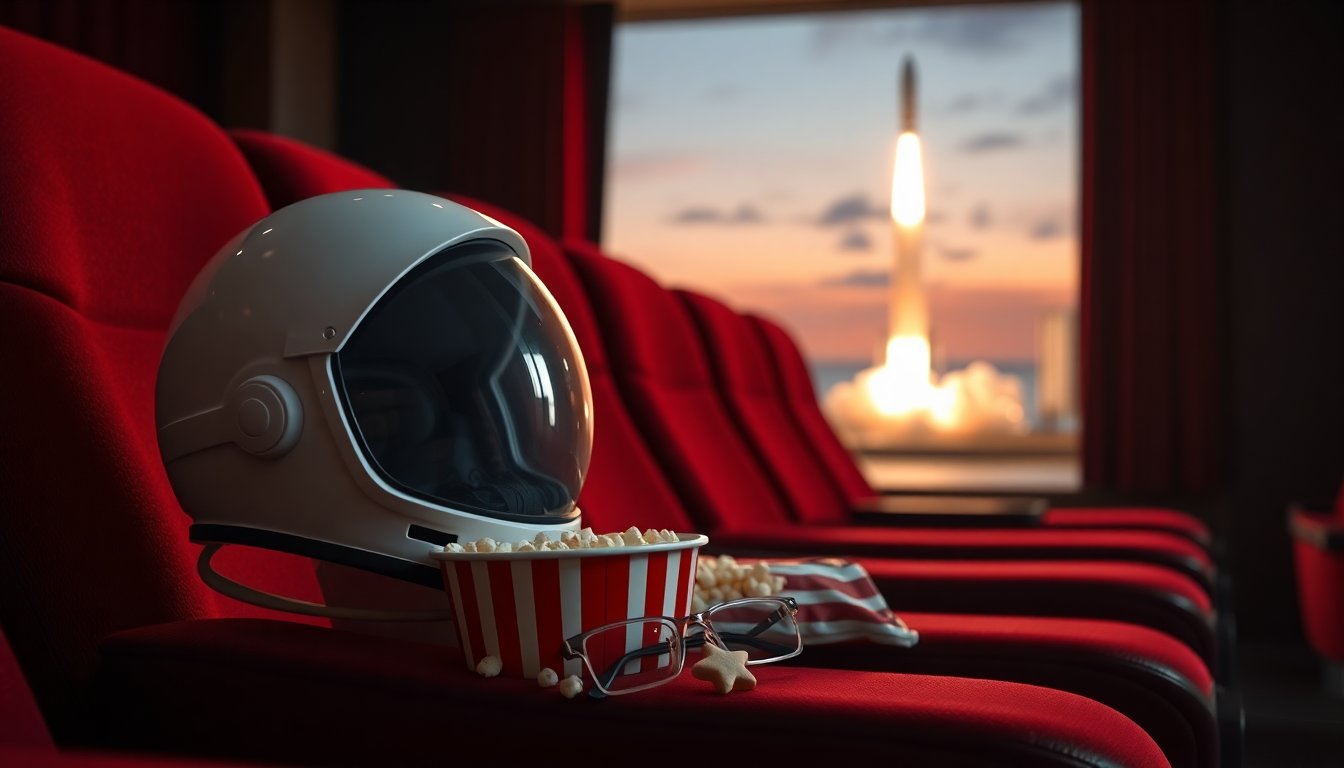
On April 1, 2026, two very different journeys toward the heavens arrived at once: a high-profile Hollywood sequel and a milestone NASA flight. The space-themed blockbuster The Super Mario Galaxy Movie opened in cinemas nationwide while the space agency launched Artemis II from the Kennedy Space Center in Florida at 6:35 p.m. EDT. The juxtaposition of a family-oriented animated adventure and a genuine crewed mission created an unusual double bill: one that let viewers alternate between popcorn-fueled fantasy and live technical achievement in a single evening.
The cinematic release continues the Mario franchise’s expansion beyond the Mushroom Kingdom, and the NASA mission represents a real-world step in America’s return to deep space. The film is a direct follow-up to the 2026 The Super Mario Bros. Movie, carrying familiar voices—Chris Pratt as Mario, Charlie Day as Luigi and Anya Taylor-Joy as Princess Peach—through a 98-minute animated romp. The flight, meanwhile, is a planned nine-and-a-half-day mission that will perform a close lunar pass before returning to Earth, marking the first piloted deep-space flight of its kind in over 50 years.
The shared appeal: why fiction and flight felt connected
At first glance, a family cartoon and a NASA mission have little in common. Yet both events invited public attention to roughly the same themes: exploration, team effort and new frontiers. Super Mario Galaxy dramatizes cooperation among colorful allies as characters traverse interstellar locales, while Artemis II depends on technical teamwork across agencies and contractors to manage complex systems. Each narrative—one scripted, one procedural—relies on collaboration to achieve its goals, and both were presented to wide audiences: the movie in theaters and the launch streamed live on NASA‘s channels.
How the double feature worked
Pairing the two experiences made sense for fans and casual observers alike. A theatergoer could step out of a showing of The Super Mario Galaxy Movie and tune into Artemis II coverage online, connecting playful imagination with tangible engineering. The film’s colorful depiction of a cartoon galaxy provided an accessible counterpoint to the mission’s technical language—terms like lunar flyby were explained in broadcasts for viewers following the crew’s trajectory as it circled the moon without entering lunar orbit.
Artemis II: a test that points to future ambitions
Artemis II is framed as an essential test flight within a broader program aimed at sustainable human exploration beyond low Earth orbit. Designed as a close lunar pass rather than orbital insertion, the mission will validate systems and procedures needed for more ambitious crewed operations. By executing a successful flyby and return, the crew will help pave the way for subsequent missions that incrementally increase complexity, ultimately supporting long-term objectives such as extended lunar presence and eventual Martian expeditions.
Historic context and public visibility
This sortie carries symbolic weight as the first American piloted deep-space flight in decades, and NASA amplified public engagement by broadcasting the launch and mission updates. For many viewers, the live footage served as an educational window into real aerospace operations, with commentators unpacking technical milestones and mission phases in accessible language. The result was a blend of scientific demonstration and civic theater that complemented the day’s cinematic spectacle.
What the movie contributes to the Mario universe
The Super Mario Galaxy Movie translates the 2007 game’s cosmic settings into sweeping computer animation while also laying groundwork for future installments. Directed by Aaron Horvath, Michael Jelenic, Pierre Leduc and Fabien Polack and written by Matthew Fogel, the film expands the franchise’s scope by introducing new characters and plot threads, including the appearance of Fox McCloud voiced by Glen Powell. Its ending teases further stories, positioning this film not merely as a standalone spectacle but as a springboard for later adventures across an increasingly broad cinematic galaxy.
Despite mixed critical reception—some outlets rated the film around 5/10—audiences flocked to theaters, pushing the sequel toward the top of box office charts during its opening weekend. Visually, the animated galaxy contrasts with real space exploration, yet both share the power to stir curiosity about the cosmos. Families can enjoy a playful, narrative-driven voyage on screen while also appreciating the methodical progress of human spaceflight unfolding live.
Why the coincidence mattered
Having an animated star-studded movie premiere and a high-profile NASA mission on the same day offered a cultural moment when fantasy and engineering met. Both invited people to look upward—some to imagine themselves alongside Mario and Luigi, others to follow a crewed vehicle as it traced a path around the moon. Together, they underscored a persistent human desire to explore, whether through stories that transport us or through machines and crews that carry us into the actual unknown.
For anyone drawn to space in its many forms, the events of April 1 provided multiple entry points: a family-friendly blockbuster in theaters, and a real-time illustration of aerospace capability on screens at home. Each, in its own way, reinforced why we still watch the skies and dream about where humanity might go next.