
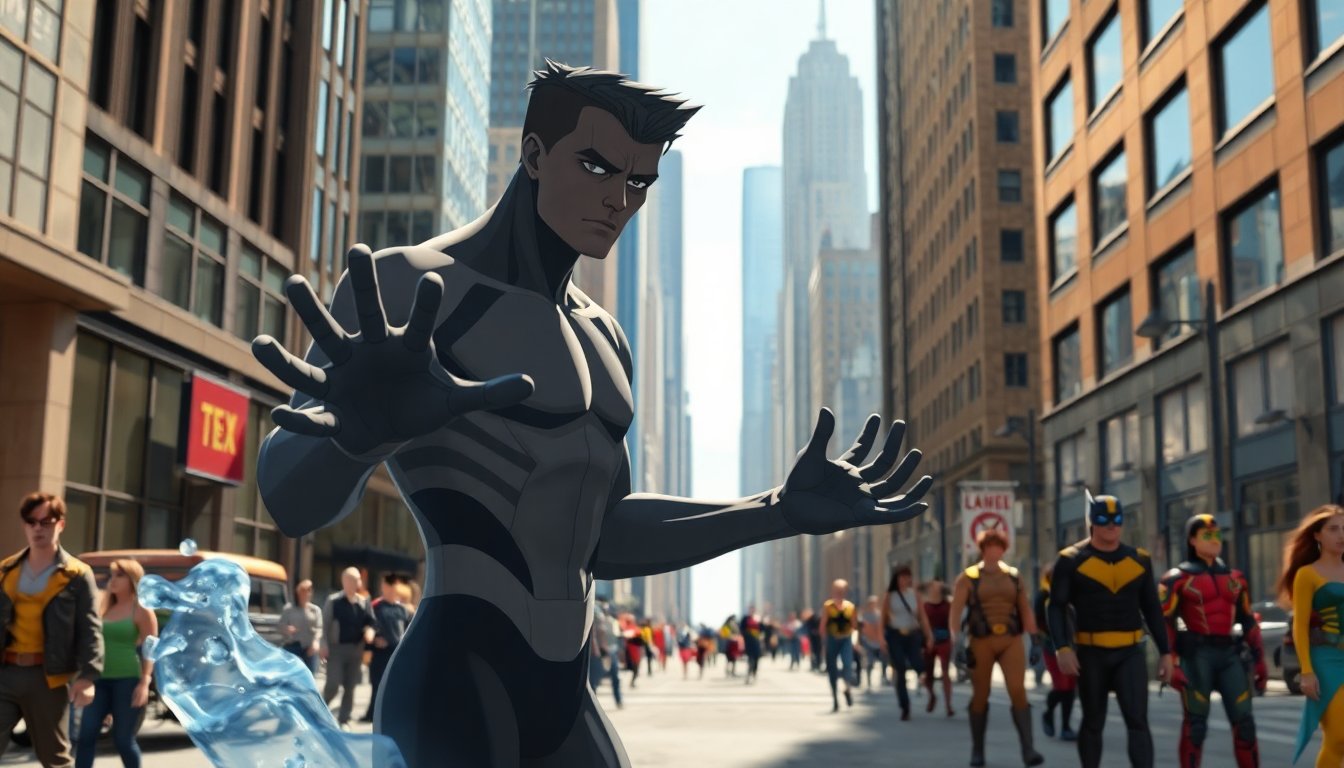
X-Men ’97 revives a classic for a new generation
The return of the animated series X-Men ’97 has sparked excitement among fans of the original X-Men: The Animated Series, which aired in the 1990s. This new version is not just a nostalgic throwback; it establishes its own identity, separate from the existing Marvel Cinematic Universe. This creative freedom enables X-Men ’97 to honor its roots while reintroducing beloved characters such as Cyclops, Storm, and the versatile Morph.
Morph’s shapeshifting rules
Morph, a character recognized for his remarkable ability to transform into other mutants, adheres to specific limitations that maintain his powers. Insights from X-Men ’97: The Art and Making of the Animated Series reveal that series director John Castorena emphasized a key rule: while Morph can take on the physical characteristics of any individual, he cannot replicate their mutant abilities.
Understanding the mechanics of Morph’s transformations
Maintaining balance within the narrative is crucial for the character of Morph. When Morph transforms into characters like Colossus or Juggernaut, he must concentrate on their physical attributes. This focus is necessary to regenerate specific characteristics, such as Colossus’s metallic skin. However, it is important to note that Morph cannot invoke special powers, such as Professor X’s telepathy, as these abilities lie outside the realm of physical traits.
A notable moment in X-Men ’97 illustrates this point. In an episode, Morph showcases his ability to become the Hulk, emphasizing strength as a physical attribute. This instance highlights how his powers can be both entertaining and formidable while adhering to established limitations. It is essential for creators to maintain the integrity of the characters and to avoid exceeding the boundaries of Morph’s capabilities.
The potential for cameos
Morph’s shapeshifting abilities enhance his character while creating opportunities for numerous cameos within X-Men ’97. The writers and directors have effectively integrated this potential into the storyline, enabling Morph to assume the forms of various mutants from the vast Marvel universe. This creative flexibility offers chances for both nostalgia and surprise. However, it requires careful management to ensure that the narrative remains coherent and does not become overloaded.
Thoughtful cameo choices
Emmett Yonemura, the episodic director, emphasizes that each cameo in the series should serve a purpose beyond mere fan service. The creative team has meticulously selected characters that align with the series’ framework and will not disrupt future storylines. By focusing on physical characters, such as ninjas and brawlers, the cameos aim to enhance the narrative rather than distract from it. This careful consideration sustains viewer engagement and excitement while preserving the story’s integrity.
Moreover, each cameo acts as a reminder that the original series exists within its own multiverse, creating a rich array of interactions and possibilities. This encourages fans to speculate on the intentions behind each transformation, fostering a vibrant community around the show.
The impact of X-Men ’97
The animated series X-Men ’97 has garnered acclaim for its clever writing and engaging characters. This new installment successfully resonates with long-time fans while also attracting new viewers. Season 1 has received widespread approval, and plans for a second season are already underway, with a scheduled release in 2026.
As Marvel Studios develops a live-action X-Men reboot, X-Men ’97 continues to stand as a vital part of the franchise’s legacy. Fans can immerse themselves in this world by streaming the series on Disney+. Here, the adventures of Morph, Cyclops, Storm, and the rest of the team unfold, honoring the original while paving a new path for the franchise.