
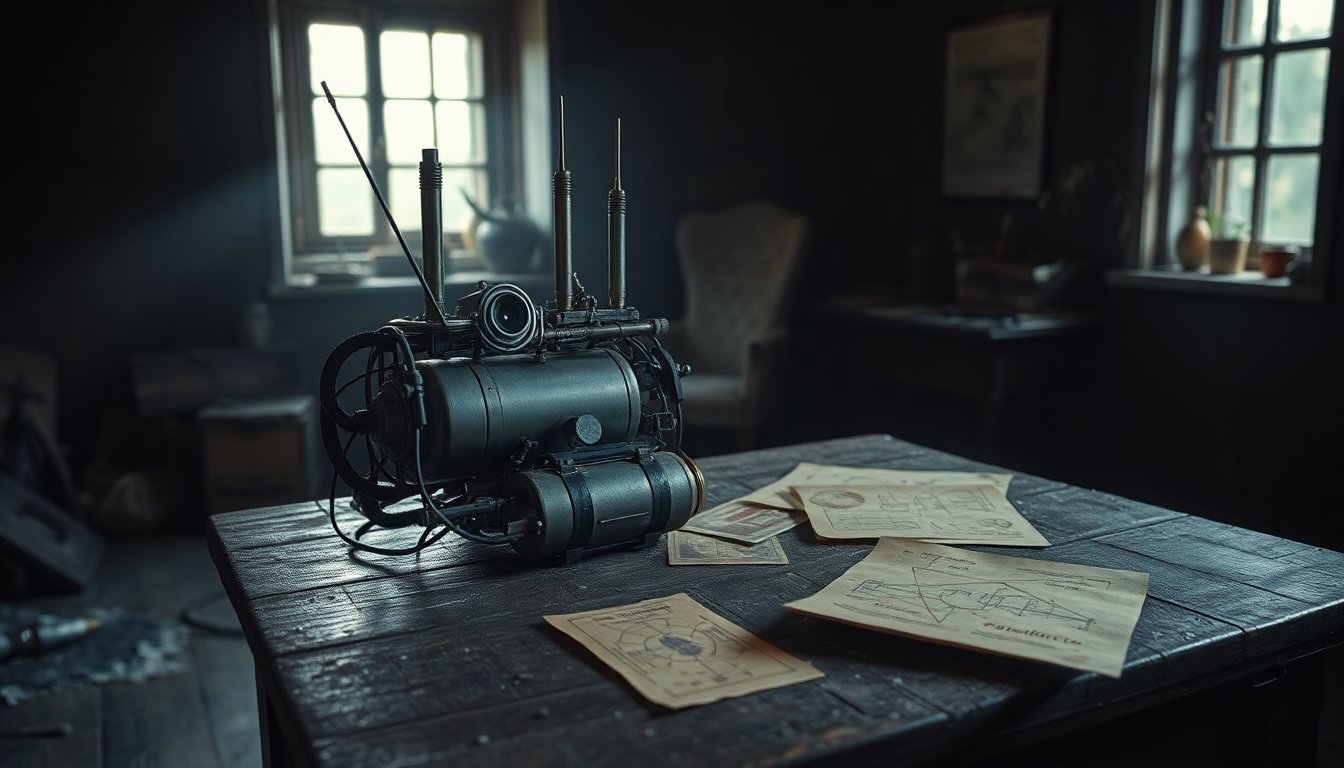
In the realm of extraordinary claims and historical mysteries, the story of the chronovisor stands out as a captivating narrative that blurs the boundaries between fact and fiction. This purported device, conceived by Italian Benedictine monk Pellegrino Ernetti in the 1960s, was said to capture and display moments from the past, reminiscent of a paranormal television. Combining cathode rays, unusual metals, and various antennas, Ernetti’s invention allegedly allowed him and a group of distinguished scientists—including Nobel Prize winner Enrico Fermi and former Nazi engineer Wernher von Braun—to witness historic events ranging from the Roman Empire’s inception to the crucifixion of Jesus Christ.
Despite a vow of silence imposed by Pope Pius XII, who feared the implications of such technology, Ernetti eventually revealed his creation. This disclosure triggered a flurry of articles in Italian newspapers throughout the 1970s, alternating between fascination with the monk’s claims and skepticism regarding the veracity of such a fantastic invention. Over the years, Ernetti stood firm in his belief, reiterating in a letter before his death in 1994 that the chronovisor was indeed real. He further claimed that the Vatican had hidden it away rather than destroying it, fearing its potential to wreak havoc on humanity.
The film adaptation: Chronovisor
Directors Jack Auen and Kevin Walker have taken on the challenge of adapting this captivating tale into a feature film titled Chronovisor. Their cinematic endeavor presents the titular machine as a mystical artifact—akin to a holy grail or a black hole—drawing in anyone who dares to approach it. The film revolves around Béatrice Courte, an academic portrayed by real-life scholar Anne Laure Sellier, who becomes consumed by the quest to locate this elusive machine after encountering a fleeting mention of it. Auen and Walker craft Chronovisor as a modern ghost story, with the enigmatic device serving as a catalyst for a series of mysterious events.
Visual storytelling and atmosphere
The atmosphere in Chronovisor is laden with intrigue and suspense, enhanced by haunting visuals captured using warm, low-lit Super 16mm film by cinematographer Leo Zhang. The film’s aesthetic evokes a world caught between the realms of the living and the departed, encapsulating a sense of foreboding that permeates the narrative. Auen and Walker skillfully navigate the eerie ambiance, ensuring that the viewer feels the weight of Béatrice’s obsession as she delves deeper into the mysterious past.
Literary exploration and the power of words
What sets Chronovisor apart from other films is its profound reverence for the written word. The directors emphasize the act of reading as pivotal in unraveling the secrets of the chronovisor, presenting a narrative that champions the importance of literature in discovering hidden truths. The film’s structure immerses viewers in Béatrice’s academic world, where she pores over ancient texts and scholarly material rather than relying on digital searches. This anachronistic approach plays with the viewer’s perception of time, as the film’s setting oscillates between contemporary elements and a timeless quest for knowledge.
Engagement and interactivity
The unique decision to overlay English translations directly onto the original texts in the film encourages audiences to engage actively with the material. Auen and Walker’s intention is clear: they want viewers to read along with Béatrice, creating an immersive experience that transcends traditional storytelling. This artistic choice enhances the film’s intellectual depth, as close-ups of books and documents punctuate the runtime, inviting contemplation and reflection.
As the film unfolds, it transforms into more than just a retelling of an improbable invention; it becomes a commentary on the nature of conspiracies and the allure of extraordinary narratives in a world that often dismisses the inexplicable. The seamless blending of scholarly research with cinematic storytelling showcases the dizzying power of ideas, creating a captivating journey that invites viewers to question the boundaries between reality and myth.
The legacy of the chronovisor
Ultimately, the question remains: does it matter whether the chronovisor was a fabrication? Regardless of its authenticity, the tale and the film adaptation resonate deeply, highlighting the magnetic pull of stories that challenge our understanding of history and the universe. The enchantment lies not solely in the device itself, but in the potential that such narratives hold to ignite curiosity and inspire exploration. As Béatrice’s journey unfolds in Chronovisor, it serves as a reminder that mysteries abound in our world, waiting for those brave enough to seek them out.