
Writers guild of america west cancels march 8 los angeles awards amid staff strike
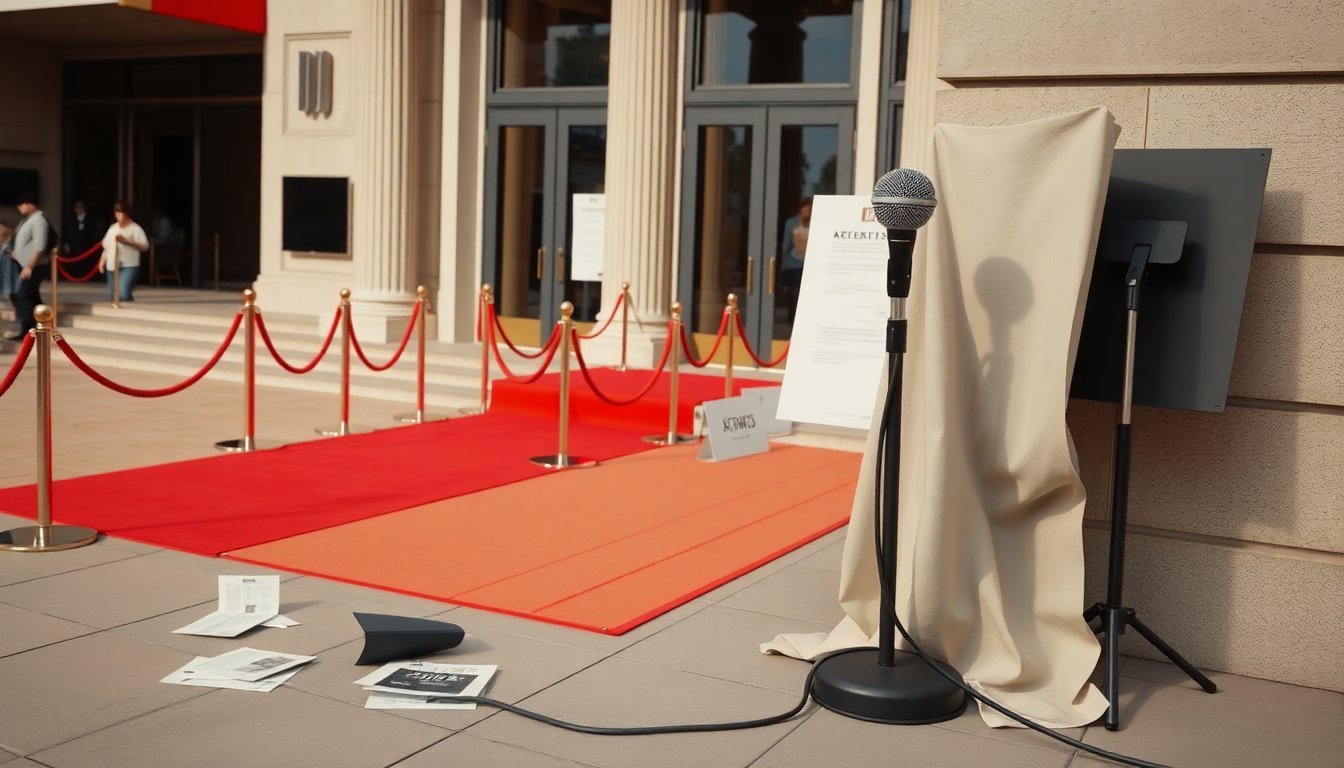
The Writers Guild of America West announced it has canceled its Los Angeles awards ceremony that had been scheduled for March 8. The decision affects presenters, nominees and invited guests who had been preparing to attend the event.
In a letter to presenters and participants, Michele Mulroney, president of the WGAW, said the ceremony would not proceed because the guild’s non-supervisory staff is currently on strike. Mulroney wrote the guild sought to avoid asking guests and creatives to cross a picket line and to prevent staging an awards show amid an active labor dispute.
The cancellation follows internal consultations and reflects concern for staff safety and solidarity with striking workers. Organizers did not provide a new date for the ceremony in the letter.
Transaction data shows event planning costs and contractual obligations are typically significant for ceremonies of this scale. Brick and mortar venues and production crews face logistical and financial consequences when ceremonies are postponed or canceled, particularly during labor actions.
The WGAW said further updates would be provided to nominees and participants through official channels. The union did not announce alternative plans for recognizing winners at this time.
Why the Los Angeles ceremony was canceled
The cancelation followed sustained picketing outside the WGAW headquarters by staff members. The staff union, publicly identified as the Writers Guild Staff Union (WGSU), has said its members seek a negotiated first contract that secures pay and procedural protections. The union has accused guild management of failing to bargain in good faith.
In some communications, the staff have been represented by the Pacific Northwest Staff Union (PNWSU) during bargaining discussions. Management officials said their decision prioritized avoiding complications for nominees, guests and crew that could arise from holding an event during an active labor dispute.
The pickets targeted the headquarters entry points and several nearby streets. Organizers said they aimed to raise public awareness of stalled talks and to press for a contract that defines grievance procedures, wage floors and clear promotion pathways. Transaction data shows similar tactics have increased leverage in recent public-sector and private-sector bargaining campaigns.
Guild leadership cited concerns about safety logistics, guest access and potential disruptions to broadcast and production operations. Officials also noted contractual and insurance issues that they said made proceeding with a ceremony untenable while the dispute remained unresolved.
Union representatives rejected the characterization that their actions endangered nominees or guests. They said they had coordinated with local authorities and planned peaceful demonstrations focused on the bargaining table.
The union did not announce alternative plans for recognizing winners at this time. Negotiators for both sides agreed to continue talks, but no new schedule for a ceremony has been released. The next public update will come from either the WGSU or WGAW as negotiations progress.
The WGAW said it would not ask members or guests to cross a picket line while staff exercise their right to strike. The guild’s leadership framed the decision as a matter of principle and safety. The letter from WGAW president David A. Goodman and interim leadership, signed by Mulroney, said an alternative celebration for Los Angeles–based nominees will be scheduled when conditions allow.
Union claims and management response
Staff union leaders told management they were informed the awards could be canceled and used as leverage in bargaining. The staff union described that message as an attempt to create division between unionized employees and the wider WGA membership. Management has not publicly confirmed the claim.
The dispute underscores tensions over workplace rights and event logistics while picketing continues near the WGAW headquarters. In labour disputes, location is everything: picket lines shape both optics and practical decisions about gatherings. The parties say negotiations remain ongoing.
The staff union said negotiators delivered a final offer and warned that rejecting it could lead to cancellation of the awards show. The union described the tactic as aimed at creating division between event staff and the guild’s membership. It said staff who would normally produce the ceremony faced the prospect of picketing, which could place nominees, guests and hotel workers in a difficult position.
Guild leadership responded that staff representatives negotiated in good faith while balancing duties to writers and the organization. The parties say negotiations remain ongoing.
What happens next for nominees and attendees
Organizers have not announced final plans for the ceremony. Nominees and their teams should expect uncertainty until talks conclude.
Logistics remain a central concern. In real estate, location is everything; for an awards show, venue access, staffing and hotel operations determine whether the event can proceed.
Event hosts and vendors may face mixed obligations if staff strike. That scenario could affect access to dressing rooms, technical support and on-site hospitality.
Legal and contractual questions could arise around travel, accommodations and insurance. Nominees and guests should review contracts and consult representation where appropriate.
Unionized hotel employees were identified by the staff union as a potential point of friction. Any picketing that involves hotel services could complicate arrival and lodging for attendees.
Stakeholders are watching official communications from the guild and from staff representatives. Transaction data shows that late changes to major events often trigger rapid operational adjustments, including relocation or postponement.
For now, the most salient fact is that negotiations continue and no final decision about the ceremony has been announced.
For now, the most salient fact is that negotiations continue and no final decision about the ceremony has been announced. Nominees who had planned to attend the Los Angeles event were told they can instead participate in the concurrent Writers Guild Awards New York ceremony, which the organisers say will proceed as scheduled.
The New York ceremony, organised by the Writers Guild of America East (WGAE), is booked at the Edison Ballroom and is expected to include live presentations of film, television and news awards. The WGAE operates as a separate local with its own staff and union arrangements, and WGAE leaders say those arrangements are not affected by the WGAW staff strike.
Organisers notified nominees and representatives by email and telephone, according to people briefed on the notices. Travel and seating logistics are being managed by WGAE staff working with nominees’ teams and networks. Transaction data shows last-minute travel shifts and venue preparations are under way for the Edison Ballroom programme.
Hosts, honorees and logistics
The broader labor context and implications
The Los Angeles program had been slated to be hosted by comedian Atsuko Okatsuka, with special honors including the WGAW Laurel Award. Organizers canceled the Los Angeles event and said ticket purchasers will receive automatic refunds through the sales platform. The guild indicated it will contact studios and sponsors separately to resolve sponsorship and related arrangements.
The New York ceremony will proceed as planned with Roy Wood Jr. as host. Organizers said other honorees and awards scheduled for New York will be presented. Transaction data shows last-minute travel shifts and venue preparations are under way for the Edison Ballroom programme.
Negotiations between the guild and industry employers remain central to the decision-making process. Union leaders and studio representatives continue talks, and any change to remaining events would depend on the outcome of those talks. Sponsors and production partners must balance contractual obligations with evolving labor conditions.
Operationally, the cancellation alters logistics and costs for vendors, venues and nominees who had planned to attend in Los Angeles. Travel and accommodation adjustments are already visible in booking records. For sponsors and rights holders, the situation raises questions about contractual remedies and reputational management.
Observers say the outcome of ongoing negotiations will determine whether additional ceremonies or industry events face alteration. Transaction data and official communications from the guild will provide the next indicators of how the situation develops.
Staff-management split exposes structural fault lines within the guild
Transaction data and official communications from the guild will provide the next indicators of how the situation develops. The cancellation underscores tensions when employees and members pursue separate labor agendas.
The staff union is striking over pay increases and legal protections, including just cause for discipline. Management counters that it must protect the guild’s mission while negotiating terms it considers financially sustainable.
Because the organization operates as coordinated but distinct locals, the differing outcomes across cities reflect deeper differences in representation and bargaining alignment. Those structural variations shaped whether events proceeded or were suspended.
In real estate, location is everything; in labor disputes, governance structure is everything. Transaction data shows where leverage and vulnerabilities lie within the guild’s internal framework.
The split outcome will affect upcoming bargaining dynamics. Expect negotiators to cite local precedents and operational constraints when framing further proposals.
Analysts will monitor membership communications, staffing updates and any new filings for clues about potential resolutions. The dispute could influence broader labor relations practices among similar member-staff organizations.
Community reaction and next steps
The canceled event drew immediate condemnation from members and concern from industry partners. Producers and crews reported lost work and logistical disruptions. Honorees and sponsors expressed disappointment at the interruption to planned recognition and promotion.
The WGAW board said it hopes bargaining will resume and that similar disruptions can be avoided. The staff union publicly urged management to return to talks. Both parties have indicated a willingness to negotiate, but no timeline for a resolution has been made public.
Legal advisers and industry associations are monitoring the dispute for precedent-setting implications. Observers note the potential for the episode to shape labor relations practices among comparable member-staff organizations.
Operationally, transaction data shows cancellations and postponements carry measurable costs to venues and third-party vendors. The immediate focus for stakeholders remains restarting negotiations and limiting further fallout for workers and partners.
The mattone resta sempre in Roberto Conti’s shorthand: location matters, but internal governance determines whether events can proceed. Investors and industry actors will watch bargaining progress for signals on stability and future risk.
Mixed reaction as guild shifts Los Angeles recognition to a later date
Writers and industry observers voiced mixed reactions after the guild altered its awards plan. Some expressed support for staffers’ right to organize and strike. Others lamented the loss of an in-person celebration for nominees.
The guild said it will arrange an alternative recognition event for Los Angeles-based winners at a later date. The organization also confirmed that winners will receive their statuettes through the guild’s awards office.
For now, the New York ceremony will proceed as a live forum to honor achievements in writing. That ceremony will serve as the principal public recognition while the situation on the West Coast remains in flux.
The change adds uncertainty for nominees, production partners and event vendors. In the media market, location is everything, and the split approach highlights differing operational realities between coasts.
Implications for the guild and awards ceremonies
As negotiations continue, the outcome will shape how internal staff unions and membership-driven organizations stage high-profile events during labor disputes.
For nominees, presenters and fans, the immediate issue is whether ceremonies can honor creative work without requiring anyone to cross a picket line.
For the guild and its employees, the negotiations concern both a first contract and the long-term operational integrity of an organization that represents writers across media.
Transaction data shows that operational choices made now will set precedents for event planning, staffing and public communications in future disputes.
In the media market, location is everything, and the split approach highlights differing operational realities between coasts.
Observers expect the terms agreed at the bargaining table to determine whether ceremonies proceed with reduced staff, remote presentations or alternative recognition formats.
Negotiators on both sides will decide whether those outcomes protect workers’ rights while preserving the symbolic and commercial value of awards seasons.