
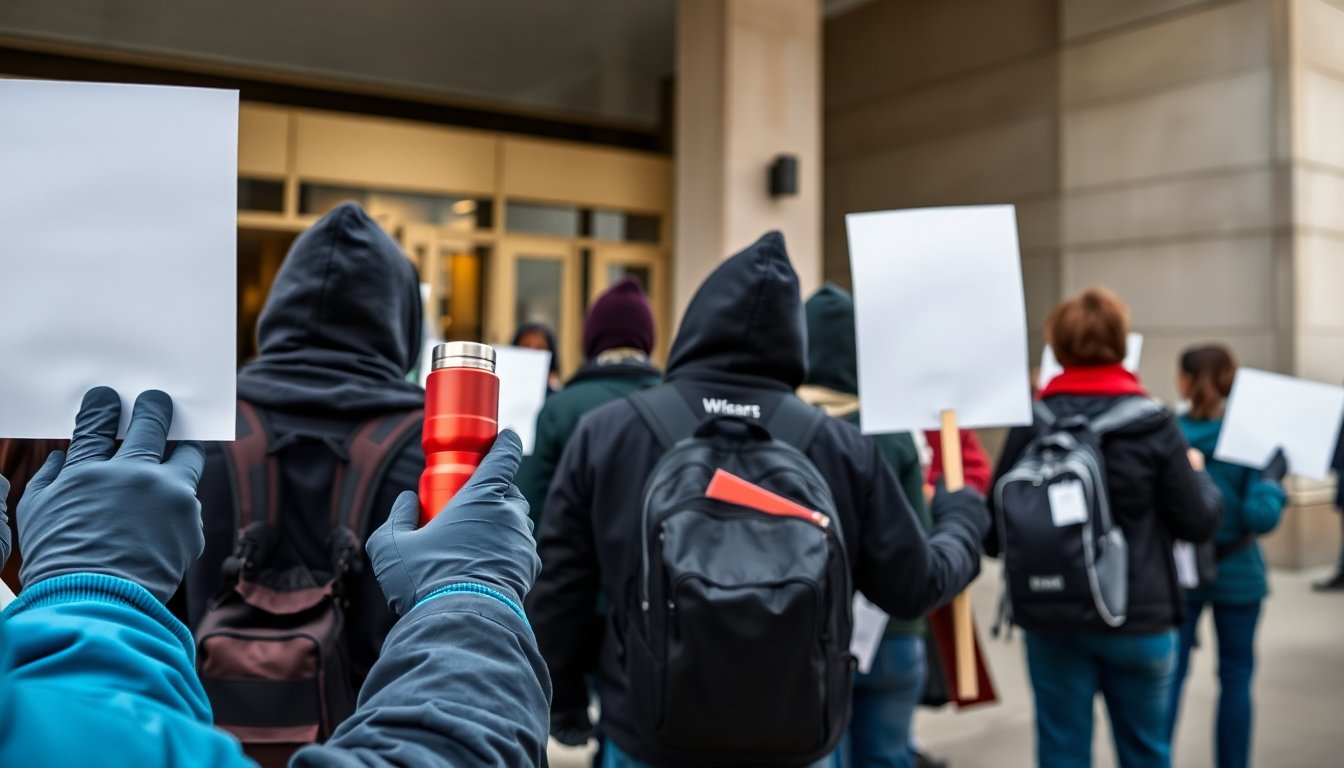
Staffers at the Writers Guild of America West (WGAW) have staged a walkout, accusing management of unfair labor practices and leaving the union that represents screenwriters mired in an internal battle. Roughly 115 employees who formed the Writers Guild Staff Union (WGSU) are picketing outside the WGAW headquarters after contract talks stalled. They say management’s final offer fails to address core workplace protections and that some organizers have faced retaliation; WGAW denies the allegations and says any personnel actions were unrelated to union activity.
What the staff want — and why they walked out
– The staff are seeking a first collective bargaining agreement that would spell out recognition, job security and formal grievance procedures. Key demands include guaranteed wage increases, a 401(k) plan with employer matching, and just-cause protections for discipline and dismissal. They also want clear policies about how the guild will use artificial intelligence in its work.
– Union leaders say bargaining, which began last fall, produced little progress on those central issues. They contend some organizers were disciplined after union activity ramped up; WGAW disputes that characterization and insists it remains willing to return to the table.
– Picketing, the staff say, came only after they exhausted internal avenues. Management voices concern about operational disruptions and the effects on members, but officials haven’t signaled a readiness to meet the union’s core demands.
A threatened awards ceremony raises the stakes
– The dispute has cast doubt over the 2026 Writers Guild Awards. WGSU alleges management suggested canceling the ceremony if staff rejected what the union calls a “broken last offer.” WGAW leadership says it won’t ask members to cross picket lines to attend and has pledged refunds and alternative arrangements if the event can’t go forward.
– The awards matter beyond trophies: they help shape the awards season conversation and can build momentum for films and screenwriters heading into the Oscars. Union leaders warn that canceling or muting the ceremony would damage morale, impose financial and reputational costs on staff who stage the event, and erode trust in the guild’s stewardship of high-profile initiatives.
– Management circulated documents comparing its proposals and rejects claims of unfair labor practice. The competing accounts of what was said in talks remain a central point of contention as negotiations continue.
Practical ripple effects for nominees and awards season
– If the ceremony is canceled or heavily picketed, nominees may skip it, reducing the event’s influence as an industry bellwether. That could blunt momentum for contenders in screenplay and film categories and make an internal guild dispute more publicly visible.
– Organizers on both sides say the optics matter: presentation and ritual shape how work is received, and disruptions to a marquee event change perception as much as any line in a review.
Implications for the upcoming MBA negotiations
– The walkout complicates preparations for the next multi-employer bargaining round with the Alliance of Motion Picture and Television Producers (AMPTP), known as the Minimum Basic Agreement (MBA). WGAW leadership wants a united front for those talks, but an unresolved internal conflict could siphon attention and resources at a delicate moment.
– Staffers argue the guild should resolve its own labor issues before stepping into high-stakes industry negotiations. Observers warn that prolonged internal discord could weaken the WGA’s leverage on critical issues such as streaming compensation formulas and residual protections.
– Some member meetings and public forums intended to set bargaining priorities were reportedly canceled because of the walkout, reducing opportunities for rank-and-file input. Staffers point to their operational contributions during prior labor actions — from communications to training and logistics — as proof of their importance to bargaining readiness.
Allies, divisions and the broader labor landscape
– Other union staff groups and labor organizations have publicly backed the WGSU pickets, including staff unions at the Writers Guild of America East and employee unions at SAG-AFTRA. Support from outside groups underscores how staff unions — often salaried employees rather than gig workers covered by industry-wide minimums — pursue protections different from those in the MBA.
– Those differences could complicate attempts to craft a single negotiating package across employers and worker classifications. Leadership and staff will need to resolve their dispute if the WGA hopes to move into multi-employer bargaining with cohesion.
What happens next
– Picket lines remain active outside WGAW headquarters as negotiators prepare for further sessions. Both sides frame their positions as matters of principle: staff pressing for enforceable workplace protections, and management protecting members’ interests and the organization’s operations.
– In the coming days negotiators must choose whether to finalize a contract for staff and whether the 2026 Writers Guild Awards can — or should — go forward as planned. How leadership and staff resolve this standoff will shape the guild’s bargaining posture and could influence the timing and scope of upcoming industry negotiations. Observers will be watching closely.