
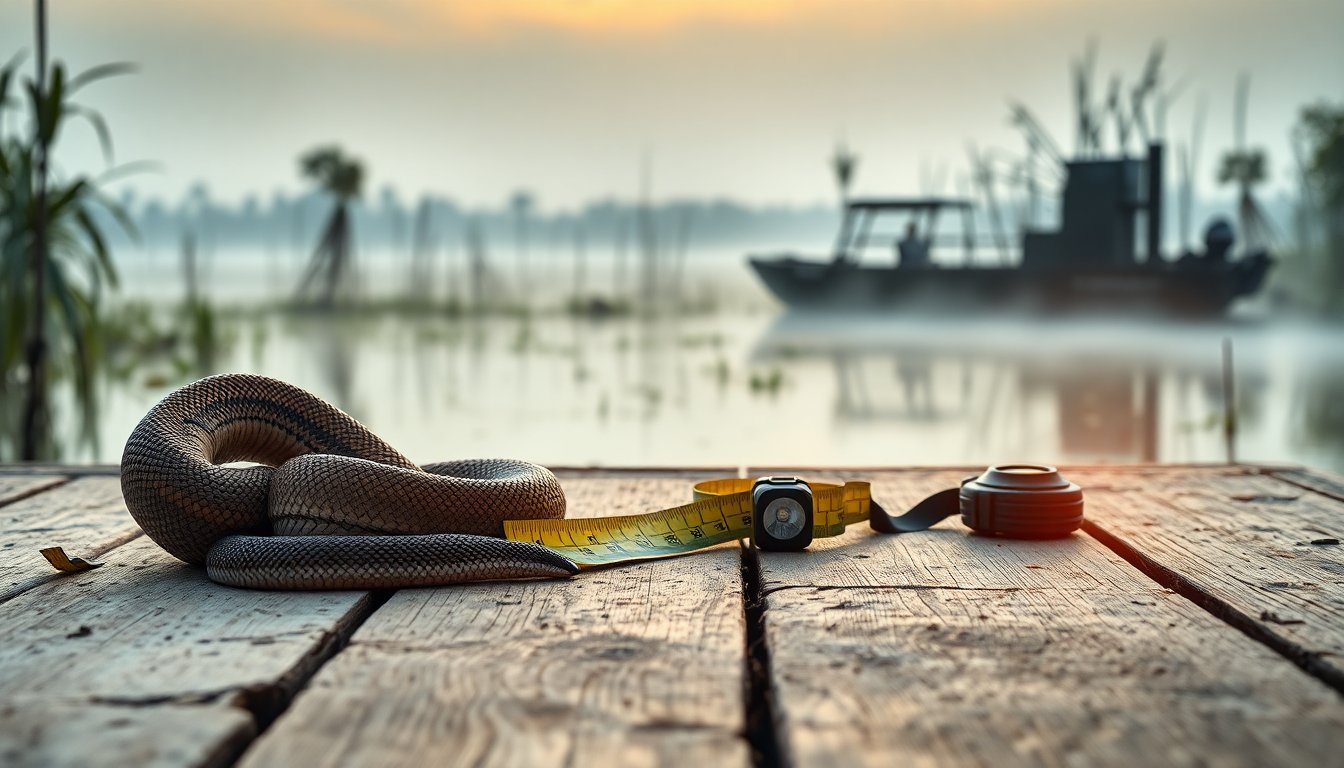
The documentary at the center of this piece follows an unusual Florida event and the people drawn to it. Director Xander Robin’s first feature turns its lens on the annual Everglades Python Hunt, a state-backed competition meant to reduce the numbers of the Burmese python that have dramatically altered local wildlife. The film uses observational footage to present nights and days of searching, capturing, and sometimes contentious debate, and it highlights how a practical wildlife management effort became a stage for personality, ideology, and spectacle. Viewers are invited to witness both the physical work and the cultural choreography that surrounds this controversial eradication effort.
Behind the on-camera action are broader ecological and social questions. The documentary does not simply catalog snakes; it explores why people participate, how they frame their roles, and what preservation means when the chosen cure is extermination. Robin’s camera lingers on moments of triumph and discomfort alike, and the result is a film that oscillates between hunting sequences and intimate portraiture. By threading together these moments, the film asks what survival looks like for a landscape and for the humans who claim to protect it.
A fresh cinematic look at a real-world problem
The film’s core value lies in offering audiences access to a rarely seen activity. The python hunt is presented not as a slick reality show but as a lived experience, where weather, terrain, and creature behavior matter as much as individual bravado. The documentary makes use of extended field sequences to show how teams canvass the marshes, set traps, and respond to sudden sightings. Along the way the film introduces viewers to the mechanics of removal and the practical challenges of working in the Everglades, while also emphasizing the scale of the ecological disruption caused by an invasive species like the Burmese python.
Characters, conflict and commentary
Motivations in the hunt
One of the film’s strengths is how it presents a variety of participants whose reasons for joining the contest diverge sharply. Some are framed as conservation-minded, seeking to restore balance to the wetlands; others are thrill-seekers or competitors chasing status and prizes. The documentary draws subtle contrasts between those motivations and shows how identity and community are built around success in this niche world. Director Robin uses interviews and observational footage to reveal that, for many, the hunt functions as both a job and a site of social performance, where status and reputation can matter as much as ecological outcomes.
Ethics, humor and spectacle
Alongside the competing motivations the film surfaces ethical tensions: is extermination a necessary tool of preservation or a morally fraught practice? The documentary does not offer simple answers, instead letting moments of humor and unease coexist. Some participants are portrayed with a degree of comic relief—obsessive collectors or self-styled experts—while others prompt more solemn reflection on the losses suffered by native species. Through this mix of tones the film manages to be entertaining without shortchanging serious conversation about the long-term consequences of eradication strategies.
Production, reception and release
The movie was produced by Robins, Lauren Ciofi, and Lance and Mel Oppenheim, with Gillian Brown and Dani Bernfeld listed as executive producers. Lance Oppenheim, known for his earlier HBO work, is noted among the production team for his previous recognition from IndieWire for “Ren Faire.” The film premiered at SXSW 2026, where it drew attention from festival critics and earned a spot among IndieWire’s highlighted selections. Critics praised its access to fieldwork and the way it foregrounded human stories that emerge from the larger ecological crisis.
Distribution comes from Oscilloscope Laboratories, and the film opens at the Angelika Film Center on Friday, May 8, with plans for expansion afterward. Promotional materials, including a trailer released as an IndieWire exclusive, invite viewers to judge how well the film balances spectacle and scrutiny. Director Robins, who grew up in South Florida, has said the project grew out of personal familiarity with the region and its changing wildlife, noting how everyday encounters with nonnative reptiles became a jumping-off point for the film’s investigative gaze.
Overall, the documentary offers both rare visual access to a highly specific practice and a thoughtful look at the people who make that practice meaningful. It will appeal to audiences curious about wildlife management, reality-based subcultures, and films that use an event to open broader ethical and environmental questions. Whether you come for the snake sequences or the cast of characters, the film supplies both spectacle and substance in equal measure.


