
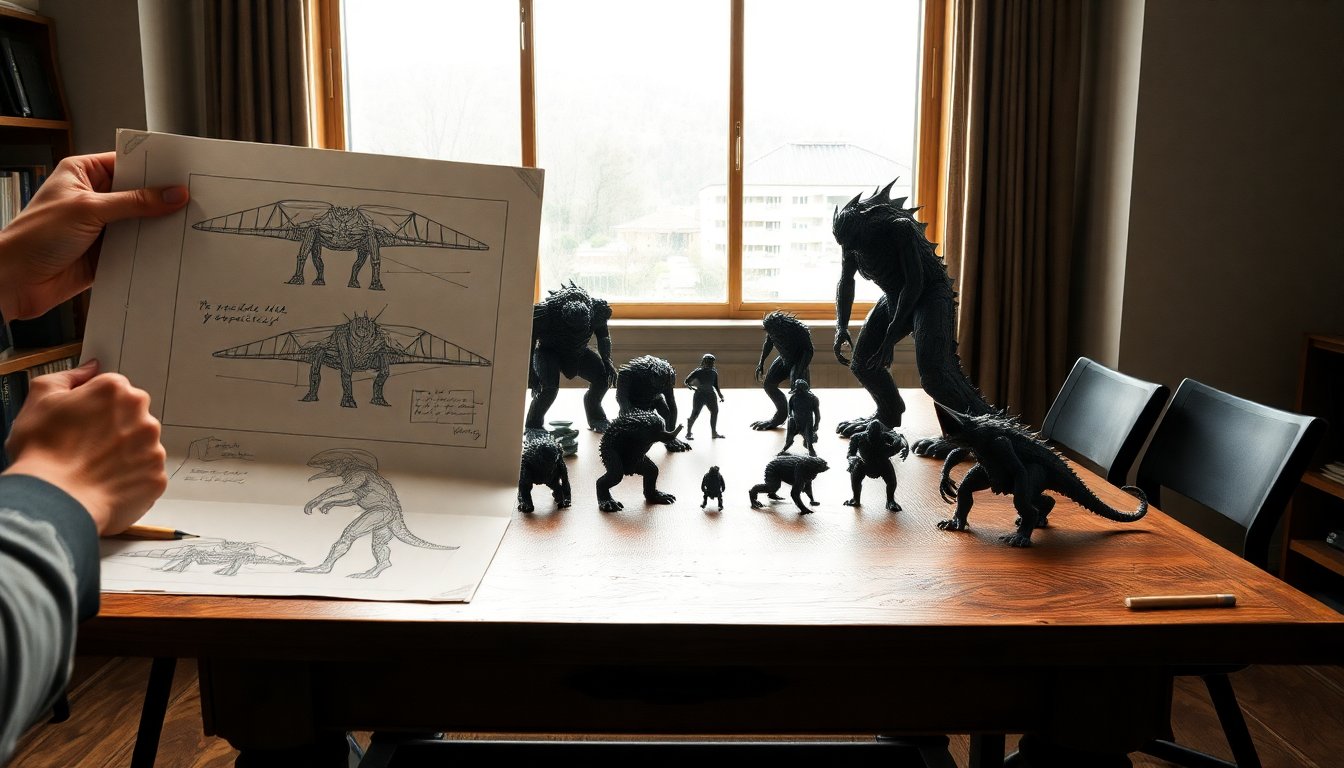
Guillermo del Toro has built his career on a love affair with genre cinema—gothic romance, noir and monster movies all find new life in his hands. His films feel like conversations with those traditions: affectionate, inventive and unmistakably personal.
Pacific Rim, released in 2013, is a clear example. The film’s world—giant kaiju rising from an oceanic breach and humanity’s response in the form of colossal, neural-linked jaegers—married blockbuster spectacle to the tactile, design-forward sensibility that defines del Toro. Practical effects, elaborate creature and machine design, and moments of intimate human drama helped the movie gross around $411 million worldwide and turn the concept into a viable franchise.
When the studio moved forward with a follow-up, del Toro chose a different relationship to the project. He served as a producer on Pacific Rim Uprising (2018) but stepped away from directing and, famously, declined to watch the finished film. He has said the decision was partly practical—scheduling and other commitments—and partly protective: he didn’t want his own memory of the original to be complicated by a sequel he hadn’t fully shaped.
That mix of professional calculation and personal feeling is understandable. A director’s involvement can vary widely: the director steers a film’s daily creative choices, while a producer often manages financing, logistics and broader oversight. Del Toro read the Uprising script and offered input, but he stopped short of taking responsibility for final visual decisions. By not screening the final cut, he kept a clear boundary between his creative authorship and the studio’s new direction.
There’s also timing to consider. Del Toro was immersed in other projects—most notably The Shape of Water, which he completed and released before Uprising premiered. That film earned him an Academy Award for Best Picture and shifted the balance of opportunity. With fresh acclaim and new projects on the horizon, the opportunity cost of returning to or supervising a franchise sequel grew steeper.
Personal context also played a role. Del Toro has likened watching the finished sequel to seeing home movies of an ex—an image that hints at emotional distance more than literal cause-and-effect. He went through a divorce in 2017, shortly before The Shape of Water’s release, and the comparison underscores how private life and creative choices can intertwine without a straight line of causation.
The Pacific Rim universe continued to evolve under other hands: Steven S. DeKnight directed Uprising, and later adaptations—like the animated Pacific Rim: The Black—reimagined the core kaiju-versus-jaeger premise for new audiences. Each version reflects different priorities: studios balancing commercial reach, new directors bringing fresh tonal choices, and creators deciding whether to re-engage with a property they originated.
Del Toro’s stance is one way creators protect a creative legacy. Stepping back can preserve the distinctiveness of an original work and free an artist to pursue projects that feel more urgent or personal. It also forces studios to choose: keep an auteur attached and accept constraints, or hand the franchise to others to expand its market potential.
Ultimately, his decision illustrates a broader industry dynamic. Filmmakers juggle reputation, opportunity and personal investment. Del Toro chose to guard the world he built while moving forward with films that mattered to him—an approach that kept his authorship intact and allowed the Pacific Rim concept to grow in directions he didn’t have to oversee.