
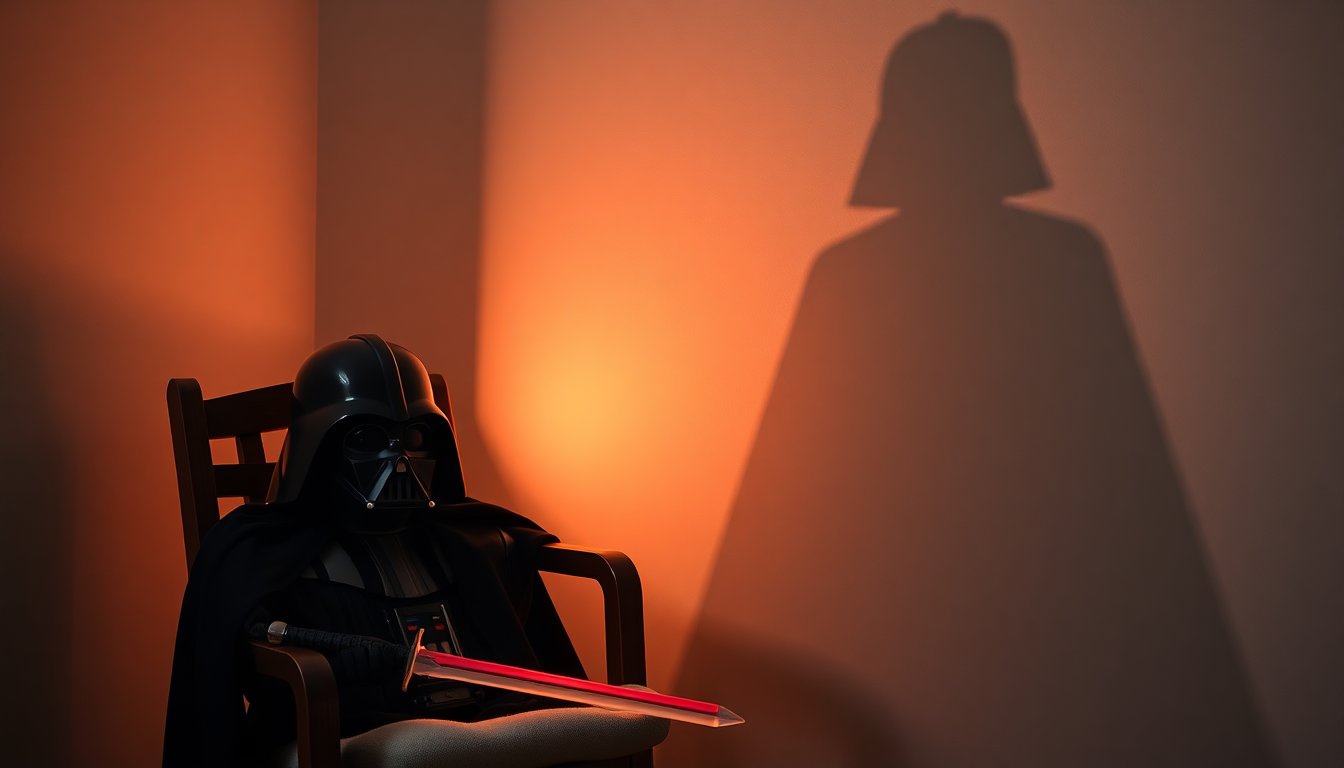
Darth Vader still looms large in our cultural imagination because he’s more than a villain in a movie — he’s a whole sensory and emotional package. George Lucas gave us the blueprint, but the character became iconic through a blend of performance, design and sound: the black helmet and armor, the white-hot saber, that slow, mechanical breathing, and the voice that rumbles through a speaker. Those elements combine to create a figure who both repels and fascinates, instantly recognizable around the world.
But his staying power runs deeper than costume and effects. Vader channels an extreme, almost elemental kind of power that clashes with ordinary human vulnerability. That clash — absolute authority meeting everyday weakness — is why children and adults respond to him in different ways: as a source of fear, as a thrilling emblem of strength, or even as someone to emulate. Over the decades, figures like Vader have escaped cinema and taken up residence in playrooms, fashion, political rhetoric and our shared vocabulary about control and identity.
The pull of power in childhood
Kids are natural experimenters with power. Pretend play offers a safe stage for practicing agency: a cape, a stance, an imaginary weapon — simple props that let a child explore roles and consequences. Visual cues matter. A dramatic silhouette, dark clothing, a distinctive sound — these signals make the idea of dominance easy to grasp and contagious among playmates.
Play isn’t just showmanship; it’s a learning tool. When children try on dominant roles they rehearse negotiation, test limits and learn about cause and effect in a contained space. Even aggressive role-play can teach empathy and moral judgment over time, as kids encounter resistance and consequences. Creators of media and toys know this instinct and package authority into clear visual and auditory shorthand that children recognize immediately.
For adults guiding that process—parents, teachers, caregivers—the patterns are useful diagnostics. What children imitate reveals anxieties, curiosities, and social learning needs. Redirecting power-play toward cooperative stories or restorative outcomes can transform a coping strategy into a lesson about responsibility and ethical choice.
Vader as a cautionary archetype
Darth Vader works on two levels: he thrills, and he warns. Star Wars frames the dark side as an enticing shortcut — quick results that ultimately corrupt. That framing converts spectacle into a moral lesson: unchecked power damages others and eats away at the one who wields it.
This dual nature matters when cultural idols form young imaginations about authority. If heroes and villains are presented only as dazzling figures, admiration can slide into an endorsement of domination. But when narratives emphasize cost and consequence, admiration can shift toward virtues like restraint, accountability and reflection.
The human scale: Anakin’s fall
What makes Vader’s warning bite is its intimacy. Anakin Skywalker begins with vulnerability: a childhood of slavery, a fierce fear of loss, and a desperate desire to control fate. Talent and goodwill sit beside insecurity, ambition and attachment wounds. Those elements fuse into a tragic logic: the wish to prevent pain becomes a hunger for power.
Anakin’s transformation shows a painful truth: seeking power to keep hurt at bay often results in self-erasure. The arc doesn’t end in absolute defeat — there is redemption — but it’s costly, demanding sacrifice and a reckoning with responsibility. Modern storytellers increasingly use such origin stories to explore how personal wounds scale up into broader harms, and those stories suggest real-world analogues: restorative practices, safeguards and ethical education that prioritize accountability over dominance.
How media aesthetic can glamorize villainy
There’s a practical hazard when spectacle outshines story. Blockbusters prize visual genius and kinetic thrills; audiences can cheer a villain’s flair without pausing to weigh the ethical stakes. When charisma, efficiency and coolness dominate the conversation, the destructive methods behind those qualities risk being celebrated rather than criticized.
But his staying power runs deeper than costume and effects. Vader channels an extreme, almost elemental kind of power that clashes with ordinary human vulnerability. That clash — absolute authority meeting everyday weakness — is why children and adults respond to him in different ways: as a source of fear, as a thrilling emblem of strength, or even as someone to emulate. Over the decades, figures like Vader have escaped cinema and taken up residence in playrooms, fashion, political rhetoric and our shared vocabulary about control and identity.0
But his staying power runs deeper than costume and effects. Vader channels an extreme, almost elemental kind of power that clashes with ordinary human vulnerability. That clash — absolute authority meeting everyday weakness — is why children and adults respond to him in different ways: as a source of fear, as a thrilling emblem of strength, or even as someone to emulate. Over the decades, figures like Vader have escaped cinema and taken up residence in playrooms, fashion, political rhetoric and our shared vocabulary about control and identity.1
But his staying power runs deeper than costume and effects. Vader channels an extreme, almost elemental kind of power that clashes with ordinary human vulnerability. That clash — absolute authority meeting everyday weakness — is why children and adults respond to him in different ways: as a source of fear, as a thrilling emblem of strength, or even as someone to emulate. Over the decades, figures like Vader have escaped cinema and taken up residence in playrooms, fashion, political rhetoric and our shared vocabulary about control and identity.2