
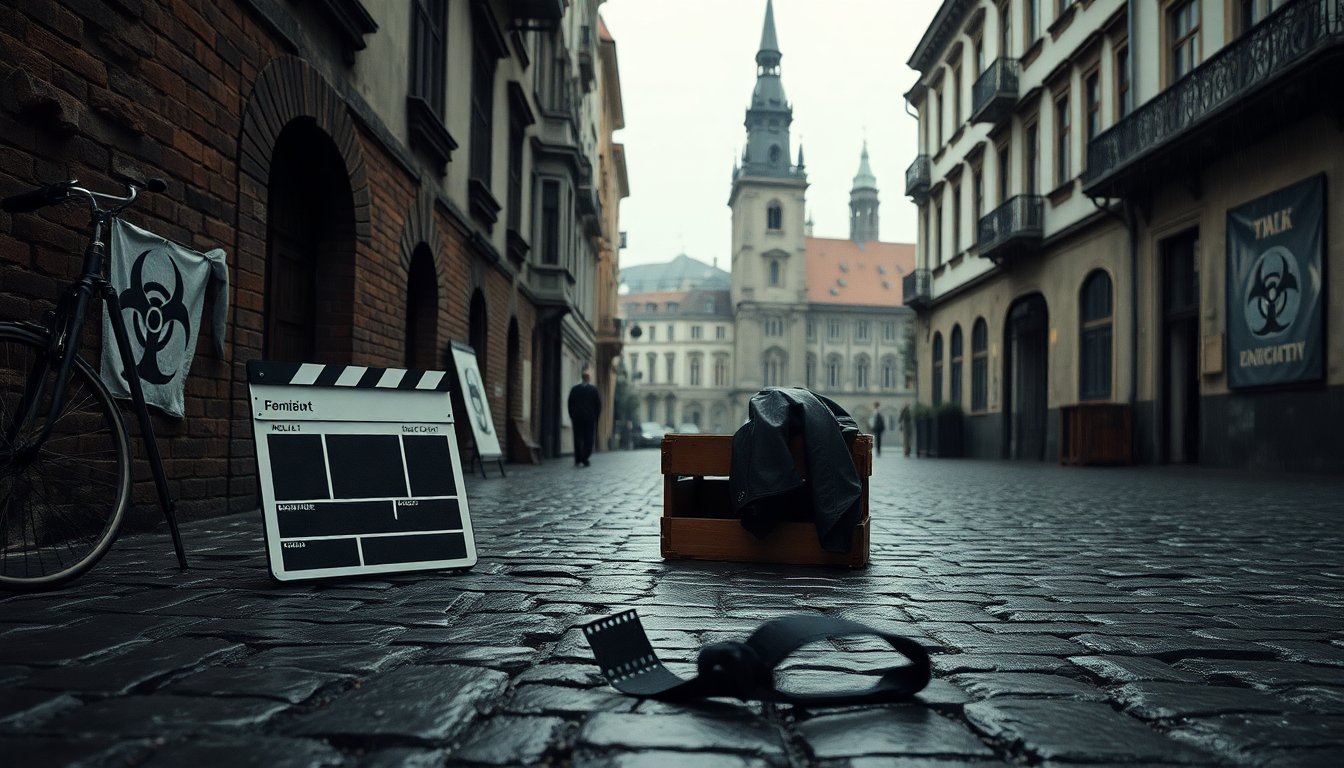
The long-running film series based on Capcom’s classic survival horror is getting another shot at reinvention with director Zach Cregger at the helm. Producers and studio executives have positioned this project as a return to the darker, scarier origins of the Resident Evil franchise rather than a continuation of the action-heavy installments that dominated the screen previously. Filming took place in Prague, where production teams recreated the feel of Raccoon City, and the movie has moved into post-production. The studio has scheduled the release for September 18, 2026, and early audience screenings have generated noticeable excitement.
This version is being described as a compact, high-adrenaline experience: test screenings reportedly clock the film at roughly 90 minutes, and insiders say the pacing is relentless. Cregger—who reportedly secured a $20 million deal to direct the reboot—co-wrote the screenplay with Shay Hatten. The creative team includes producers from Constantin Film, Vertigo Entertainment, and PlayStation Productions, and oversight at Sony’s Columbia Pictures is provided by Nicole Brown. The reinvention is being sold as a horror-first take that honors the game’s atmosphere without rehashing the same playable characters fans already know.
What the story and structure appear to be
Plot details have been deliberately guarded, but the central premise follows a single courier’s descent into chaos. The protagonist—described in production notes as an easygoing organ courier named Bryan—is sent on a late-night delivery to Raccoon City General Hospital and becomes entangled in an escalating biohazard outbreak after colliding with a mysterious woman on a snowy road. From that point, the film reportedly becomes a concentrated ordeal, told largely from the courier’s perspective. This approach has been framed as an attempt to replicate the immersive dread of the games by limiting exposition and allowing viewers to learn the world through lived experience rather than broad backstory reveals.
Perspective and pacing
Sources say Cregger’s direction favors thrusting the audience into the middle of events, creating a nearly continuous forward momentum. The main character functions in some ways like a player avatar, a conduit for the viewer rather than a figure with a sprawling arc and long flashbacks. That decision aligns with Cregger’s stated desire to deliver a stripped-down ride—less puzzle-box plotting and more immediate threat response—while still staying obedient to the franchise’s mythology in tone if not in character continuity.
Cast, crew, and the creative signal
The ensemble is built from actors who bring grounded, offbeat charisma rather than blockbuster star wattage. Lead duties go to Austin Abrams, with supporting turns from Paul Walter Hauser, Zach Cherry, Kali Reis, and Johnno Wilson. Reports indicate Cherry plays a hospital scientist, and Reis portrays a former military figure originally written as male, a casting choice that underscores the production’s flexible approach. Behind the camera, the project pairs Cregger with writers and producers who have experience in frenetic action and horror, signaling a blend of visceral filmmaking and tight structural discipline.
Production partners and promises
Production credits include familiar names such as Robert Kulzer, Roy Lee, and Miri Yoon, supported by PlayStation Productions and Sony. The collaborative team has publicly framed the film as a chance to reset expectations for video game adaptations, bringing the franchise back to a focus on atmosphere and dread. Cregger has emphasized that he approached the material as a long-time fan of the games but avoided watching the earlier films—choosing instead to build a distinct cinematic entry that still respects key elements of the source.
Tone, comparisons, and early audience reactions
Test-screening reports describe the film as a muscular, moment-to-moment horror experience. Some attendees compared the relentless propulsion and continuous set-piece flow to high-energy action films, suggesting the movie leans on a sequence-driven structure rather than slow-burn exposition. Critics and insiders have drawn analogies to directors known for economy and intensity, noting that this reboot seems designed to deliver shock, tension, and a tight emotional throughline without padding.
Reviewers who saw early cuts praised the film’s brevity and its commitment to keeping viewers off-balance. The use of practical effects, tense camera work, and a focus on immediate survival situations reportedly pushes the movie into territory distinct from both the franchise’s previous big-screen spectacles and other contemporary horror hits. Whether this approach satisfies the most ardent fans of the games will be a central question when audiences and critics meet the film at its September release.
What to expect next
With post-production underway and the official date of September 18, 2026 set, marketing will likely begin to reveal how faithful the film is to specific game moments and which parts of the universe it explores. For now, the industry is watching whether a director known for imaginative, sometimes divisive genre work can deliver a compact, terrifying reinterpretation that reconnects the franchise to its horror roots. If early reactions are any guide, audiences may be in for a brisk, unrelenting ride that prioritizes atmosphere, practical menace, and a tightly edited runtime.