
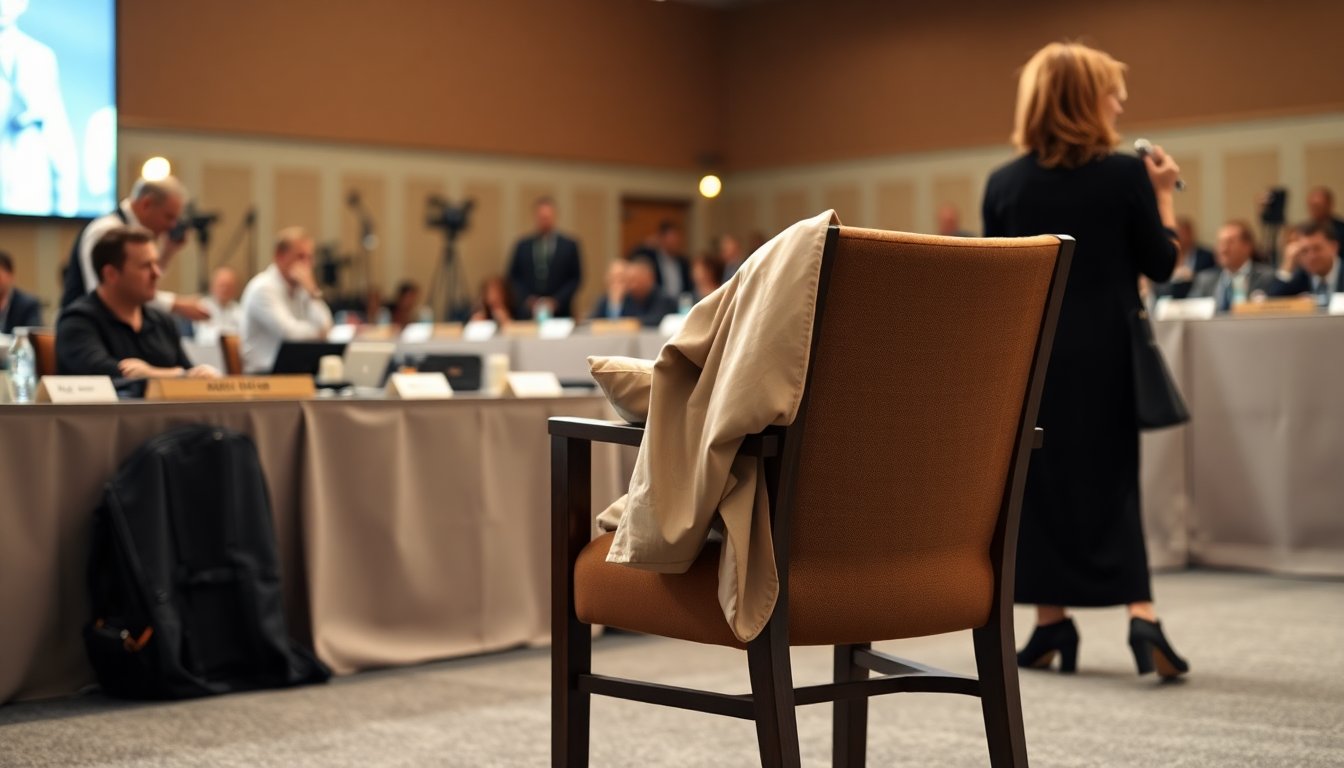
The world premiere of At the Sea unfolded in Berlin without its lead star in the room. Instead, director Kornél Mundruczó opened the press session by reading a note from Amy Adams, who conveyed her pride in the project and gratitude to the festival for supporting independent storytelling. The absence of the six-time Oscar nominee did not dim the spotlight: the film is positioned as a character-driven drama that has already attracted industry attention.
Crafted as an American-Hungarian collaboration, At the Sea reunites Mundruczó with screenwriter Kata Wéber and presents an intimate portrait of recovery, family and identity. The press conference featured the director, the writer and producers including Alexander Rodnyansky and Viktória Petrányi, underscoring the international scope behind this quiet, intense drama.
What the film is about and who brings it to life
At the Sea centers on Laura, played by Amy Adams, a former dancer who returns to her family home on Cape Cod after completing rehab. The story tracks her attempt to reconcile with loved ones and reconstruct a life that had been defined by her late father’s legacy and her own public identity. In plain terms, the film is an exploration of recovery as a non-linear process and the way family dynamics respond to a person who has changed.
The ensemble surrounding Adams reads like contemporary prestige casting: Murray Bartlett, Brett Goldstein, Chloe East, Dan Levy, Jenny Slate, Redding L. Munsell and Rainn Wilson all contribute to the film’s intimate texture. Production credits include companies such as Ryder Picture Company, AR Content, Hammerstone Studios and partners like Mk2 Films; the producers list features names like Aaron Ryder and Alex Lebovici, reflecting a cross-Atlantic production infrastructure.
Festival context and creative lineage
Mundruczó’s work has steadily moved from allegorical, kinetic pieces to tightly focused, actor-centric dramas; his earlier film Pieces of a Woman established that trajectory. Industry observers have framed At the Sea as the middle chapter of an informal triptych that examines crisis across stages of a woman’s life, with themes that hinge on immediate emotional realism rather than spectacle. The Berlinale slot — screening in competition — amplifies the film’s visibility among critics and awards voters.
The creative team and their approach
The screenplay by Kata Wéber remains central to the film’s emotional clarity: its dialogue and structure prioritize psychological realism and long, immersive moments that require performers to sustain intensity. Mundruczó’s visual sensibility — a willingness to linger on the interiority of characters — supports those performances, so the camera often functions as a silent witness to difficult, intimate choices.
Production and distribution notes
As an American-Hungarian co-production, At the Sea illustrates the increasingly global nature of prestige filmmaking. WME Independent is reported to be shopping North American rights while Mk2 handles international distribution. The film’s producer and executive producer roster is extensive, indicating broad industry backing and a readiness to position the picture for awards season attention.
Performance, reception and what’s next
Adams’ statement read at the press conference emphasized the film’s emotional stakes: she praised the cast, described the sense of family formed during production and underscored the film’s insistence on brutal honesty as a prerequisite for forward movement. Early trade coverage has begun to attach awards buzz to Adams’ portrayal of Laura, a pattern familiar from Mundruczó’s prior successes in performance-led dramas.
Outside of this project, Adams’ recent screen work includes the black comedy-horror project Nightbitch, while upcoming credits include a major role in Taika Waititi’s adaptation of Klara and the Sun and an undisclosed part in Shawn Levy’s Star Wars: Starfighter. These choices demonstrate how Adams continues to balance indie, actor-centered pieces with large-scale studio assignments.
In sum, the Berlinale premiere of At the Sea — even without its leading star on stage — has signaled a film that trades on small, intense performances and an international production engine. If the film follows the path of Mundruczó’s earlier work, its strength will hinge on acting and sustained directorial focus rather than conventional festival spectacle; that positioning could make it a quiet but lasting presence in the awards conversation.