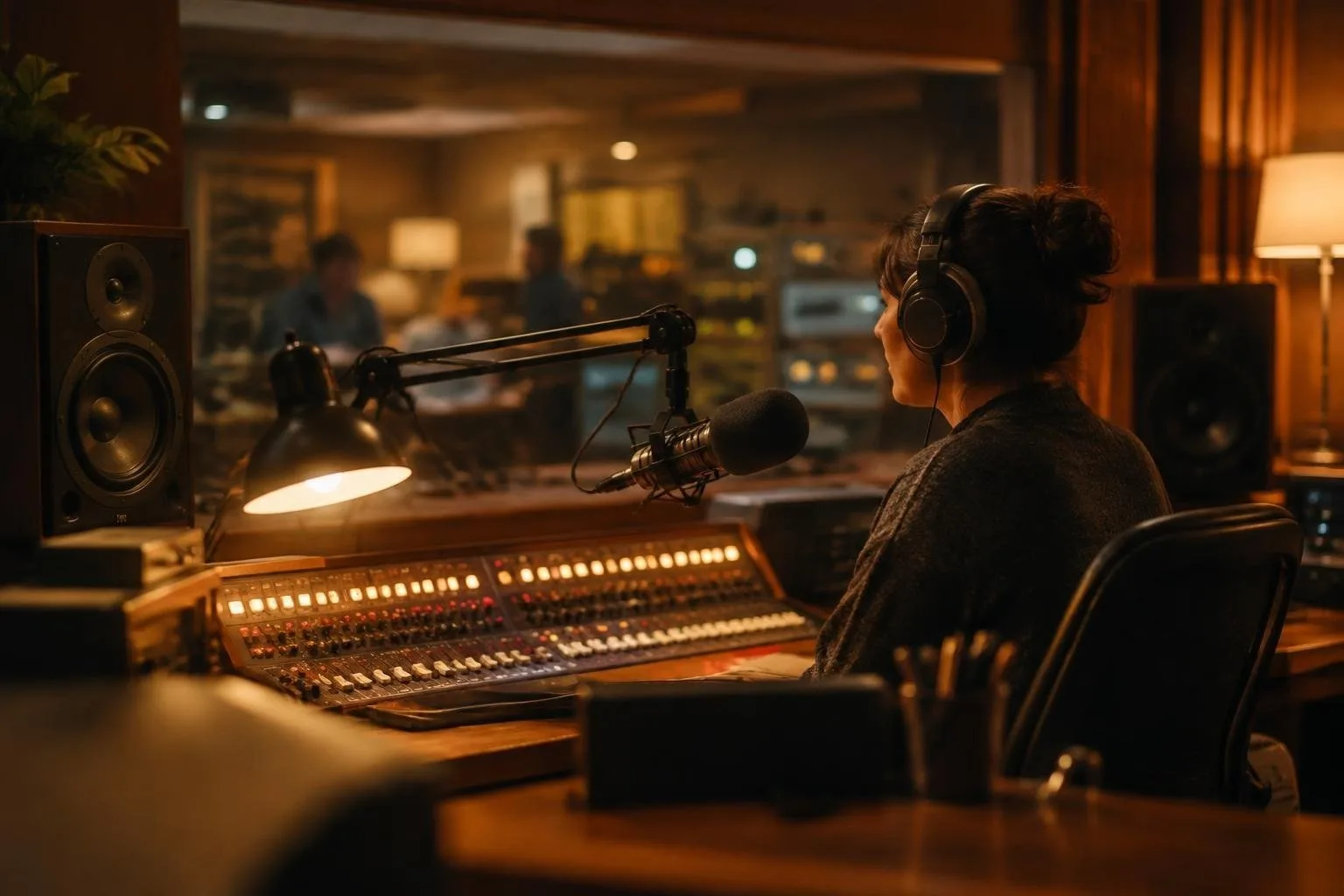
Radio has always occupied a strange middle ground between intimate conversation and public performance. When a radio host leans into the microphone, listeners often feel as if a private friend is speaking directly to them—a phenomenon scholars call an parasocial relationship. Recent offerings such as Theo Rossi’s psychothriller Come With Me and the MGM+ series American Hostage remind us that this dynamic still fuels compelling drama.
For anyone who has spent years behind the console, the on-screen translation of that bond can feel both exhilarating and terrifying. From the gritty streets of Saigon in the 1960s to the smoky late-night studios of a small-town AM station, filmmakers and TV writers have tried to capture the alchemy of voice, audience, and the inevitable power struggles that follow. Below is a curated tour of the most successful (and some spectacularly flawed) portrayals, arranged chronologically so you can hear the evolution of the medium through the lens of storytelling.
Classic Films That Got Radio Right
Play Misty for Me (1971)
Clint Eastwood’s directorial debut places a late-night jazz disc jockey, Dave Garver, at the heart of a quiet obsession. Filmed on location at the real KRML station in Carmel-by-the-Sea, the movie captures an authentic studio atmosphere that few later productions have matched. Eastwood delivers a restrained performance while Jessica Walter’s Evelyn repeatedly begs for the “Misty” tune, illustrating how a single song can become a conduit for listener fixation. The film’s tension arises from the thin line between a comforting voice and an invasive presence.
Good Morning, Vietnam (1987)
Robin Williams channels real-life DJ Adrian Cronauer, broadcasting rock-and-roll morale boosters to U.S. troops in Saigon. Though the storyline swings toward comedy, the underlying premise—using the microphone as a weapon of escapism—remains powerfully true. Williams’ improvisational energy, paired with Bruno Kirby’s foil, portrays the classic clash between a rebellious radio personality and the military hierarchy that tries to rein him in. The film demonstrates how a charismatic voice can momentarily lift an entire army out of the trenches of conflict.
Talk Radio (1988)
Oliver Stone dramatizes the real murder of Denver talk-show host Alan Berg, with Eric Bogosian inhabiting the role of the provocative air-wave provocateur. The screenplay leans heavily on the dangerous edge that a confrontational talk radio format can cut, showing how a host’s willingness to stir controversy can ignite both fervent support and lethal backlash. The film’s stark staging of live broadcasts underscores the immediacy—and vulnerability—of the medium.
Private Parts (1997)
Howard Stern’s own story is told with unabashed brashness, yet beneath the shock-value lies a tender portrait of a man who turned personal trauma into on-air honesty. The movie tracks Stern’s climb from struggling overnight slots to national syndication, revealing the business machinations of station managers, advertisers, and rival personalities. It illustrates how a radio host’s authenticity can become a commercial commodity, while also exposing the emotional toll of living out loud.
Talk to Me (2007)
Don Cheadle embodies Petey Greene, a Washington, D.C., disc jockey who rose from a prison sentence to become a voice of reason during the turbulent late-1960s. Director Kasi Lemmons frames Greene’s rise as a case study in how the microphone can transform a marginalized individual into a community leader. The film spotlights the prison-to-public-airwaves journey, emphasizing the social impact of a relatable, outspoken host.
Television Series that Capture the Radio Beat
WKRP in Cincinnati (1978-1982)
Created by former sales director Hugh Wilson, WKRP dramatizes a struggling FM station that relies on wild on-air stunts, quirky personalities, and absurd promotional giveaways—think turkeys that “could fly.” The ensemble, featuring Howard Hesseman’s Johnny Fever and Tim Reid’s Venus Flytrap, feels like a love letter to the chaotic yet tight-knit world of 1970s radio. While exaggerated, the series nails the camaraderie, egos, and sheer improvisational skill that define a real broadcast team.
NewsRadio (1995-1999)
Set in New York’s all-news WNYX, the sitcom blends rapid-fire jokes with a surprisingly affectionate look at newsroom politics. Dave Foley’s news director and Phil Hartman’s quirky accountant illustrate the absurdity of a 24-hour news cycle while still honoring the professionalism required behind the scenes. The show’s satirical edge never loses sight of the fact that a radio newsroom operates like a high-stakes orchestra, each voice essential to the final broadcast.
Frasier (1993-2004) – The KACL Moments
Although the series centers on a psychiatrist’s family drama, the titular character’s work at Seattle’s KACL allows for memorable call-in segments. Over 130 celebrity callers lend their voices, showing how a skilled host can turn a routine advice show into a cultural touchstone. Frasier’s precise diction and cultivated airspeak underscore the power of a polished radio voice to shape public conversation.
Northern Exposure (1990-1995) – KBHR 570 AM
John Corbett’s Chris Stevens serves as the philosophical anchor for the fictional Alaskan town of Cicely, broadcasting from a low-power station that feels more like a community hearth than a commercial outlet. Unlike the high-energy metropolitan stations, KBHR’s intimacy mirrors the real-world role of small-town radio as a storyteller, news source, and cultural glue.
When the Signal Fades: Movies and Shows That Missed the Mark
Not every on-screen attempt at reproducing the magic of the microphone lands successfully. The 1978 comedy FM tried to portray rebel DJs battling corporate control, but its script ignored the emerging punk and new-wave movements, resulting in a soundtrack-heavy pastiche that feels more like a dated music video than a true radio drama. Similarly, the 2022 thriller On the Line, starring Mel Gibson as an abrasive overnight host, collapses under a thin hostage plot and lackluster performances, offering little insight into the actual pressures of late-night broadcasting.
Television’s misfires include the short-lived sitcom Hello, Larry (1979-1980). McLean Stevenson’s portrayal of a divorced DJ moving to Portland never found a footing; the station setting evaporated after the first season, leaving the show feeling like endless dead air. Another misstep, Rhythm & Blues (1992-1993), attempted a premise where a white DJ is hired to boost ratings at a Black-owned Detroit station. The premise ignored industry realities and reduced the entire concept to a single, tired joke, resulting in both critical and cultural backlash.
These failures remind us that portraying the nuanced relationship between a radio host and their audience requires more than catchy soundtracks or sensational plots. Authenticity, respect for the medium’s history, and an appreciation for the delicate balance of power behind the mic are essential ingredients for storytelling that resonates.