Takashi Yamazaki returns to the cratered world of post-war Japan with Godzilla Minus Zero, the sequel to his acclaimed 2023 kaiju drama. Premiering on November 6, 2026, the 135-minute film re-introduces familiar faces while planting new moral questions about vengeance, nuclear legacy, and the possibility of change.
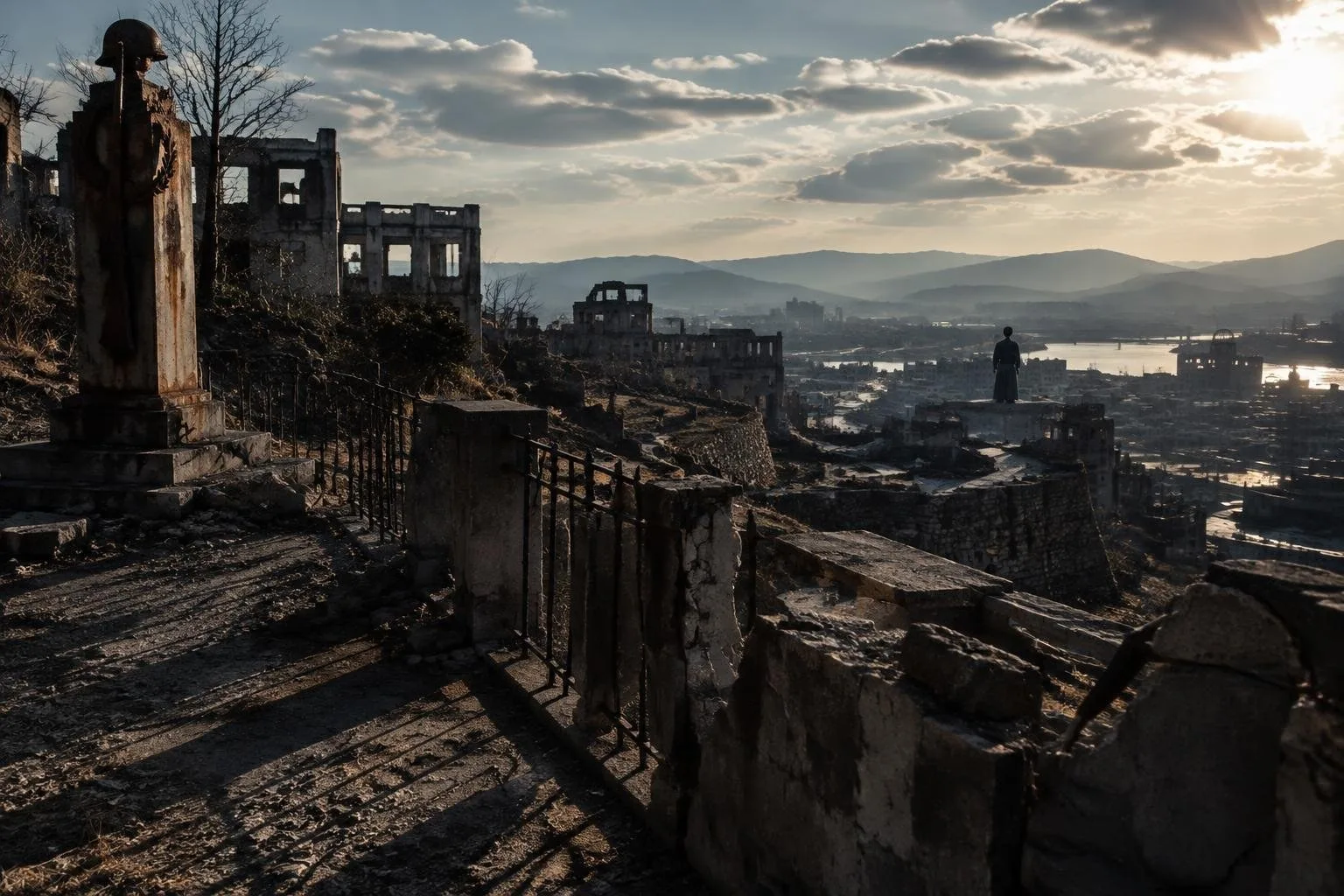
Set in 1949, the story weaves together the aftermath of the first film’s cataclysm with the lingering trauma of Hiroshima. Central to the narrative is professor Kanji Murakami (Min Tanaka), a survivor who lost three generations of relatives in the atomic blast. His grief drives a plot to weaponise the monster against the United States, a plan that spirals into a broader meditation on the cycle of violence.
Plot and the push for revenge
After the defeat of King Ghidorah, Murakami joins the Large-Scale Disaster Response Bureau, led by chief Kenji Noda (Hidetaka Yoshioka). Using his expertise as a biologist, he creates a “Resonance Wave” device that mimics the frequency of kaiju, allowing the team to lure creatures toward a chosen target. Combined with Noriko Oishi (Minami Hamabe), whose mutated “G-Cell” links her directly to Godzilla, the bureau intends to pit the titan against Ghidorah once more.
Murakami, however, envisions a darker application: he plans to redirect Godzilla’s atomic breath onto New York City, annihilating the United States as retribution for the bomb that erased his family. The film visualises this nightmare in a sequence where ordinary New Yorkers suddenly dissolve under a mushroom-cloud-shaped blast—an image Yamazaki admits mirrors a pivotal hallucination in Christopher Nolan’s Oppenheimer. Yet the sequence is revealed as Murakami’s imagination, a psychological glimpse of the devastation his hatred could unleash.
Yamazaki’s thematic direction
In conversations with IndieWire, Yamazaki explained that the film’s core rests on what he calls the “twin poles of human foolishness and arrogance.” He argues that Murakami’s single-minded quest ignores the aftermath of a revenge act, prompting a chain of new hatred. The director likens this to the broader historical pattern that birthed Godzilla: a nation grappling with the dread of nuclear warfare and asking, “Are we going to go into war again?”
By placing Hiroshima’s tragedy at the heart of the story, Yamazaki strives for “a more hopeful direction.” He wants audiences to see that breaking the endless loop of retaliation is possible, even for a character consumed by rage. This intention also differentiates Godzilla Minus Zero from its predecessor, which focused more on survival and immediate monster action.
Final act: mercy over annihilation
As the plot nears its climax, Murakami confronts the moral fork. Instead of unleashing Godzilla on New York, he decides to destroy his own research, erasing the knowledge that could let the United States weaponise the beast. He also releases Noriko and Kōichi Shikishima (Ryunosuke Kamiki), allowing them to flee with their daughter Akiko (Sae Nagatani). By burning the Resonance Wave schematics, Murakami achieves a paradoxical revenge: denying the enemy a tool of mass destruction while protecting innocent lives.
The ending sees Murakami captured by U.S. soldiers, a stark reminder that the world remains unsettled. Yet the decision to spare New York and safeguard his family’s legacy underscores the film’s central message: true retaliation can be the act of restraint, not of devastation.
Beyond the human drama, the monster set-pieces remain spectacular. Godzilla’s heat rays and the aerial battles are captured with IMAX cameras, delivering a visceral experience that, alongside Naoki Satō’s score, earns the film a place among modern kaiju spectacles.