
The ITV reality show The Neighbourhood launched into Saturday primetime with a clear ambition: to turn everyday community life into a high-stakes contest. Hosted by BAFTA-winning presenter Graham Norton, the format brings six real households together to share a single street and play a game that mixes cooperation and elimination. Filmed on a purpose-built set in the Peak District, the series premiered on April 24, 2026, and offers a prize of £250,000 (equivalent to $338,000). The central experiment asks neighbours to balance winning challenges with staying socially liked enough to avoid eviction.
The production was led by co-producers Richard Cowles and John Hay from Lifted Entertainment and The Garden, teams with prior hits such as Love Island and the technical rig experience behind Squid Game: The Challenge. In a move that blurred presenter and producer boundaries, Norton actually relocated himself to live near the contestants for several weeks — a commitment meant to keep him within earshot of the dynamics unfolding on set and to shape the tone of the series at close range.
Building a believable street
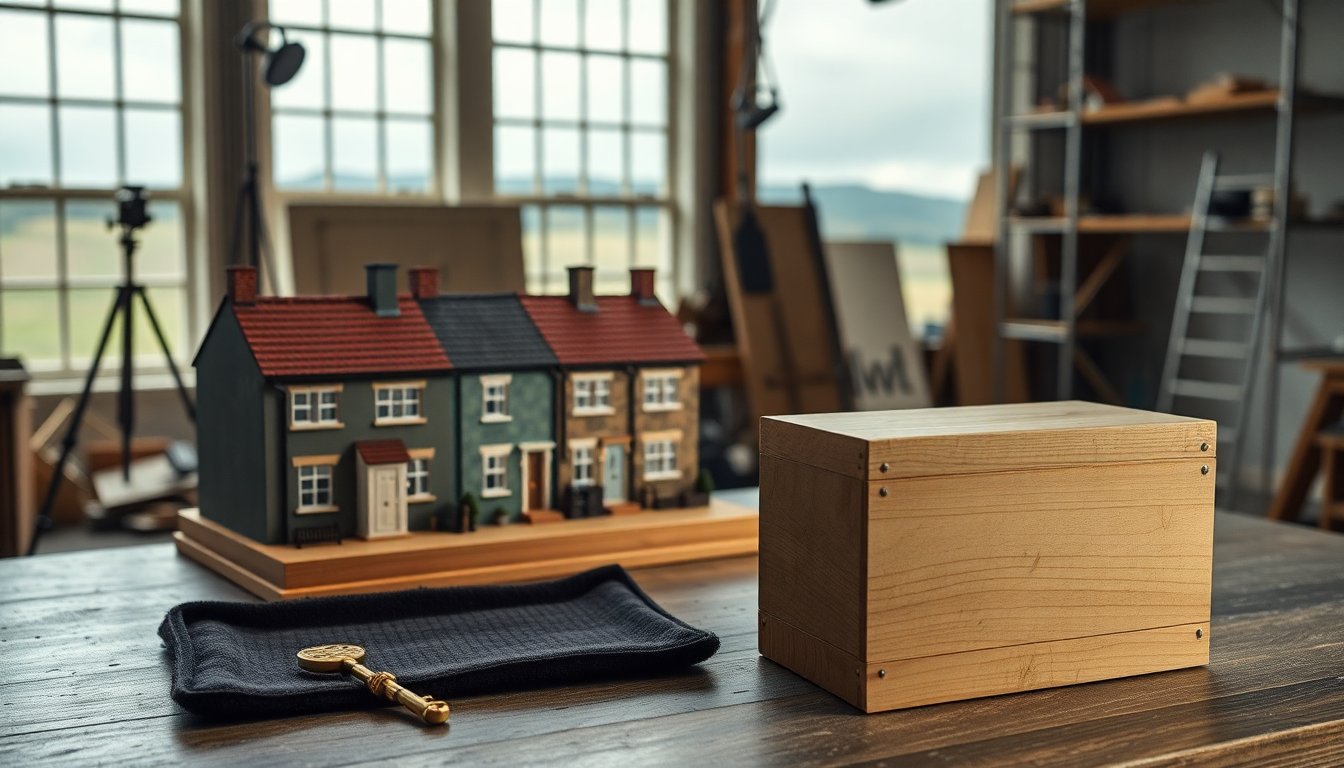
The creators opted to construct a complete residential environment rather than repurpose an existing village, naming the central cul-de-sac “Keep Your Enemies Close”. The set includes six color-coded homes, a fictional pub called The Uppin Arms, a café called Room With A Brew, and internal lanes like Goa Way. Designed as a 360-degree, lived-in space, the street was intended to be a continuous ecosystem where contestants could move freely and interactions could be recorded around the clock. The choice of a custom build supported the show’s idea of immersive observation and helped crew control sightlines, challenges, and camera coverage in ways a normal street could not.
Why the Peak District was chosen
Production teams scouted across the UK before settling on the Peak District in Derbyshire, a region whose rolling landscapes and stone-built aesthetic helped craft an idealized image of British neighbourhood life. That rural backdrop was chosen to contrast bucolic appearances with the strategic tension inside the houses. The search for the right tone — somewhere between quaint village charm and manufactured competition — influenced design choices, from house façades to signage, so that the environment felt familiar yet unmistakably produced for television.
Game design, casting and daily mechanics
Instead of pitting strangers in a single house, the format gathers varied groups: students, families, friends and others who bring pre-existing relationships into the mix. Contestants face physical and social tasks — some involving everyday props like bins or oversized washing lines — while also navigating the softer but critical element of popularity. The programme sets up an inherent tension: pursue the competitive path to win challenges or play the social game to avoid being voted out. Producers wanted to show how those dual objectives collide, and they deliberately cast for demographic diversity to generate unpredictable alliances.
Fixed-rig capture and creative pitch
Technical production leaned on The Garden’s expertise with fixed-rig filming to capture uninterrupted interaction and candid moments. The series concept was sold in part through a playful board game pitch that mapped an imaginary street and its occupants for commissioners, an approach that helped commissioners visualise the format quickly. From greenlight to transmission the schedule was tight — roughly six months to build the set, cast, and film — a sprint that demanded coordination between construction, camera planning and contestant logistics.
Graham Norton’s influence and international prospects
Norton’s involvement was not just as a host; producers say his presence set a tonal boundary — witty and mischievous without crossing into cruelty. Initially cautious about joining, he became convinced by the originality of the idea and by the production team’s creative approach. Norton’s wider public profile, including an appearance in Taylor Swift’s viral music video and a book, Forever Home, currently being adapted by FilmNation and Mediapro for Paramount UK network 5, added extra star wattage to the launch even as he keeps a relatively low press profile for the show.
Producers remain optimistic about The Neighbourhood translating internationally because the neighbourly premise is broadly relatable. They position the series as a distinctly British take — an idealised street with specific cultural cues — while believing local versions could transplant the format into other markets. With an eye on global formats sales, the team sees the blend of household drama, constructed environment and technical capture as a package that broadcasters abroad could adapt to reflect their own community dynamics.


