
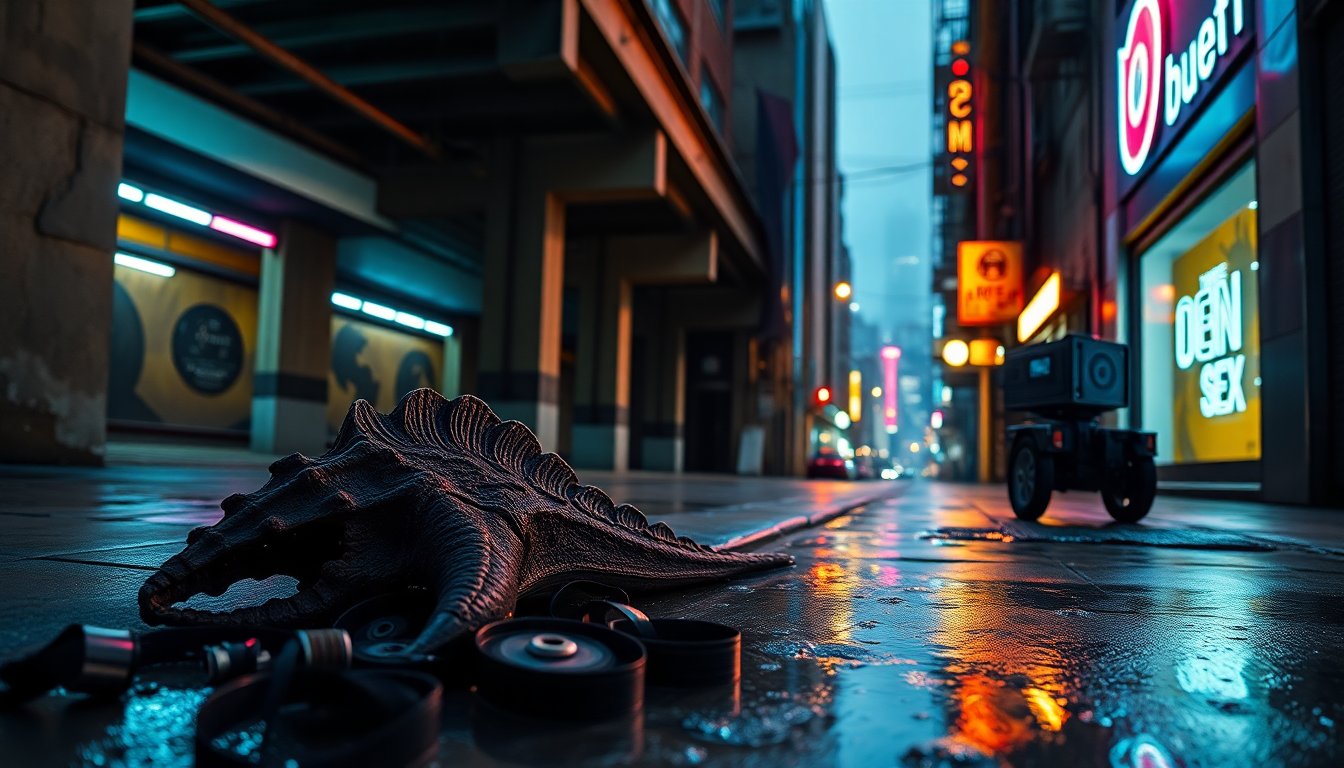
The 1993 film Super Mario Bros. has become shorthand for ambitious failure, yet its oddities reward close attention. From an opening that dumps audiences into a prehistoric catastrophe to a drenched neon metropolis called Dinohatten, the movie rejects the familiar iconography of the Nintendo games in favor of a gritty, cyberpunk-tinged fantasy. That creative gamble left viewers baffled on first release and delighted a subset of fans over time, securing the film a place in conversations about what a cult film can be: a work loved for its strangeness rather than polished fidelity.
Watching the movie today requires leaving expectations at the door. The film substitutes the games’ colorful, blocky landscapes for a tactile, physical world built from concrete sets, props, and animatronics, a contrast with the modern trend for faithful animated adaptations. The cast — including Bob Hoskins, John Leguizamo, Dennis Hopper, Samantha Mathis, and Fisher Stevens — anchor the material with grounded performances that highlight the film’s odd tonal mix: part buddy comedy, part dystopian fable. The result is not a faithful retelling but an original, if messy, piece of franchise experimentation.
The film’s radical worldbuilding and aesthetic
From the first frames the movie signals it will not be a straightforward translation of game mechanics. A meteorite premise births a parallel reality where dinosaurs evolved into an industrial society, and the setting of Dinohatten looks like a nightclub district slapped onto a fossil bed. This is not the Mushroom Kingdom; it is an invented parallel dimension stitched from grimy textures and neon lights. Those choices upset fans who wanted literal recreations of Mario levels, but they also produced some of the film’s most memorable moments: grotesque Goomba designs, living fungus that feels unpleasantly organic, and a sense that the environment was physically constructed rather than digitally rendered.
Why it diverged from the games
The filmmakers opted for a cinematic identity of their own instead of mimicking the source visuals, a decision that informed casting and tone. In this movie Mario and Luigi are working-class Brooklynites thrust into an absurd, hostile world: Mario as a gruff caretaker figure and Luigi as a cocky younger brother. Those character beats differ from the largely blank-slate personas of the early games, but they give the film a human center. The production’s aesthetic choices — mixing practical effects with emerging computer effects workflows — create a textured, sometimes uneven atmosphere that more modern, digitally safe adaptations tend to avoid.
Legacy, influence, and why it still matters
Although the movie flopped at the box office and prompted public distancing by its directors, it left an indelible mark on both Hollywood and fan discourse. The project pushed early digital editing tools in production, reportedly using a beta version of the Autodesk Flame system, making it part of the industry’s shift toward CGI-heavy blockbusters that would follow. The film’s polarizing reception also influenced how companies approach licensed material: Nintendo tightened creative control on later adaptations, and the movie became a cautionary tale about translating interactive worlds to film.
Why to watch it now
Modern video game movies often aim for comforting nostalgia and polished brand recognition, while the 1993 film gambled on invention. That makes the original valuable as an artifact: it captures a moment when studios were still testing how to turn games into movies, sometimes by reinventing them entirely. For viewers interested in filmmaking history, the movie demonstrates the tactile value of practical sets and the strange charm of analog effects. If you enjoy oddball studio experiments or want to see a risky adaptation that refuses to play it safe, this film rewards a second look.
Availability and a note on viewing
For years the film has been difficult to stream reliably and is far more likely to be encountered on discs or in specialty screenings than on mainstream platforms. That scarcity contributes to its mystique: tracking down a physical copy is part of the experience of studying a peculiar, hands-on piece of cinema history. Whether you approach it as an essential entry in the lineage of video game adaptations or a curiosity that showcases where franchise filmmaking can misstep, the 1993 Super Mario Bros. remains worth watching for anyone curious about how games and movies have negotiated one another.