
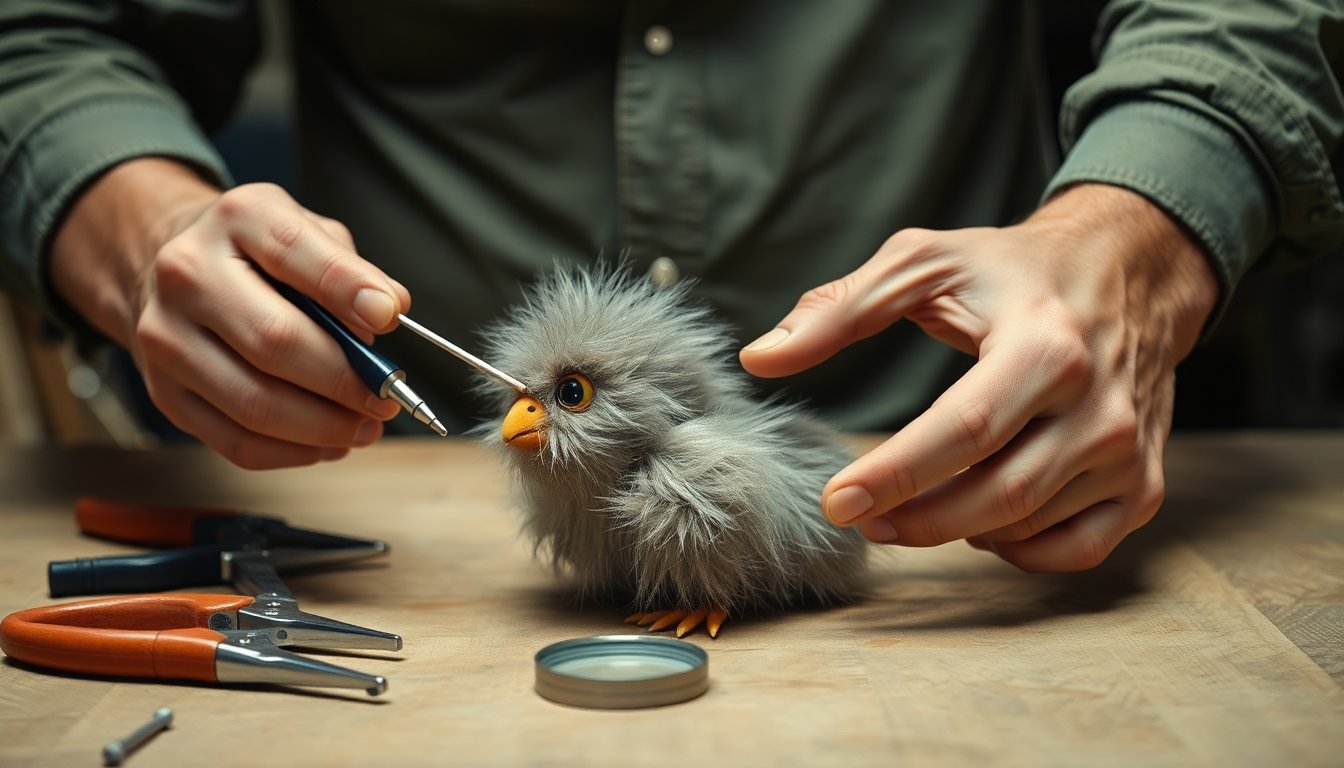
The director J.J. Abrams took an unusually tactile role during the production of the 2013 film Star trek Into Darkness, and one tiny prop illustrates that perfectly. A sequence involving a lifeless tribble and the genetically enhanced antagonist Khan became memorable not only for its plot consequences but also for a behind-the-scenes detail: Abrams himself manned the puppet mechanism. That anecdote resurfaced thanks to comments by actor Karl Urban, who described the director operating the creature from beneath a table while the cameras rolled.
Tribble lore stretches back to classic television, where these furry critters are known for their rapid reproduction and soothing trills. In the Abrams film, a small puppeted tribble is used to dramatize a controversial plot device: blood from Khan Noonien Singh, a character with enhanced physiology, appears to revive dead tissue. The story beats — the pricked tribble, the surprising reanimation, and the later use of Khan’s blood to revive Captain Kirk — made the scene both divisive and talked-about among fans and critics.
The scene and its narrative role
On screen, the tribble sequence functions as a compact illustration of two things: first, the franchise’s recurring fascination with the ethical consequences of genetic modification; second, the filmmakers’ willingness to blend whimsy with high-stakes drama. The little furry prop is contrasted with the grave circumstance of death and resurrection, turning a typically comic element into a plot engine. That tonal shift is what audiences found surprising: a creature associated with lighthearted interludes becomes proof of a potentially world-altering biological property, represented by Khan’s blood.
How the puppeteering happened
According to Karl Urban, the operation of the tribble was decidedly low-tech but earnest. Rather than rely solely on remote systems or post-production tricks, the on-set solution involved a human operator crouched close to the action. Urban recalled that Abrams himself was the one manipulating the mechanism, delighting in the tactile moment. The director sat under a table and controlled the toy’s movement, enjoying the playful side of filmmaking even amid a large-scale production.
Urban’s recollection and the interview
Urban offered this detail in a 2013 interview with ScreenCrush, framing it as a small but telling vignette about Abrams’ style. He described the director as being “like a kid in a candy store” while animating the prop and confirmed there was no elaborate video monitor to guide the puppeteering. The operation was simple — a few subtle wiggles to sell life — and Abrams left the creature’s distinctive vocalizations to sound design and post-production rather than producing them himself from beneath the table.
A director who wasn’t always a superfan
That hands-on involvement sits interestingly alongside Abrams’ own admission that he didn’t grow up as a die-hard Trekkie. In a 2009 conversation with The Guardian, Abrams called the franchise somewhat campy and suggested he only gradually grew to appreciate its depth. Nevertheless, his appreciation for franchise history — especially well-loved elements like the tribble — shows up in moments like this one, where a director reclaims a small classic detail and makes it his own during production.
Plot implications: Khan’s blood and the ethics of resurrection
Beyond the puppetry anecdote, the scene raises questions about the film’s internal logic. Khan is presented as a product of genetic augmentation, possessing heightened strength, intellect, and regenerative capacity. Injecting his blood into dead tissue — first the tribble, then later into Captain Kirk — implies a near-magical medical property that temporarily circumvents conventional limits. Many viewers saw this as a convenient narrative device that simplifies death and healing, while others treated it as bold, if unlikely, science-fiction shorthand.
Why the moment matters to fans
Small discoveries like Abrams operating a tribble matter because they humanize blockbuster filmmaking and connect modern adaptations to franchise tradition. The story combines on-set whimsy, a contentious plot twist, and a nod to the original series’ penchant for memorable creatures. Whether you take the resurrection plot seriously or shrug at its convenience, the image of a major director beneath a table, giving life to a tiny furry prop, is emblematic of the collaborative, sometimes improvisational nature of movie sets.
Ultimately, the tribble episode in Star Trek Into Darkness is remembered for two entwined reasons: it advanced a strange but pivotal plot point about Khan’s blood, and it provided a charming behind-the-scenes moment where J.J. Abrams indulged in the hands-on craft of puppeteering. Both aspects keep the sequence alive in franchise conversations — a little creature making a surprisingly large impression.