
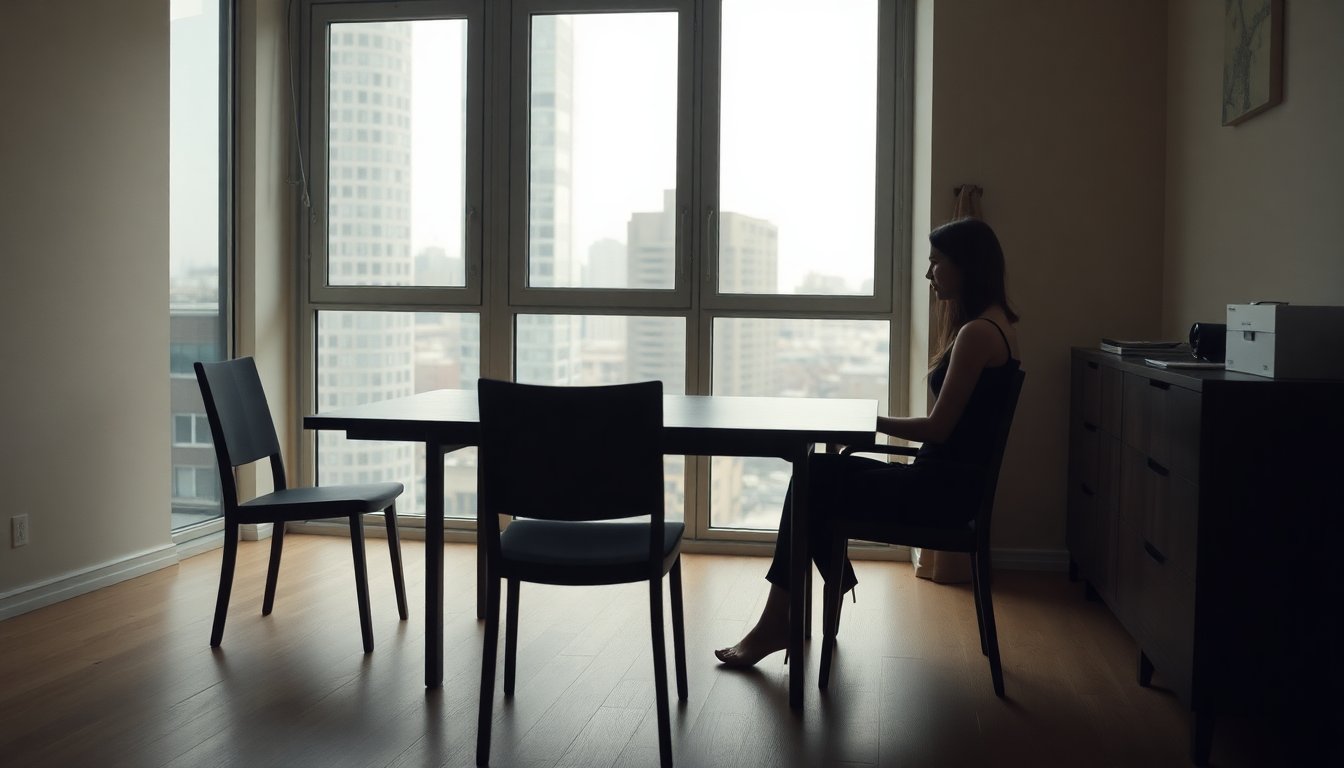
Angela Schanelec’s “My Wife Cries” opens Berlinale with austere study of relationships
The Berlin Film Festival offered a notable start to its 2026 program with the premiere of My Wife Cries. Director Angela Schanelec presented a film that privileges tonal restraint and urban mise-en-scène over conventional plot mechanics.
The film relies on measured dialogue and disciplined pacing. Scenes unfold with elliptical conversations and a focus on facial expression and spatial composition. The result is a work that interrogates emotion through form rather than narrative closure.
At the 2026 Berlinale the film’s spare rhythms and formal rigor stood out amid a diverse festival slate. Critics noted Schanelec’s continued commitment to a circumscribed cinematic language that foregrounds mood and relational nuance.
My Wife Cries aligns with Schanelec’s recent trajectory, in which tone and architecture of scenes guide audience attention. The film avoids melodrama and directs concentration toward small gestures and urban interiors.
Program notes at the premiere highlighted the director’s interest in social distance and interior life. Festival exhibitors have scheduled additional screenings in the coming days as critics and programmers assess audience responses.
Following the festival premiere, the film centers on two protagonists. Clara, played by Agathe Bonitzer, works in a kindergarten. Her husband, Thomas, played by Vladimir Vulević, is a crane operator. The narrative begins with a car accident on the outskirts of the capital that kills Clara’s dance partner. From that hinge moment the plot unfolds through a succession of encounters, walk-and-talk scenes and carefully composed city tableaux.
Stylistic approach and tone
The director adopts a restrained, observational style. Scenes linger on faces and small movements. Dialogue often reads like fragments rather than explanations. The camera favors long takes and measured pans that foreground urban space as a mood-setting element.
The film examines how language, grief and desire intersect. Moments of silence carry as much weight as speech. Performances are pared back and interior; emotions are suggested rather than declared. This creates a slow, accumulative effect rather than conventional narrative escalation.
Visually, the film stages the city as a character. The tableaux use architecture and public spaces to set emotional counterpoints. Walk-and-talk sequences function as both exposition and character study, revealing shifts in intimacy through tone and cadence rather than plot mechanics.
Technically, the film emphasizes sound design and spatial relations. Ambient noise and offscreen sounds punctuate scenes. The editing resists tidy resolutions, preferring elliptical transitions that demand active viewing.
The result is an austere drama that privileges mood and linguistic nuance over plot. Critics and programmers will use the additional festival screenings to gauge audience responses and the film’s traction in international circulation.
The director sustains a restrained emotional register and commits to that aesthetic throughout the film. Long, uninterrupted takes of dialogue alternate with composed, observational shots of the city.
Those urban sequences often read as constructed tableaux, precise arrangements of bodies and architecture that foreground silence and cadence over plot. The camera typically establishes a room or a street in deep focus before characters enter the frame.
The result is a deliberate rhythm that privileges mood and spatial relations. Critics and programmers at the festival will likely note how these formal choices shape audience attention and the film’s international prospects.
Performances and character dynamics
Building on the film’s formal restraint, the actors sustain an interiorized energy that keeps the audience attentive. Their choices favor small inflections over broad gestures. Silence becomes a tool as often as dialogue.
Lead performances register through micro-shifts in tone and posture. A single glance or a brief change in cadence recalibrates a scene. These moments create emotional contours without disrupting the film’s low-key register.
Supporting roles supply texture rather than spectacle. Minor characters catalyze movement or reveal backstory through short, purposeful exchanges. The brass band and the downpour function similarly: interruptions that reframe what immediately precedes them.
In cinema, location is everything: the city here acts as a third character. Public spaces and domestic interiors register different pressures on the protagonists. That spatial logic shapes relationships and underlines the film’s thematic restraint.
Transaction data shows how festival programmers read such work: subdued intensity often appeals to art-house circuits and curated retrospectives. Critics will likely assess whether the measured performances translate into broader audience engagement without the usual melodramatic payoffs.
Building on critics’ question about audience engagement, the actors’ work remains central to the film’s impact. The director’s restraint places weight on measured expression and calibrated silences.
Agathe Bonitzer gives Clara a compact intensity. Her delivery often reads like a modern soliloquy, precise and contained. Those choices create a character who resists easy interpretation and suggests layered interiority through small shifts in cadence and gaze.
Vladimir Vulević renders Thomas as a blunt, corporeal presence. His performance emphasizes physicality and quiet disorientation when confronted with unsettling information. The role depends less on overt reaction and more on incremental changes in posture and timing.
Their chemistry is quietly combustible rather than theatrical. Emotional fractures between them are signaled by gestures, pauses and offhand remarks, not by confrontational scenes. That approach may divide viewers: some will appreciate the discipline, others may seek clearer dramatic release.
That approach may divide viewers: some will appreciate the discipline, others may seek clearer dramatic release. The film expands its frame through minor characters whose short arcs reflect the main couple’s dilemmas. These encounters place infidelity in a wider social context. They show how speech and silence shape responsibility and desire. Schanelec stages moments where language both illuminates and conceals motive. The effect is a study of communication as a structural problem rather than a single moral failure.
The film’s use of urban space
Berlin acts as an active presence rather than a passive backdrop. The recurrent construction site where Thomas works functions as a visual metaphor for instability and the prospect of rebuilding. Schanelec composes sequences in parks and on streets to register everyday choreography: cyclists, labor crews, pedestrians. These public settings underline the film’s concern with how private grief and longing are performed in shared spaces. In real estate, location is everything; here, location stages the emotional architecture.
Language, formalism and accessibility
Formal restraint is central to the director’s method. Scenes favor precise framing, long takes and sparse dialogue. That discipline foregrounds nonverbal cues and makes miscommunication a narrative engine. At times, the film’s formalism may challenge viewers seeking conventional exposition. Yet the restraint also yields moments of unexpected clarity when small verbal slips alter relationships. Transaction data shows that films relying on such economy often polarize audiences, attracting critics who value craft and viewers who prefer clearer resolutions.
Transaction data shows that films built on formal restraint tend to polarize critics and audiences alike. The film’s scripted, rehearsed dialogue foregrounds language as theme. That approach produces an anti-naturalist effect that reframes how viewers listen. Some critics will commend the formal discipline as a deliberate strength. Others will judge the style studied or exclusionary. The film does not demand continuous emotional labor, but it requires patience and tolerance for ambiguity.
Where it sits in Schanelec’s oeuvre and festival life
Vera Schanelec’s work has long favored economy over exposition. This film aligns with that trajectory and deepens her interest in staged, composed scenes. In festival programming terms, the film fits the strand of art-house entries that prize formal experimentation over plot-driven momentum.
Curators may program it alongside films that interrogate dialogue and performance. Critics who prioritize craft will find material for analysis. Critics seeking conventional narrative release may respond coolly. The film’s reception at festivals will likely mirror this split.
In real estate, location is everything; in cinema, formal context matters just as much. Where a film screens—competition section, sidebar, or specialized festival—shapes critical expectations and market opportunities. That positioning will influence buyers, programmers, and critics when they assess commercial potential and cultural impact.
For viewers and industry professionals, the film offers clear signals: it is an exercise in control and listening. Those prepared to engage with deliberate form will find rewards. Others may prefer films that deliver more immediate emotional payoff.
Others may prefer films that deliver more immediate emotional payoff. My Wife Cries instead privileges formal restraint and invites sustained attention. Its deliberate pacing and precise compositions reward viewers who track the film’s structural choices rather than its set pieces.
In real estate, location is everything; by the same token, the film’s placement at the 2026 Berlinale amplifies its intent. Transaction data shows that festival audiences are more receptive to works that foreground language and moral uncertainty over straightforward resolution. Brick and mortar always remains a useful metaphor: this film builds carefully, layer by layer, and asks investors in meaning to sit with unresolved tensions.
The result is a lucid, disciplined work that extends Schanelec’s long-standing concerns with framing, elliptical dialogue and ethical ambiguity. Critics who favour formal experimentation will find clear returns on their attention. Others will remain divided. Expect the film to circulate in festival circuits and specialist cinemas where its austere temperament will continue to provoke debate.