
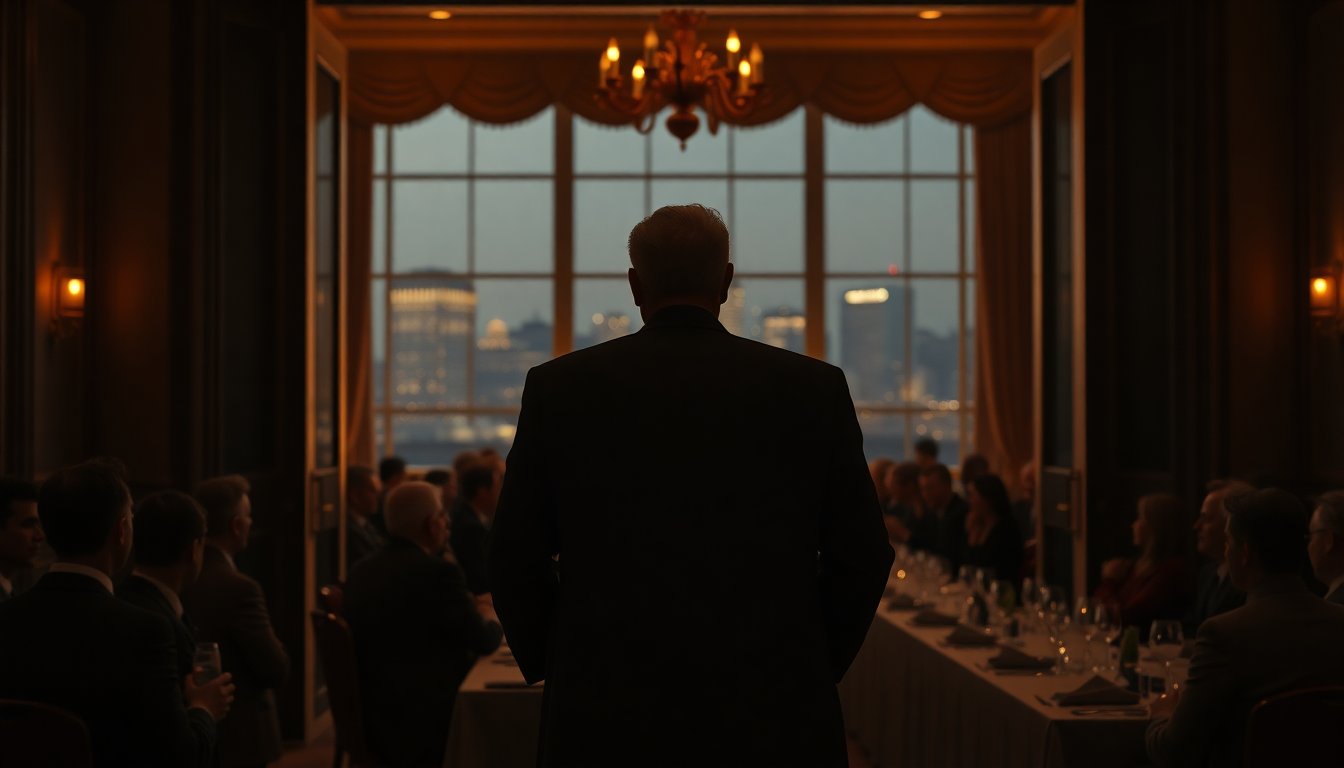
The evening hosted by producer and investor David Ellison at the U.S. Institute of Peace drew attention when it was billed as an event “honoring the Trump White House.” Guests at the gathering included prominent media figures, government officials and executives tied to a looming corporate deal. According to reporting, the former president delivered remarks that lasted almost an hour, and the guest list prompted conversations about how close relationships between news organizations and public officials can appear.
Beyond the dinner itself, the timing mattered: the event came as a proposed $110 billion merger between Paramount and Warner Bros. Discovery moved forward, and as a high-profile lawsuit involving the Wall Street Journal and News Corp. was being resolved in the courts. Invitations distributed by Paramount named Ellison as host and described the night as an occasion to honor the Trump White House, setting the tone for an evening that mixed politics, media and business.
Who attended and why it mattered
Among those present were journalists and executives from CBS News, including Bari Weiss and Norah O’Donnell, as well as the acting attorney general Todd Blanche, who oversees the department that must sign off on large mergers. Also on the guest list were Paramount’s chief legal officer Makan Delrahim, Senator Marco Rubio, and former White House staffer Stephen Miller. The mix of media, corporate and government attendees highlighted the interplay of influence between newsrooms and political actors.
For staff within major outlets, the scene raised concerns. Anonymous journalists from CBS told reporters they were surprised and uneasy, worried the gathering could convey an impression of coziness between newsroom personnel and the administration. These concerns resonate with broader debates about journalistic independence when news organizations are part of conglomerates with political and commercial ties.
Corporate backdrop: the Paramount-WBD merger
The dinner occurred shortly after shareholders of Warner Bros. Discovery approved the impending merger with Ellison’s Paramount, a step that brought the megadeal closer to completion. That merger, valued at roughly $110 billion, still requires regulatory sign-off from the Justice Department, adding a layer of scrutiny to any interactions that might involve the department’s leadership. The presence of the acting attorney general at a politically charged dinner therefore attracted particular notice.
Regulatory approval for deals of this scale often involves detailed antitrust review and interagency consultation. The optics of industry leaders, news executives and political figures dining under one roof prompted observers to question whether the process is being influenced, or merely observed, by social proximity. In this case, the formulation of invitations and the way the evening was described compounded those questions.
Press events and awards in the same weekend
The Ellison-hosted dinner preceded a high-profile weekend on the press calendar: the White House Correspondents Dinner, which the former president planned to attend, and an awards ceremony at which the Wall Street Journal would accept the Katharine Graham Award for Courage and Accountability. CBS News, which is part of the Paramount corporate family, planned to bring Secretary Pete Hegseth to the correspondents event, further illustrating how media companies navigate dual roles as news outlets and corporate entities.
The award and the story behind it
The Wall Street Journal was recognized for an investigative piece published on July 17 about correspondence connected to financier Jeffrey Epstein, which included a 2003 letter attributed to Donald Trump. That story later prompted a defamation lawsuit by the former president against News Corp., the Journal’s parent company, centered on how the article was framed and attributed.
Legal outcome and implications
A federal judge in Florida dismissed the defamation suit in April. In his ruling, U.S. District Judge Darrin P. Gayles concluded that the complaint did not adequately allege that the article’s publication was made with actual malice by those named in the suit. The dismissal closed one chapter in a broader legal and reputational fight tied to reporting about Epstein and interactions with powerful figures.
Taken together, the dinner, the corporate merger process and the litigation underscore the complex intersections of politics, journalism and business. The event hosted by Ellison served as a focal point for questions about perception and propriety that are likely to continue as the merger proceeds through regulatory review and as news organizations manage their corporate affiliations in a politically charged environment.


