
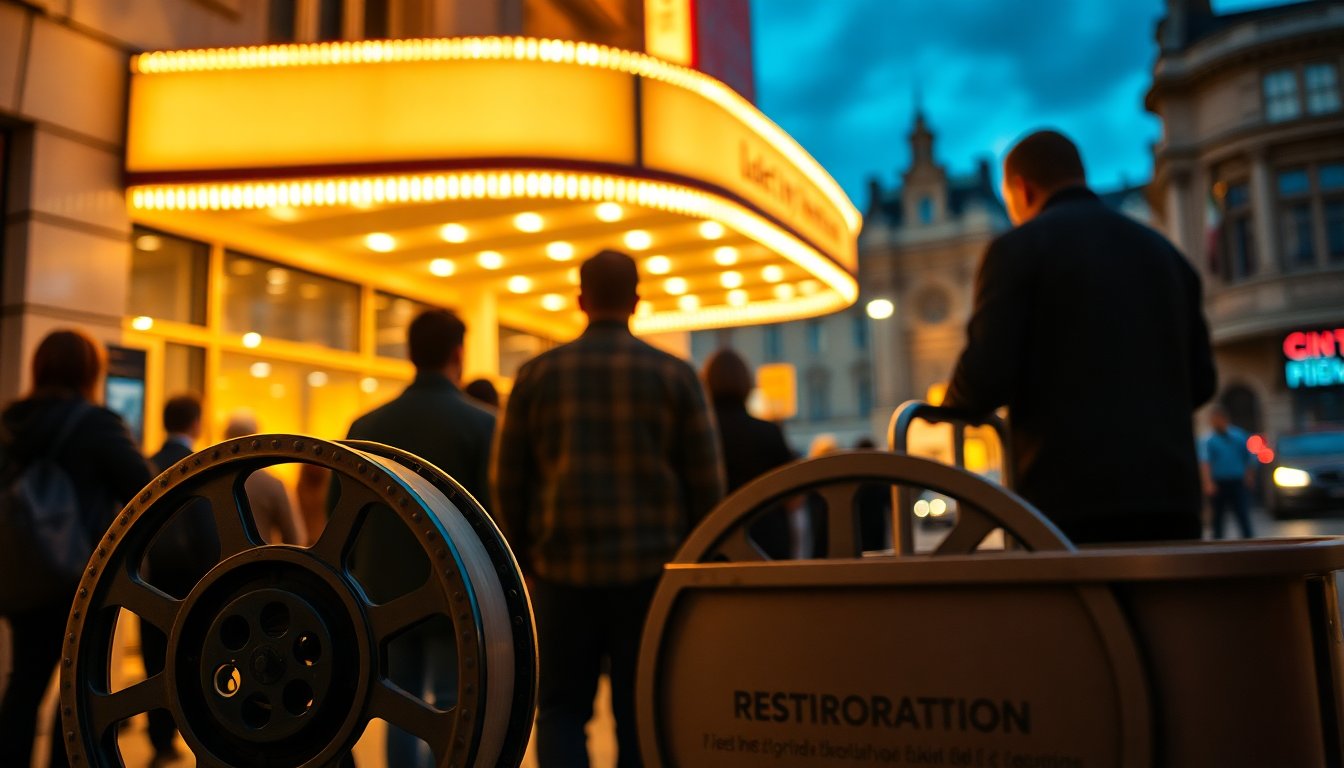
The Queer East Festival returns to London for its seventh edition, running from May 1 to June 6. Over five weeks the city hosts a wide-ranging program of feature films, documentaries, shorts and live events across major venues such as the Barbican, BFI Southbank and ICA. The festival opens at the Barbican with a newly restored screening of The Outsiders (1986, dir. Yu Kan-Ping), the first screen adaptation of Pai Hsien-Yung’s novel. This 4K restoration reintroduces material that had previously been removed, giving audiences a fuller view of a landmark work in Mandarin-language queer cinema.
Queer East’s program mixes contemporary premieres with archival discoveries, presenting more than a hundred films that reflect the diversity of queer experiences across East and Southeast Asia and their diasporas. Highlights include South Korean milestone 3670 by Park Joon-ho, Thailand’s satirical debut A Useful Ghost by Ratchapoom Boonbunchachoke, Joan Chen’s starring turn in Xiaodan He’s Montreal, My Beautiful, and Tracy Choi’s coming-of-age drama Girlfriends. The festival also screens documentaries such as Jota Mun’s Between Goodbyes, which traces the emotional terrain of queer Korean adoptees, and Queer as Punk, following a Malaysian punk band fronted by a trans man.
Restorations, prints and archival focus
One of the festival’s defining strands is its emphasis on film history. Program director Yi Wang has deliberately foregrounded film heritage by presenting screenings in formats that range from pristine 4K restorations to projection from original 35mm prints. These archival showings include Japanese classics such as Keisuke Kinoshita’s Farewell to Spring and Masahiro Shinoda’s With Beauty and Sorrow, alongside Lino Brocka’s restored Macho Dancer. The aim is to let contemporary audiences—many of them under 30—see how queer life and aesthetics were depicted across decades, and to open conversations about continuity and change in regional queer storytelling.
What restoration and archive screenings mean
By programming archival works, Queer East creates a conversation between older and newer films. The festival treats restoration not only as a technical act but as a cultural recovery project: bringing long-suppressed or hard-to-find works back into circulation helps preserve a shared memory for community audiences. Presenting films from original prints or newly scanned masters also offers a tactile, communal viewing experience that streaming cannot replicate, reinforcing the festival’s role as a curator of both heritage and discovery.
New work and UK premieres
Alongside restorations, the lineup champions fresh voices and bold genre work. UK premieres include Richie Koh’s drag comedy A Good Child (Singapore), Nigel Santos’ ensemble drama Open Endings (Philippines), and Rohan Kanawade’s debut Cactus Pears, which won the World Cinema Grand Jury Prize at Sundance 2026. The program ranges from political satire and horror to intimate romances and experimental documentaries—examples include Thunska Pansittivorakul’s Isan Odyssey and Tianyi Zheng’s hybrid film Where Comes Mulan. These selections stress that queer Asian cinema resists a single category and embraces both entertainment and activism.
Events, industry day and community
The festival is more than screenings: there are talks, workshops, live performances and social gatherings designed to build networks. A late-night rave is scheduled for May 16, while the second Queer East Industry Day takes place at BFI Southbank on May 24, bringing filmmakers, distributors and programmers together to discuss practical challenges in producing and exhibiting queer Asian films. These events are meant to foster collaboration, mentorship and new distribution pathways for films that often struggle to find mainstream platforms.
Origins and growth
Founded by Yi Wang, the festival began as a modest weekend showcase aimed at expanding London’s exposure to contemporary East and Southeast Asian queer cinema. An initial plan for April 2026 was disrupted by the pandemic, and early editions mixed online and in-person programming. Since those beginnings the festival has expanded substantially: from roughly 15 films in its first year it now programs around 130 titles across some 14 venues in the city. This growth reflects both increasing production across the region and strong audience appetite for diverse queer stories.
Why this festival matters
Queer East positions itself as a corrective to narrow assumptions about Asian cinema and queer representation. The programming deliberately challenges a white gay men–centred lens by amplifying films by and about queer women, trans communities and regional grassroots movements. For many attendees the festival feels like a meeting ground: a place where archival material and contemporary work can be viewed together, where political issues are discussed, and where a sense of community is actively cultivated. By bringing rare films to the big screen and supporting industry conversations, Queer East helps ensure these stories continue to circulate and resonate.


