
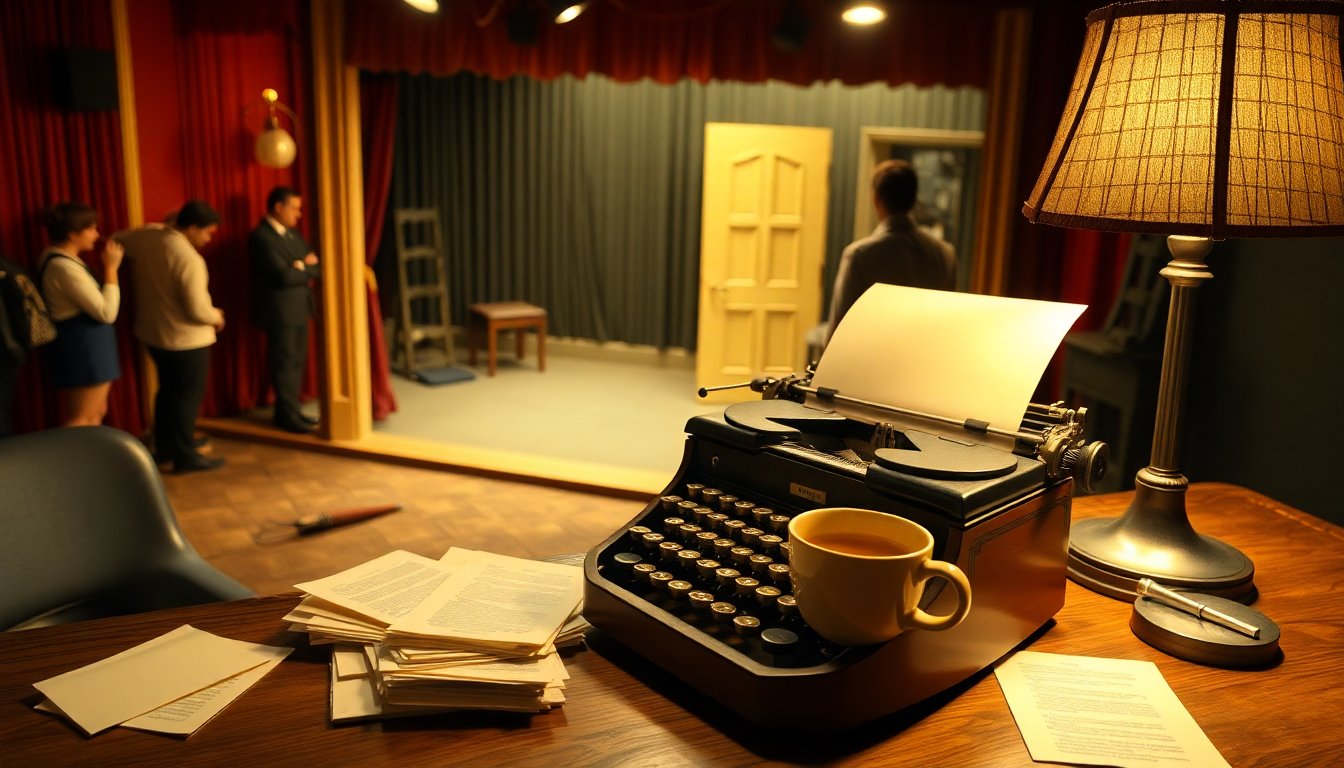
Quentin Tarantino is trading film sets for footlights — at least for now. Sources say the director behind Pulp Fiction and Inglourious Basterds has written an original British farce he intends to mount in London’s West End. Rather than recycling scenes from his movies, the piece reportedly leans into fast, physical comedy: rapid entrances and exits, mistaken identities, pratfalls and the tight, machine-like timing that makes farce sing.
A new medium, not a repeat
Tarantino’s theatre venture comes amid a series of shifts in his film plans — projects shelved, scripts passed on to other directors. It also fits a broader trend of filmmakers exploring live formats to expand their creative language. Insiders describe the play as an old-fashioned British farce in spirit: ensemble-driven, built around precision stagecraft and the sort of backstage chaos that calls to mind Noises Off, though this will be an original story rather than an adaptation.
What the piece will feel like
Expect a high-energy, deliberately theatrical tone. The emphasis appears to be on rhythmic momentum rather than naturalistic acting: fast costume changes, carefully choreographed doorwork, and comic set pieces that rely on timing as much as invention. Sound cues, lighting shifts and quick-moving set elements will be key to the laughs — the sort of technical choreography that transforms mayhem into comedy gold.
Directorial and casting choices will likely prioritize actors with strong farce and physical-comedy chops. Producers are searching for an ensemble that can sustain relentless pacing and sell jokes through body language as much as line readings. Rehearsals will probably include intense timing drills, doorwork practice and repeated tech runs to iron out the tiniest mechanical hiccups.
Stylistic roots and tone
The play’s influences reportedly span mid-20th-century stage farce, commedia dell’arte and contemporary physical theatre. The result should feel heightened and theatrical, with a clear eye for rhythm and momentum. Directors working with this material are expected to treat blocking like choreography and to favor precision over spontaneity — because in farce, every second counts.
Production logistics and venues
The creative team is scouting a range of West End houses, looking for flexible staging that can move between mid-size theatres and larger auditoria. That modular approach would let producers expand the run if demand is strong, while keeping the option of a transfer open. Budget conversations are said to include extended tech weeks and extra stagehand support to manage rapid set changes safely.
Casting will be a balancing act between star power and stage credibility. Industry reports suggest a mix of recognizable names and seasoned theatre performers — actors who can draw an audience but also handle the demands of precise comic timing. Whoever signs on will be judged less on individual moments and more on the ensemble’s cumulative chemistry and mechanical accuracy.
How this fits into Tarantino’s trajectory
This move reads less like an abandonment of cinema and more like a change of pace. Tarantino has a track record of shifting roles — writing, producing or stepping back from directing while staying creatively involved. Writing a play lets him remain active creatively without immediately committing to another film shoot.
Tarantino is reportedly bringing the same meticulous approach to stagecraft that he applies to his films: careful blocking, dependable set pieces, and a rehearsal process that privileges timing and rhythm. If those reports hold true, the production will demand more technical rehearsal time than a typical commercial play, and collaborators will need flexible schedules to accommodate that.
Practical and commercial implications
Studios, producers and collaborators should expect shifts in timing and availability. A theatre project of this scale often means staggered film shoots and reallocated talent. For audiences, the promise is a different kind of Tarantino experience: leaner staging, sharper dialogue and a heavier emphasis on performance craft over cinematic spectacle.
A new medium, not a repeat
Tarantino’s theatre venture comes amid a series of shifts in his film plans — projects shelved, scripts passed on to other directors. It also fits a broader trend of filmmakers exploring live formats to expand their creative language. Insiders describe the play as an old-fashioned British farce in spirit: ensemble-driven, built around precision stagecraft and the sort of backstage chaos that calls to mind Noises Off, though this will be an original story rather than an adaptation.0
A new medium, not a repeat
Tarantino’s theatre venture comes amid a series of shifts in his film plans — projects shelved, scripts passed on to other directors. It also fits a broader trend of filmmakers exploring live formats to expand their creative language. Insiders describe the play as an old-fashioned British farce in spirit: ensemble-driven, built around precision stagecraft and the sort of backstage chaos that calls to mind Noises Off, though this will be an original story rather than an adaptation.1