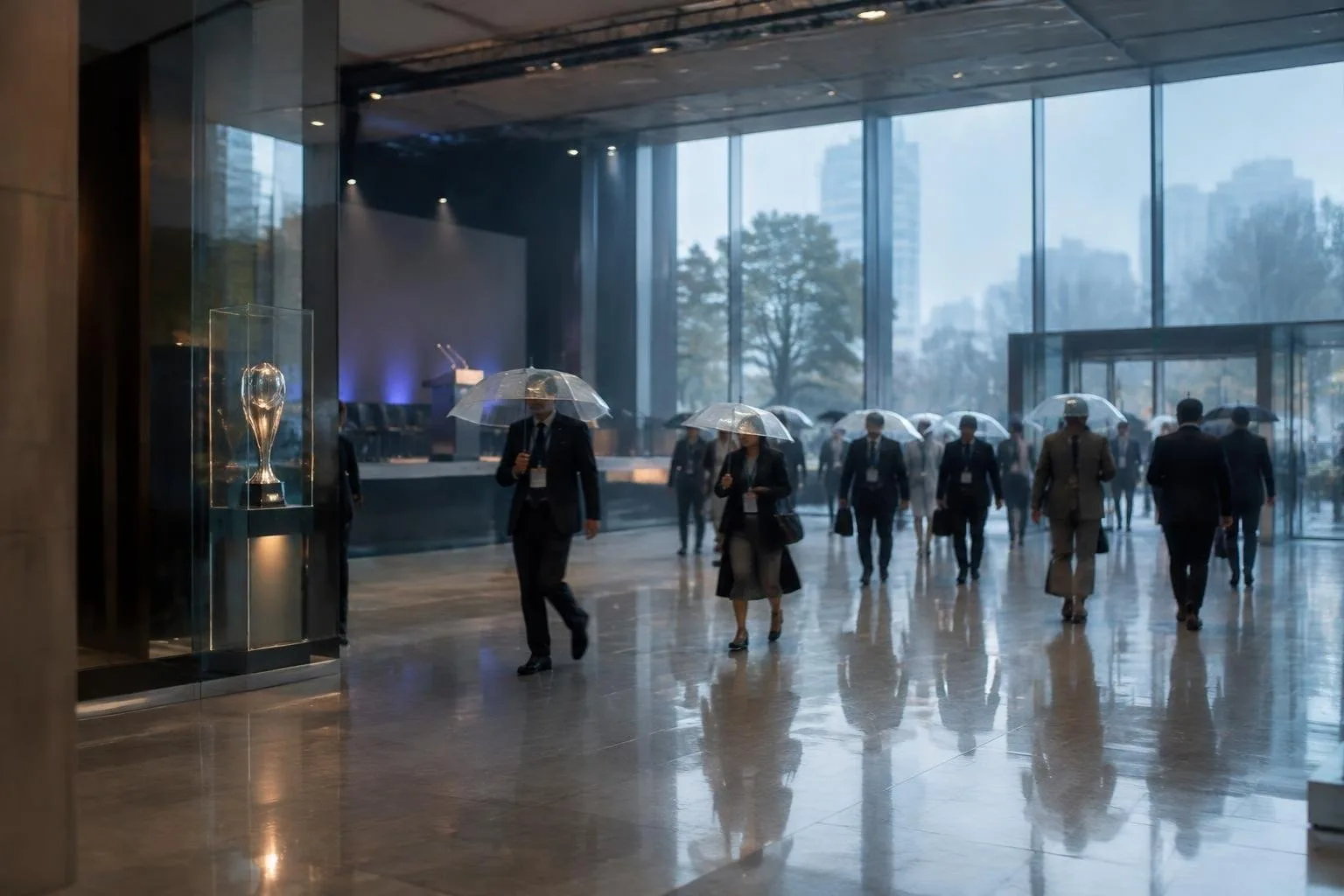
The 39th Tokyo International Film Festival closed on November 4 with a rain-kissed ceremony at Hulic Hall, yet the atmosphere remained electric. The Macedonian-directed comedy Sister Brother Manhole Cover emerged as the night’s headline act, securing the coveted Tokyo Grand Prix, also known as the Governor of Tokyo Award. The prize, valued at ¥3 million (about $19,000), was presented by Vice Governor Yamashita Satoshi on behalf of Governor Koike Yuriko, who could not attend.
Milcho Manchevski, who helmed the film, had already departed Tokyo, so producer Jane Kortoshev stepped onto the stage alongside leads Sara Klimoska and Filip Trajković. Kortoshev quipped, “We arrived with a manhole cover and leave with a beautiful award,” encapsulating the film’s whimsical premise: two siblings scavenge Skopje’s streets for scrap metal, only to stumble into a surreal underworld when a stolen bronze bust lands on one of their feet. The jury president, Australian filmmaker Rolf de Heer, praised the work for its “humanity, compassion, and playful complexity,” emphasizing its balanced tone of tenderness and humor.
Other headline awards
The competition also highlighted a diverse slate of winners. Singapore-born animator Sun Xun took home the Special Jury Prize for Magic Atlas, a decade-long labor of love that blends ink-wash paintings with medieval-style engravings. In the film, an orphan inherits a magician’s tome and restores erased memories from an authoritarian regime, a narrative that juror Oh Jungwan lauded for its “remarkable craftsmanship.” Meanwhile, Argentine director Lisandro Alonso earned Best Director for Double Freedom, a sequel-like follow-up to his 2001 debut, depicting a solitary woodcutter forced to care for his sister after her psychiatric facility shuts.
Acting honors stayed largely within Japanese talent. Narita Ryo claimed Best Actor for his role in Mishima Yukiko’s Two Cigarettes, Three Nights, portraying a longtime friend who reunites with a stalled illustrator across three cities. Although absent from the ceremony, Mishima accepted the award, recounting a moment when a sudden snowfall—a wish shouted by Narita—mirrored the film’s yearning tone. Hu Ling captured Best Actress for Wang Jiangyong’s debut The Night That Binds Us, delivering a moving performance as a grieving dorm manager entangled with a younger student amid familial scandal.
Regional showcases and audience favorites
Beyond the main competition, the festival’s sectional awards underscored emerging voices. In the Asian Future category, Tareq Daoud’s Swiss-Turkish drama Serife Tavsan won Best Film and a ¥1 million cash prize, following a septuagenarian widow’s quest for self-fulfillment against her children’s objections. A special mention went to Indonesia’s Jani Be Good by Ariani Darmawan, a pre-Christmas tale of teenage rebellion and single-parent dynamics.
The Nippon Cinema Now showcase honored Tanaka Miki’s debut Silver Express as its top film, rewarding a story of two asexual protagonists forming an unconventional bond. Matsumura Shingo’s Between Us earned the section’s Special Jury Prize, tracing the reunion of former child performers in a high-school drama club six years after a family camping trip shattered their lives. Finally, Isabelle Stever’s documentary I Rarely Wake Up Dreaming received the TIFF Ethical Film Award, highlighting the festival’s commitment to socially conscious cinema.
International co-production and future outlook
Sister Brother Manhole Cover stands out as a true multinational effort, bringing together production partners from North Macedonia, Bulgaria, Serbia, Albania, Italy, and the United Kingdom. This cross-border collaboration underscores a growing trend in festival circuits, where financing and creative input flow across Europe and beyond. Director Manchevski, who last released a narrative feature with Kaymak, expressed via video message that the Grand Prix feels like “vindication for a quirky film that almost didn’t happen,” stressing his focus on portraying “unusual families and the haves and have-nots” rather than pushing overt messages.
Looking ahead, the festival’s programming director Shozo Ichiyama hinted at the next edition’s eclectic slate, describing the 2026 competition as “so varied it felt like a test for the jury.” De Heer echoed this sentiment, noting the difficulty of measuring such disparate works against one another. As the curtains fall on this year’s awards, the Tokyo International Film Festival has once again proved its role as a global platform where satirical comedies, handcrafted animation, and poignant historical dramas can share the spotlight.